Showing posts with label fall. Show all posts

Sunday, October 26, 2025

Spider Catapults


Spiders continue to be a popular topic of exploration in our classroom! To infuse this interest with math and fine motor work we introduced clothespin catapults to the children this week. Wooden catapults are easily made by securing a clothespin to a steady base (like a wooden block) with an elastic. 

They require concentration and perseverance for children to operate. As children become more confident using them they are able to use strategy to aim the catapult in a specific direction or apply pressure to further or reduce the launch power. 

Small plastic spiders (ours were from the local dollar store in the Halloween section) are light and perfect for playing with. We offer 'webs' made from wrapping a shallow basket with yarn. Children are encouraged to fire the spiders into the webs.


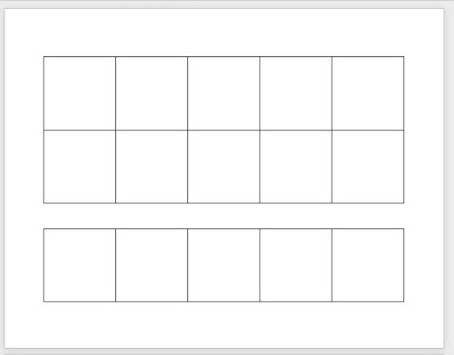
Once children master launching the spider into the web additional math tools can be offered to enhance the experience. A five or ten frame or hundreds chart are easy tools for children to use when tracking how many spiders they have landed in the webs.   


Additional targets can be provided for children to play with (e.g., alphabet chart, number chart, printable web with points). The possibilities are endless! 

Monday, October 13, 2025

Spider Math

 "Oh look! There's a spider on the school! 

Maybe he's coming to learn too!"

Autumn always brings with it many treasures. Recently my students have been curious about the many creepy crawlies they have been discovering in the yard. Although spiders can be scary for some, they serve a big purpose in our local ecosystem as they eat insects and also are a source of food for others. Exploring them together also helps those who are scared or reluctant learn to see them in a new way. 

I always look for ways to incorporate children's interests into our activities, specifically math. Here five spider math ideas for you to use with your little ones!

1. Which One Doesn't Belong - encourage children to examine and describe these collections of images and articulate which they believe doesn't not belong in the group and their reasoning why.


2. See, Think and Wonder - this thinking routine asks children to carefully examine something and clearly describe what they see, articulate their thinking about the object, and express curiosity through wonderings and questions related to the subject. This picture of an intricate web might be an interesting prompt for discussion.

3. Spider Survey - ask children to record their names on a t-chart that indicates whether or not they like spiders. Calculate and interpret the results of the survey with children. Click the image to access the printable.


4. Spider Subitizing - use this printable with children to explore different ways of representing a number. Write a number on the spider and ask children to brainstorm and record many different ways of showing the number (e.g., tallies, dots, ten frames, word). Click the image to access the printable.


5. Spider Symmetry - use this printable with children to explore the concept of symmetry. Encourage children to draw the missing half of the spider and web as best as they can. Explore symmetry in photos of real life spiders!
Click the image to access the printable.


Sunday, November 10, 2024

Facilitating Math Talks with Young Children - Printables to Support the Math Talk Books

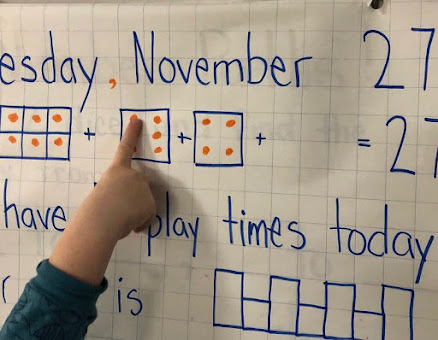
Math talks are a great way to engage children in open-ended explorations that invite them to think critically and creatively about a concept. Math talks are like number talks, yet include any area of math that an educator would like children to explore. An effective math prompt to facilitate a rich math discussion will be layered; it should be open-ended with multiple entry points for engagement. Even children as young as kindergarten are capable of participating in complex math conversations. In our classroom I aim to invite children into a math talk at least once a day; I sometimes use the numerical date on our morning message as the spark for exploration. Other times an interesting photo or collection of loose parts will be engaging and incite children into further exploration. I try to vary the invitations I provide in order to diversify the math we discuss and to reach as many learning interests as possible. 

In our program we have a morning circle time. This circle is our first whole group gathering time for the day and helps set a positive atmosphere in our classroom. It is also a time to celebrate being together, and share news from our homes. We often use it as an opportunity to read a story and discuss any new and exciting activities or additions to our classroom space about which the children should know in order to be successful for the day. 

When I first started teaching kindergarten many years ago it was expected that the morning circle would begin with 'calendar time' where children would put a sticky number on a large grid to depict the day and there would be an extensive discussion about the calendar (e.g., day of the week, month, year). However over the years I realized that this was a very teacher-directed task and not as meaningful a use of our time. After reading Sherry Parrish's work on number talks I was inspired to use our morning message as an anchor for math talks. Wanting to still introduce the date to students, the numerical representation of the date became the foundation for our number talks most days. Sometimes I would use other prompts depending on the events and interests emerging in our classroom. If you would like to read more about number talks in kindergarten, you can access an article I wrote for the Journal of Teaching and Learning here: Joyful Number Talks in Kindergarten
 

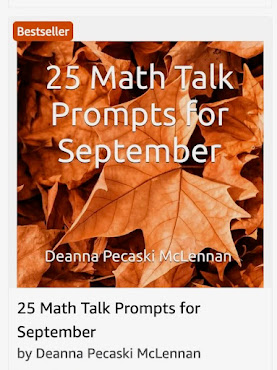
Over the years I have shared my math talks on social media and have been asked repeatedly to create a guide to support educators who wish to engage their students in math talks. This inspired my collection of monthly math talk books. Each book contain 25 prompts to engage children in regular conversations in the classroom. The prompts do not need to be followed in order. In order to help educators I have also created free downloadable PDFs that can be printed and used with students. 


Click on the book's image to be linked to where it can be purchased. 


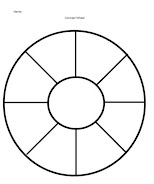
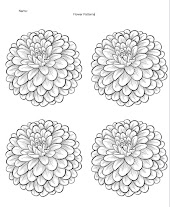
Click on the printable to be linked to where it can be printed.

Printables that can be used to support this book:


Printables that can be used to support this book:


Printables that can be used to support this book:


Tuesday, August 20, 2024

Cultivating a Mathematically Rich Learning Space

It's almost Labour Day! This time of year always fills me with hope. Although it's sometimes sad to be leaving the fun and comforts of summer - spending time with my children, sleeping in, enjoying the back yard with my pup - it's exciting to think of the possibilities of another school year. Like a blank canvas waiting to be painted our classroom evolves and changes over time as the children and I learn and explore together. 

As we head back into the school year many educators are working thoughtfully to create environments that are rich with math possibility. In Reggio Emilia the environment exists as the 'third teacher' inspiring, supporting, and extending children's learning in rich and complex ways. I have been contacted by many educators asking for advice on how to best set up their classroom and routines in order to create as many opportunities for authentic math as possible. This has inspired today's blog post - how to cultivate a math rich learning space for children at the beginning of another school year.

I thought it would be easiest to create this as a 'math check list' with points to read and consider. When I reflect upon my own math pedagogy and practice, these are what I think stand out as mathematically meaningful for the educators, children and families that share our space. Although this check list isn't all inclusive, I thought it might spark some ideas to support and inspire as we enjoy the final weeks of summer and return soon to our classrooms with open eyes, minds and hearts.

1. Make math a part of every space in the classroom and child's school world. In the classroom are there math tools and materials available for use beyond a 'math center or math shelf'? Do children see how math relates to every subject in the space (e.g., how materials are sorted and stored on the toy shelf, how measurement is used when children decide on a size of paper to use for their project)? Can they translate math tools and ideas into other spaces in their immediate school world (e.g., see how math relates to their walks in the hallway or work in the gym)?

2. Ground and build math concepts into known objects for children. When introducing, extending or innovating a math idea is it organic and natural to the child's explorations and world? For example, it is more natural to engage children in an exploration of measurement if they measure things in their immediate world using the stick they are playing with, instead of using a standardized ruler (e.g., "Can you find something the same length as your stick in the yard?", "What is taller than your body?").

3. Use available math moments with children. In our classroom we have a large block of uninterrupted play each day. It's sometimes challenging to manage children, materials and activities during center time. However I try to engage with children as much as possible in the activities, and take on the role of 'play partner' together with them. When I am actively playing I am able to closely observe what they are saying and doing, helping me to identify and extend the rich math learning that is organically occurring (e.g., helping children to recognize why their tower keeps falling, using math terms when they equally share the play dough, introducing math ideas as they discuss how many cars are in their parking lot).

4. Become a math role-model for children, families, and colleagues. Even if math isn't your favourite subject, how do you discuss it within your school and classroom? Are you excited by new activities and resources? Do you demonstrate a growth mindset? When mathematical situations arise with children that you aren't sure of, can you use these opportunities to showcase positive thinking and problem-solving? Share your new math learning with others - suggest articles and books you're reading and post these throughout your classroom to enhance documentation displays. 

5. Find the math in everything. Many educators plan forward by choosing curriculum and programming expectations and then building activities to fulfill these. Try back-mapping activities from time to time; embrace child-centered, organic experiences and then deconstruct them in order to identify the rich math concepts and curriculum expectations that they utilize. You'll be surprised to find that math happens in almost every experience children have in the classroom.

6. Try looking at life through a mathematical lens. When planning invitations for learning in your classroom see what math you can sneak in as well. Changing one or two elements of the experience might be enough to engage children in rich math. It reminds me of how I used to sneak veggies into my children's meals - a little can go a long way!


7. Collaborate mathematically with colleagues. Share new ideas and resources informally. It's easy and effective to create math invitations and activities and share these within your school or division. If every educator plans one or two activities and these are shared, children will benefit from many rich and interesting games and activities without the burden of planning and preparation it would take one educator to accomplish the same.

8. Record and celebrate your math moments. Help children, families, and colleagues recognize that math happens everywhere in the classroom by creating a documentation display with photos, anecdotal observations and connections to curriculum. This bulletin board can be built over the course of the school year as artifacts of learning are continually added by staff and students. Keep sticky notes nearby and invite observers to record their own ideas and share them by posting the notes within the documentation.

9. Engage families in joyful math with children outside of school. Consider ways that you can promote and extend math for children after school. Encouraging families to play math games and activities together with their children will not only provide children with additional meaningful math moments, but it may help older family members reconcile their fear or dislike of math.

10. Build your collection of math stories, songs and games. Children love to sing, dance and play games. Ask colleagues to share their favourite games and activities, and use these to help with transitions and other 'math moments' throughout the day. Quite often the words in songs can easily be improvised to match something happening in your classroom, and many rich storybooks have mathematical elements and problems embedded within them that can inspire children.

These are just a few of the ways in which I cultivate a rich math space with children. I'd love to hear from you! Share your math ideas in the comments below, and consider following my Instagram @McLennan1977 for regular ideas from my classroom!

Friday, July 26, 2024

Book Review

"Exploring trees outdoors is an enjoyable experience that children love to do! Swinging from a branch, exploring leaves and bark, and observing gnarled roots are all favourite activities that also integrate rich learning. Heading outside to explore the yard uses children's excitement and enthusiasm for sensory and nature experiences to inspire rich mathematical and scientific inquiries about what they are seeing and experiencing."


I was excited to see a review of my book Tree Math in the MAMT Spring Journal! You can access the review here!

Thursday, March 28, 2024

Five Free Printables to Use with Tree Math

 "Trees are poems that the earth writes upon the sky."

-Khalil Gibran

During outdoor play children are drawn to the trees in the school yard. They love to feel bark with their hands and wrap their arms around the trunk. They collect artifacts for exploration including sticks and leaves and search for insects in the bark's crevices. Trees offer so many rich opportunities for wonder and discovery as children notice how they change with the weather and seasons.


To help supplement my book Tree Math (available from Amazon and Indigo) here are five easy, free printables that can be used to support children's work in nature!

1. My Favourite Tree

Encourage children to spend time in nature and observe the tree they like best. Ask them to consider what it is they appreciate about this tree? Children can then sketch the tree on this page and compare their tree with others.

2. My Tree and the Four Seasons

Over time children can observe the same tree and draw what they notice changing during the four seasons. This page can be kept over time and added to as the months change. Children can also draw on it at one sitting and hypothesize what the tree might look like in each season, especially after conducting research about how trees adapt to the weather.

3. Tree Circumference

Children can use a variety of materials to measure how big around a tree's trunk is (e.g., measuring tape, hand spans, links) and record it on this tracking page. Drawing a picture can help explain their math thinking.

4. Tree Bark Patterns

Exploring the texture of bark appeals to many children who enjoy sensory experiences. Children can use magnifying glasses to examine the patterns in bark up close, or place a paper on top of the bark and use crayons to create a rubbing. Children can then describe what they see and compare their rubbings to others. 

5. A Tree is a Home

Encourage children to explore many trees in the school yard and neighbourhood. Ask children to observe what living things they observe on and in the trees (e.g., birds, insects, mould) and record their observations on the tracking paper. They can hypothesize how the tree might be a home for many living things at the same time.

Sunday, September 17, 2023

Ten Free Printables to Supplement the 'Autumn Math Walk' Book

 "Autumn is a second spring when every leaf is a flower."

Albert Camus

Autumn is my favourite time of year. Once we have settled into the new school year it's amazing to head outdoors and appreciate the interesting changes happening in nature. There is so much potential for math learning outside of the classroom. 

To celebrate the 1500th copy of Autumn Math Walk being published here are ten free printables to use with children during outdoor math exploration. Autumn Math Walk is available through Amazon. Enjoy!

 1. Hundred Chart Printable

Print and laminate this page so that children can bring it outdoors and see how many objects they can collect. Challenge children to find 100 of the same objects (e.g., acorns, leaves). If children's collections are made of different objects challenge them to see how many of each there are and total these to 100 (e.g., 20 acorns + 15 rocks + 12 leaves...)

2. See, Think, Wonder

Provide a copy of this page for each child. During time outdoors ask children to focus on something that piqued their interest. This page can be used to delve more deeply into the observation using the 'see, think, wonder' thinking routine.


This page can be used to help children observe and represent something more closely. For example if children are curious about the vein patterns on the back of a leaf, they can represent what they see in a large format inside the magnifying glass.  

4. Scavenger Hunt

Before heading out on a math walk children can predict what they might see and draw these in the left column. For the walk have children attach the page to a clipboard and track how many of each object is observed using check marks or tallies.

5. Idea Web

This graphic organizer can be used to help children represent all the interesting things they observed on their autumn math walk. Papers can be distributed for individual use or a large one can be printed and used by the class when reflecting after their walk.

6. Autumn Colouring Page

Colouring can be a soothing activity. This fun page can be used by children during quieter moments of rest and reflection. It can also be sent home at the end of the day. 

 7. Autumn Counting

Ask children to look for different numbers or groups of objects on their walk. As they notice different arrangements of things they can fill them out on this page (e.g., 1 duck, 2 trees, 3 ladybugs...).

 8. Favourite Part

This template can be used once children return from their math walk. It asks children to reflect upon their favourite part of the walk by drawing a picture of what they saw, and completing a sentence to further explain their thinking.

9. Big and Little Objects

As children explore outdoors ask them to consider the size of objects they find. This template can be printed and laminated for children to use outdoors as they place objects directly in each column (e.g., small acorns, leaves, flowers, sticks). Children can also reflect upon their walk and draw pictures of small and large objects on the paper once returning from the walk.

10. Five and Ten Frames

These five and ten frames can be printed, laminated and brought out with children on their explorations outdoors. Challenge children to use the frames to count different collections of objects that they find. (The frames can be enlarged on a photocopier before laminated to accommodate very large objects). 

Related Posts Plugin for WordPress, Blogger...