Showing posts with label walk. Show all posts

Sunday, September 17, 2023

Ten Free Printables to Supplement the 'Autumn Math Walk' Book

 "Autumn is a second spring when every leaf is a flower."

Albert Camus

Autumn is my favourite time of year. Once we have settled into the new school year it's amazing to head outdoors and appreciate the interesting changes happening in nature. There is so much potential for math learning outside of the classroom. 

To celebrate the 1500th copy of Autumn Math Walk being published here are ten free printables to use with children during outdoor math exploration. Autumn Math Walk is available through Amazon. Enjoy!

 1. Hundred Chart Printable

Print and laminate this page so that children can bring it outdoors and see how many objects they can collect. Challenge children to find 100 of the same objects (e.g., acorns, leaves). If children's collections are made of different objects challenge them to see how many of each there are and total these to 100 (e.g., 20 acorns + 15 rocks + 12 leaves...)

2. See, Think, Wonder

Provide a copy of this page for each child. During time outdoors ask children to focus on something that piqued their interest. This page can be used to delve more deeply into the observation using the 'see, think, wonder' thinking routine.


This page can be used to help children observe and represent something more closely. For example if children are curious about the vein patterns on the back of a leaf, they can represent what they see in a large format inside the magnifying glass.  

4. Scavenger Hunt

Before heading out on a math walk children can predict what they might see and draw these in the left column. For the walk have children attach the page to a clipboard and track how many of each object is observed using check marks or tallies.

5. Idea Web

This graphic organizer can be used to help children represent all the interesting things they observed on their autumn math walk. Papers can be distributed for individual use or a large one can be printed and used by the class when reflecting after their walk.

6. Autumn Colouring Page

Colouring can be a soothing activity. This fun page can be used by children during quieter moments of rest and reflection. It can also be sent home at the end of the day. 

 7. Autumn Counting

Ask children to look for different numbers or groups of objects on their walk. As they notice different arrangements of things they can fill them out on this page (e.g., 1 duck, 2 trees, 3 ladybugs...).

 8. Favourite Part

This template can be used once children return from their math walk. It asks children to reflect upon their favourite part of the walk by drawing a picture of what they saw, and completing a sentence to further explain their thinking.

9. Big and Little Objects

As children explore outdoors ask them to consider the size of objects they find. This template can be printed and laminated for children to use outdoors as they place objects directly in each column (e.g., small acorns, leaves, flowers, sticks). Children can also reflect upon their walk and draw pictures of small and large objects on the paper once returning from the walk.

10. Five and Ten Frames

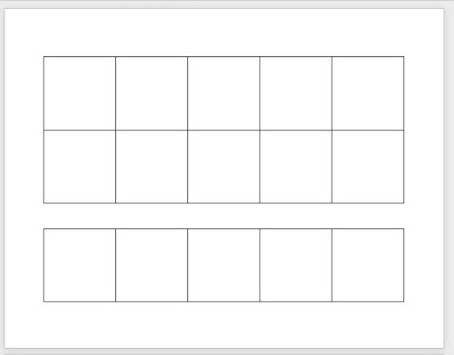
These five and ten frames can be printed, laminated and brought out with children on their explorations outdoors. Challenge children to use the frames to count different collections of objects that they find. (The frames can be enlarged on a photocopier before laminated to accommodate very large objects). 
Saturday, October 26, 2019

Autumn Math Walk


"Notice that autumn is more the season of the soul than of nature."
 Friedrich Nietzsche

What better time of year to head outside and enjoy the beauty of nature than in the fall!

We have been spending long amounts of time each day exploring the treasures in our yard. The children have been fascinated by how the world around us is changing - leaves are changing colours and falling from trees, Monarchs are gathering the last bit of nectar from the garden before heading South, and we are enjoying the last flowers in our gardens before they wilt and dry.

The children have had many questions about some of the interesting objects they have found in the yard - stumps, leaves, creatures and flowers.


Many of their wonderings have been mathematical in nature - Why is there a pattern on the sunflower's seedhead? What are those holes in the stump and where did it come from? Why is a Daddy Long Legs an arachnid and not a spider?  How do leaves change colours?

There is math everywhere. If one looks deeply enough, there is always a mathematical connection in nature. The sunflower seeds follow the Fibonacci Sequence - a numerical pattern meant to help maximize space and fit as many seeds into the head as possible. The perfect little circles in the stump might have been caused by a wood boring insect or bird looking deep into the bark for food. Daddy Long Legs have a different body than spiders even though they have eight legs. Leaves change colour because the amount of sunlight they need to create their own food lessens in cold weather (as the Earth's axis tilts us away from the sun), resulting in a chemical change in the leaves. 

I've been motivated to continue to look for rich mathematical wonderings and opportunities for inquiry each time I'm outside - even on the weekend with my own children. I find it fascinating to see math applied in an authentic, interesting, real world connection. The math in nature is beautiful! Consider going on your own autumn math walk and seeing what amazing questions and connections emerge with on your journey!

I'm excited to publish my first children's book Autumn Math Walk (Kindle edition) on amazon now. Stay tuned for a print version!


Friday, November 11, 2011

Preserving Autumn in our Classroom

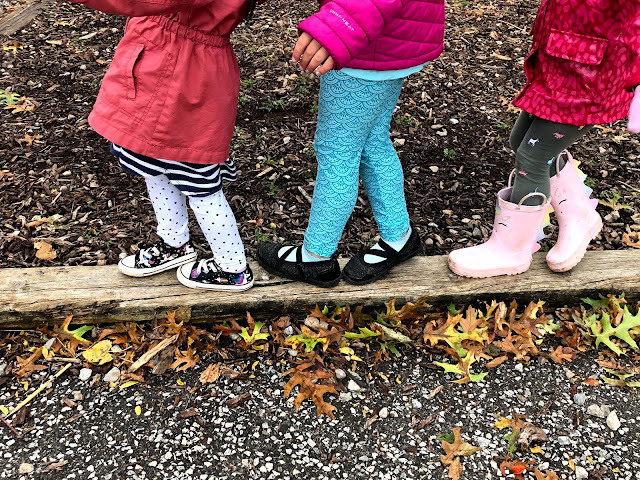
The children enjoyed the last days of warm weather and went for another nature walk around the school yard and neighbourhood this week. We invited them to collect the most beautiful and unique leaves they could find, using their critical eyes. They gathered quite the collection!

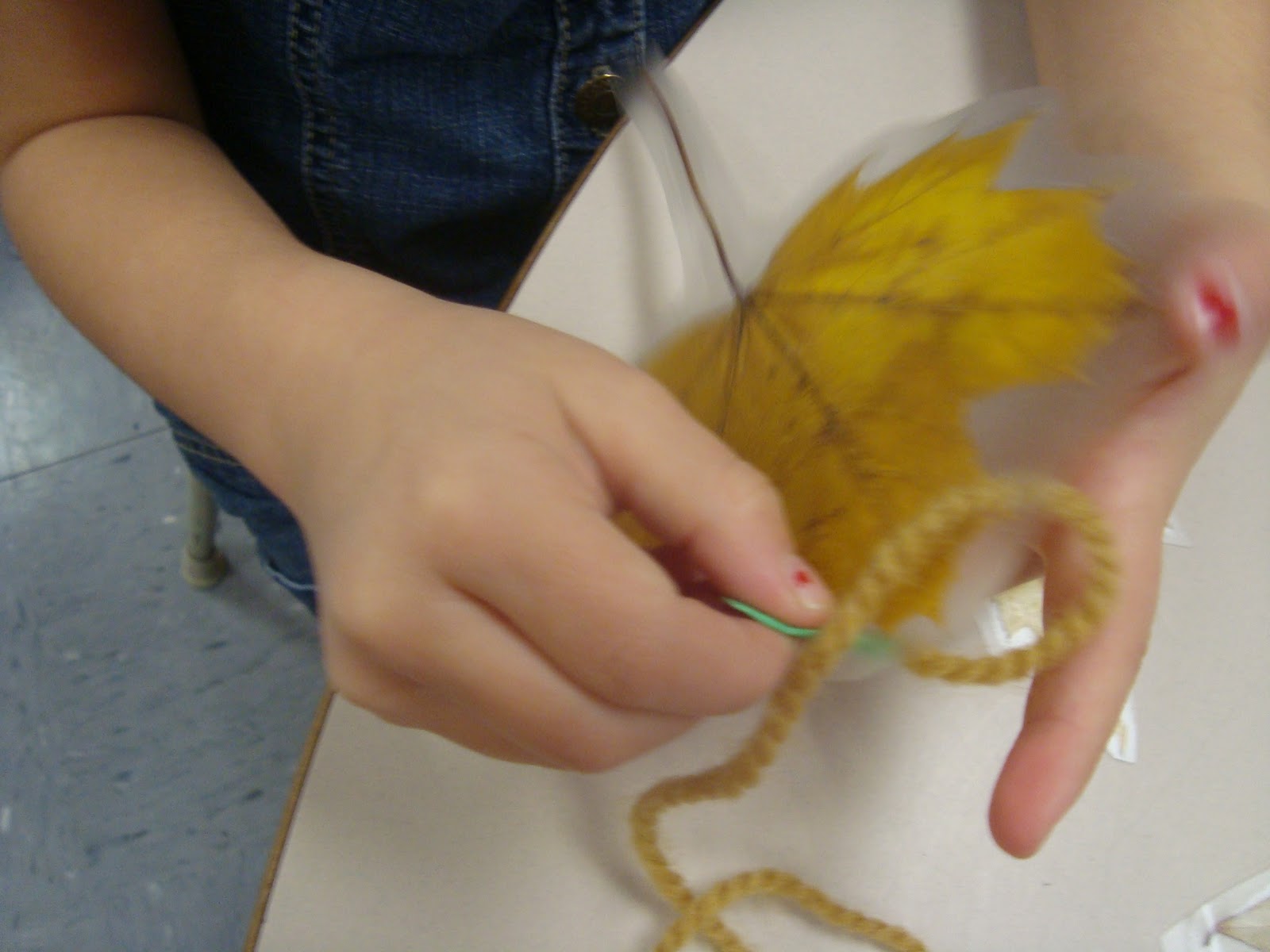
Mrs. Bombardier helped the children to first press the leaves and then preserve them in between two pieces of clear contact paper. Once the leaves were protected, two holes were punched at their tops and the children were invited to string the leaves for display in the classroom. It was great hand-eye and fine motor practice!


The children decided to string the leaves in a pattern of small, big, small, big, small, big...  It was a great math connection to showcase their prior learning about patterning. The leaves are currently on display in our science area. They are a great natural way to decorate the room with a reminder of the children's autumn activities. We are hoping to press spring flowers once they bloom and hang them near the leaves.


Related Posts Plugin for WordPress, Blogger...