Monday, September 19, 2011

Washing the Babies

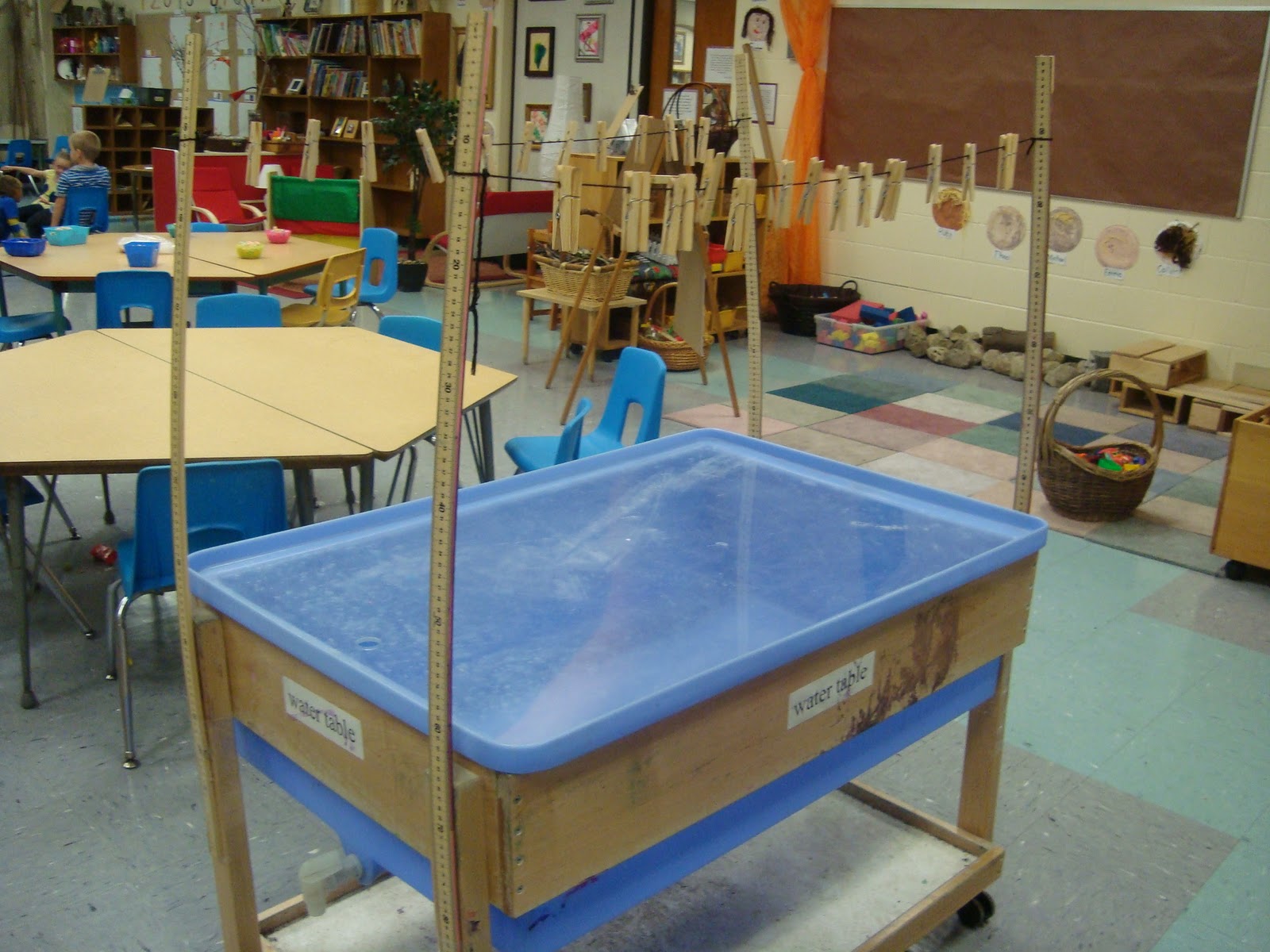
We saw a neat idea from an early years blog that put a clothesline over the water table to encourage imaginative play and strengthen fine motor skills! We tried it today.


The clothesline is the perfect height for children to hang the baby clothes from after being washed.


Pinching the clothespins strengthened the pincher grasp, which helps children develop skills for future writing!


Washing the babies and clothing encouraged children to role-play caregivers - some children sang and spoke softly to the babies as they bathed and dried them.


Ontario Curriculum fulfilled by this experience includes:
3.1 develop empathy for others, and acknowledge and respond to each other’s feelings (e.g., tell an adult when another child is hurt/sick/upset, role-play emotions with dolls
1.2 demonstrate the ability to take turns in activities and discussions (e.g., engage in play activities with others, listen to peers and adults)
4.1 begin to demonstrate control of small muscles in activities at a variety of learning centres (e.g., sand, water, visual arts centres) and when using a variety of materials or equipment (e.g., using salt trays, stringing beads, painting with paintbrushes, drawing, cutting paper, using a keyboard, using a mouse, writing with a crayon or pencil)
4.2 demonstrate spatial awareness by doing activities that require the use of small muscles

Friday, September 16, 2011

Look Who Came to School Today!

One of our children brought a few interesting creatures to school today. We placed the live grasshopper in our terrarium and the dried dragonfly and worm on the light box.


The children were fascinated by how the grasshopper was able to hang onto the top of the terrarium's lid without falling off.


The dragonfly and worm were illuminated by the light box, which made them very easy to see. We could even see inside the worm's body!


Some of the children drew pictures of what they observed.


We used science tools like magnifying glasses to help us out!

Mrs. Bombardier:  "How can the grasshopper hold onto the top of the container?"

Child: "When I turned the light [box] on, I saw the sticky part on the legs. That's where he grapples it [the container]."

Mrs. Bombardier: "What is a grapple?"

Child: "That's what holds stuff."

What a beautiful creature! The children noticed the details on the dragonfly's wings!

Beautiful Stuff! Using Found Objects

As part of our program, we are hoping to use recycled, found materials in our science and art programs. One of our children brought in a large bag filled with objects he had collected from home (e.g., lids, marker caps). We explored them during circle time and looked for similarities and ways to sort them.


The children decided to sort them by colour.

We discussed the different ways colours can look (lighter, darker).

After we sorted the materials, we added them to our colour bins of beautiful stuff.


The objects look so beautiful displayed together!


Please consider keeping a bag nearby in the kitchen so you can save materials that might interest our children. There is a list on the right hand side of our blog if you'd like suggestions for what we need. Thank you for your support of our children and program!

Thursday, September 15, 2011

Cheese!

Picture Day is Monday, September 26th! Mark it in your calendar!

Sorting Colour Chips

Today we placed coloured paint chips (paint samples) on the table and invited children to sort them.


The children immediately recognized that they could sort the chips by colour.


We discussed how there are many shades of one colour!


The colours look beautiful in our art corner. Check them out next time you're in the classroom!


Curriculum fulfilled by this activity:

DM5.1 sort, classify, and compare objects and describe the attributes used

Tuesday, September 13, 2011

Finger Painting on Foil

The children worked so well together, collaboratively sharing a space in order to finger paint on foil.

We covered one of our tables in foil and dropped the primary colours of paint onto it. Look at all the wonderful colours the children created as their exploration progressed!


Soap Inquiry

Mrs. Bombardier had a really neat activity to do with the children today. She asked:

"What happens to a bar of Ivory soap when you put it in the microwave?"


The children had some interesting ideas including"it will melt", "it will crack", and "it will get rotten"

We put it in the microwave and...


It grew and grew! It became fluffy! It was so interesting to touch!

The children explored it in the water table, until it eventually dissolved.

Monday, September 12, 2011

Our First Day!

Our first day together was wonderful! The children were so excited to meet each other and play together!

We...

Played at the drama center

Explored Play Dough

Created habitats with the insects and animals at the building center

Ate our snack and lunches

Created at the art center

Drew pictures

Painted

Read books

Decorated our names with natural materials

Played in messy sand

Used the animals, little people and furniture to tell stories

Can you tell it was a busy day?


Families, please remember to send in a pair of indoor shoes for your child and a 4 by 6 family photo to remain at school. Please remember to return all forms sent home today in your child's mailbag. Please remember to label everything that comes to school too, including backpacks, coats, lunch boxes, and shoes.  Thank you!

Friday, September 9, 2011

The First Day

The day on the calendar has been circled long ago with eager anticipation. Special clothing hangs in the closet and the new backpack has gone for several practice trips with your little one parading around the house. Here’s what you need to know about our first day.

√ School begins at 9:00am and ends at 3:30pm. Children can be picked up in our classroom at the end of the day. We will keep all walkers on our class carpet until they are dismissed to an adult or older student on our class list. Please make sure you inform us as to who has permission to pick up your child. We will not release the children to anyone not on our list, unless a note or phone call has been placed to the office.

√ Pack 2 “lunches” in one lunch bag for our 2 nutrition breaks. For example you might pack for the first break: a sandwich, drink, apple slices, yogourt; and for the second break: crackers, cheese, grapes, granola bar, and water. Discuss with your child ahead of time how he or she will determine what to eat at which break. Some families designate food by marking it with a “1” or “2”. Others divide the lunch bag and put food in a certain spot.

√ Please send the following to school as soon as possible: a pair of indoor running shoes to remain at school, a set of extra clothing (shirt, pants, socks, underwear) to remain in your child's backpack in the event of emergencies, something for your child to snuggle if needed (stuffed animal, blanket), a 4 by 6 inch photo of your entire family to be displayed in the classroom (preferably a horizontal pose)

√ Please label anything that comes to school with your child’s name

√ Donations of crayons, markers, glue sticks, etc. are always appreciated. As well the following items are always useful and much appreciated for our art area: the front covers of old greeting cards, odds and ends like buttons, ribbon scraps, foam packing material, wrapping paper, yarn, leftover scrap booking paper or stickers, and any other materials that can be manipulated by children at the art center.


Saturday, September 3, 2011

Starting School

Freshly pressed school clothing, a new backpack full of supplies, and a child clinging to your legs refusing to let go...welcome to the first day of school! Although children are eager to begin kindergarten, it's understandable for most to experience first day (first week, or even first month) anxiety. Imagine what it must be like to suddenly leave the comfort of home and be dropped into a new environment where everything and everyone is different. This anxiety is normal and we will help you and your child to get through it!  Please speak directly to us if you are concerned about your child's anxiety at starting school and we will do our best to provide support and strategies for helping with the transition to school.  

Here are some tips you might also find useful:

Downplay the milestone. For some children highlighting the first day of kindergarten as a really big deal makes them more nervous than they already are. Instead of making a huge fuss about starting school, try comparing kindergarten to something your child is already familiar with, such as going to daycare, the Ontario Early Years Center, or a music or sports class.  Explain that kindergarten will be a place where he or she will make friends and have fun, just like he or she may have done with groups of kids before.

Connect school to home. Bring your child with you to all events that happen before school including parent interviews. This will provide your child with an opportunity to meet us and see our classroom ahead of time. Please send in a 4 by 6 inch photo of your family (all members included, pets too) that we will display around the classroom. This will help your child to feel more connected to their home life while at school. When your child goes home at the end of the day, engage him or her in a conversation about what they did during the day. Talking to your child about his or her day at school can help connect school to home life.

Read books together about starting school. Reading about other children who might have fears and anxiety about starting school may be comforting to kids who are experiencing the same feelings. Here is an excellent list of books about starting school.  

Try to minimize your own anxiety. Just as it's perfectly normal for your child to feel some anxiety on the first days of kindergarten, it's absolutely normal for you to feel anxious when you see your child upset or when a life change like your child starting school occurs. It's also understandable that you may experience some frustration when you see other children playing happily in the classroom while yours is still clinging for dear life to your legs. Don't hesitate to speak with us about your concerns and how we can help plan for a smooth transition for your child into our classroom!

Don't stay too long. Reassure your child that you (or another caregiver) will be back at the end of the day (or waiting at home) and say a quick goodbye at drop-off time. Lingering will only make it more difficult for your child to see you go, and he or she may cry harder the next time because he or she may see that it's an effective way to get you to stay. As heart-wrenching as it may be for you to walk away while your child is upset, chances are that he or she will be playing happily soon after you are out of sight. We recommend that you don't sneak out without saying goodbye as this may undermine your child's trust and could worsen his or her separation anxiety.

Identify his or her anxiety. Find out exactly what your child is afraid of. Talk to him or her and find out what he or she is worried about. Concerned that you won't return? Afraid someone will be mean to him or her? Worried he or she won't know where the bathroom is or that he or she won't know what to do in the classroom? Once you establish what the specific fears are you will be better able to address your child's concerns and work with him or her and our teaching staff to find ways to handle them.

Send along a favourite comfort object or reminder of you. If your child has a favourite lovey (e.g., blanket, stuffed animal) send it along the first few days. We will ask children to keep their object in their backpack unless needed to help through a transition period. Sometimes having a favourite comfort object nearby helps provide children with a sense of security. Another wonderful item is a mini photo album filled with pictures of your family and home.

Don't put a time limit on how long it should take for anxiety to pass. For some children, first day anxiety may not last beyond a few days if it happens at all. For others, tears and school fears may go on for weeks. Just as each child has his or her own individual set of experiences and personality, the time it takes to adjust to school will vary from one child to another.

Don't hesitate to talk to us! We are here to help make your family's transition to full day kindergarten as smooth as possible.

Read professional resources to help you cope. An excellent book that we have recommended in the past for families is Nancy Balaban's "Everyday Goodbyes: Starting School and Early Care. A Guide to the Separation Process".
Thursday, September 1, 2011

Welcome to another school year!

Families,

We are looking forward to meeting you during JK family-teacher interviews next week! Please contact the school to make an appointment. We will be distributing September newsletters and other pertinent information during that time. Our SK children will bring this information home in their mailbags on the first day of school. We can't wait to meet you and your little ones!
Related Posts Plugin for WordPress, Blogger...