Showing posts with label Reflection. Show all posts

Tuesday, August 23, 2022

Documenting Children's Learning Using Instagram Reels

It was my absolute pleasure speak as keynote at the Canadian Early Mathematics Education Conference in quaint Kingston, Ontario on August 22, 2022. In addition to being able to stroll the downtown area and marvel at the beautiful campus of Queen's University, I meet many amazing educators who connected with me regarding early math learning, humbled me with kind comments about my work, and fascinated me with interesting questions regarding the teaching and learning of mathematics in the early years.


My presentation focused on sharing stories from my classroom in hopes of inspiring educators to consider how they might create opportunities for joyful math in all areas including art, literacy, the classroom environment, routines, and outdoor learning. I also shared information regarding the documentation I collect regarding math learning and how children can help co-create this documentation as part of assessment process. 


Throughout my presentation I shared many Instagram reels that I had created this past school year. These were often meant to be quick, easy and entertaining ways to make the learning visible for children, families and the community. I embedded the clips throughout the presentation to help highlight specific ways math could easily be integrated into other subject areas. I also spoke to how Instagram reels could be used as a form of documentation.

I was not surprised that the majority of conversations I had with educators after my presentation were regarding Instagram reels. Many people were curious to learn more. As a result I thought it might be helpful to blog about this and share the ideas beyond the conference.

There are many reasons why I would encourage any educator to consider creating reels as a form of communication regarding learning and special events happening in the classroom. I can think of many more, but here are my top ten:

1. Instagram reels are an engaging way to share information in a format that appeals to a viewer's senses and emotions. Catchy sound effects, music, text, stickers, hashtags and filters can be used to enhance photos and videos that help amplify the message you are hoping to send. In this reel I'm hoping to show in a humorous way how messy kindergarten children can get when exploring the outdoors, and that it's normal and healthy.

2. Instagram reels can help educators share best practices with others using social media, helping them reach beyond their immediate learning community and idea share with many others. I like to post reels that explain teaching strategies or that challenge traditional ideas or routines that others might be curious about. For example here is a reel that encourages educators to think beyond traditional 'calendar' during morning message.

3. Instagram reels can help explain the steps behind a specific activity so others can try it themselves. This way of explaining the process appeals to visual learners who would rather watch a video than read steps. The size of reels also mean that the instructions should be succinct. This reel explains how to create textured watercolours using simple materials.
4. Instagram reels can help educators unpack activities for families and the community so the learning can be made visible. This might be especially helpful for experiences that families might be unsure about including messy sensory experiences. I tried to use this reel to explain the rich learning that happens in mud play.
5. Instagram reels can help change a viewer's perception of a non-preferred subject or task. For example I try to use reels to show the beauty and wonder of mathematics because so many people still default to their negative experiences and consider it a cold and solitary experience. I want to portray math as beautiful and interconnected to nature and our everyday experiences. This reel shows a few examples of math integrated in areas of the classroom.
6. Instagram reels can be co-created with children and used as a form of communication to provide a summary of the week's experiences. They can very effectively replace weekly newsletters or bulletins meant to share news from the classroom. Children can suggest clips to include and educators can chose salient videos that highlight the rich learning that has occurred. This reel highlights some of the events that happened in one week in the spring.
7. Instagram reels can be used to give families and the community tours of the classroom and other school spaces. I have shared tours of my classroom during kindergarten registration when potential families are viewing the school, during Covid closures so families could virtually step into their children's learning space, and also as a way to share with other educators who might be looking for new ways of organizing their space. This reel is a flashback to a previous classroom I had in hopes the ideas sparked conversations and starting points for educators.
8. Instagram reels are a fun way to share a bit about yourself to your school community. I like to create a few personal ones that show my interests, pets and family in order to humanize me to my school community and make myself relatable. This definitely depends on one's comfort level to allow others to take a small step into your life and might not be for everyone. This reel was created on a sunny, lazy Sunday in my backyard.
9.  Instagram reels help educators connect with a 'professional learning community' or PLC. Use a rich wording when describing your work. Adding hashtags to your reel will also help audiences find your work as well as having it appear in the reels section of the app. It can be liked, shared or commented upon by others. Many times creating reels will help an educator connect with other like-minded people, and it's very enriching to view reels created by others. An Instagram PLC will provide endless opportunities for networking and collaboration! This reel piggybacked on a sound trend and was meant to show math in very different ways.
10. Instagram reels are a fun, creative outlet! I am always engrossed in creating these and love the challenge they provide. Involving students in their creation helps a class become producers and not just consumers of information. When co-creating and reflecting upon reels, children engage in digital documentation and can appreciate the depths of their work and understanding, and plan next steps for action. I love how this reel coordinates a fun song with the child's math game.
Tips to get started:
*find educators to follow on Instagram that work in your field, or share interests - use hashtags to help locate experts and other interesting people
*watch the reels stream in your Instagram wall - even though many of these videos are not related to education, they are entertaining and can spark ideas for your reel creation
*use up to 30 hashtags to describe your work - the more you use, the better viewers can locate your work
*capture as many videos and photos as you can in your classroom - you never know what might turn out to be interesting and important to include in a reel
*ask children to share ideas for photos and videos, or invite them to include their own work to make reels authentic and meaningful
*take photos and film videos vertically to make them fit properly into the Instagram formatting. Horizontal images and videos can still be used, but they have a large black frame around them which makes them appear small and harder to view
*use filters, stickers, locations, text, etc. to enhance your work
*jump on trends and modify them for educational use in order to help your reels be discovered by others
*reels (unless they have sound copyright or restrictions) can be saved to your phone or computer, and mashed with other tech - you can share these saved videos on twitter, in digital documentation programs like Edsby or Seesaw, or added to a blog (like I have here) to get the most out of your work

To see more of my reels and connect on Instagram please follow @McLennan1977!

Tuesday, June 7, 2016

Why Blog?


As the school year comes to a close we have been reflecting upon our year; something we always review is our effectiveness in communicating with families. Have we honoured children's learning in the classroom and made visible the rich space of possibilities so that families are informed of their children's journeys and feel connected to our classroom? Have children been included in this process as an integral source of information and inspiration? We feel that one of the many ways we have been able to do this, and expand our professional learning network (PLN) is through our blog. We think all educators should consider how a blog might help them advocate for playful learning in the early years and better connect with their school community and beyond. Perhaps this blog entry will be the catalyst for some educators to create their own blogs for use in their classrooms next September. Feel free to share the address of your school blog in the comments below!

Why blog?

Blogging is an effective communication tool.

Blogging is a very effective way to to share the innovative and exciting activities happening in one’s classroom with a larger audience. Multiple forms of information can be shared on a blog - photos, videos, hyperlinks, iMovies, padlets - helping to embed technology into instructional practices and documentation.

Blogging helps demystify what happens in a process-driven, inquiry-based classroom and builds support for why this type of practice is both meaningful and developmentally appropriate practice for children. With few ‘receipts’ of learning like paper and pencil products being sent home from school, families are often left to wonder what their child accomplished all day. The all too common shrugging of shoulders is still a common response to the age old question of ‘what did you do at school?’.

Blogging can be a great way to share the learning happening through play and inquiry in one’s classroom and encourage parent-child conversations about school as families visit the site together. This helps children reflect back on past events and use the information as inspiration in order to plan for future classroom work.

Blogging also serves as an effective way for families to give immediate feedback on classroom events and activities. Enabling the comment feature allows readers to publish public comments on each blog post. Moderating these can ensure that content is appropriate and confidentiality of children (names, locations) is maintained.


Blogs can serve to motivate families and extend ideas and activities that have happened in the classroom at home. In order to encourage responses to posts and facilitate a ‘conversation’ between the blog and readers, invitations to reply in a particular way can be included as part of the post. For example, after hanging a birdfeeder outside of the classroom window and posting photos of the birds that have visited, readers can be asked to contribute photos of birds that have visited their backyards by including these in the comments section to the corresponding post. This way the audience is helping to co-construct the content of the blog. Families may be more inspired to engage in home activities that support school activities and curriculum if they have a public forum to share their ideas and relate these back to their children’s education. Just as educators may be more motivated to raise their level of programming knowing that they have an audience, so too will the readers of the blog as they work to create a communal representation of the ideas and understandings contained in the posts.

Communication also occurs between divisional teachers who share ideas and strategies for implementing curriculum. As they visit one another’s blogs, teachers will become inspired by their colleagues and this may act as a catalyst for professional conversation and feedback on activities.

Blogging integrates technology into regular practice.

Children can help blog, integrating technology into everyday moments in the classroom. Many blogging websites have apps for smart devices so children can blog in real time with an adult during an activity. Sharing time can include a review of photos inserted into a blank blog post and children can help co-construct the narrative in a shared writing experience. This also serves as an opportunity for a rich discussion about internet safety and critical consumption of online information directly in the instructional moment.

It is a cost effective and environmentally friendly way to share a lot of information with a wide audience with little to no paper products. Occasionally we will sent out a reminder slip with the blog address and description to families in order to advertise our site and remind them to visit.

Blogging also encourages teachers to become more tech savvy as they learn to manipulate new and exciting forms of technology and mash these together with their blog.


Blogging as Assessment

Blogging can be a form of assessment. Online entries can be reviewed and information used to guide assessment and evaluation for children. Online entries can be printed and personal observations regarding children can be directly written onto pages. These can then be used in a child’s portfolios.

Blog entries can be added to learning centres in the classroom as part of the documentation available. Using a QR code tagged with the web address of all entries related to that particular centre (e.g., all entried tagged drama are then shared in the dramatic arts centre using a QR code) helps bring digital documentation into the classroom and shares the stories of the rich learning that has happened throughout the year at the centre.

Children who are on extended trips away from school or absent can see what was missed and families might be inspired to create similar learning experiences at home. It’s almost impossible to make up a missed day of interactive play at school - there are no take home activities that can replicate the richness of learning together with friends - but the entries help families see exactly what their child missed while absent.

Blogging inspires.


Blogging helps educators connect with one another as interesting ideas are shared online and a spirit of learning encourages risk-taking in one’s classroom. Many teachers like to visit one another’s blogs, so your audience may eventually expand beyond the families of your students. It also inspires you to become better, knowing you are opening up your classroom to a global audience.

Blogging gives teachers an empowered voice as they strive to change the world of education and way kindergarten is viewed by outsiders. Many teachers still struggle with didactic pressures from colleagues and administrators who are unaware of best practices in kindergarten. Authoring a blog means that one has regular opportunities to share the rich, integrated, developmentally appropriate learning taking place each day in the classroom.

Blogging inspires kids. From experience I know that children in the classroom are more motivated to participate in an activity if they know I’m going to be blogging about it. They want to see themselves in a public forum and enjoy having an audience.

Blogging also inspires families. Over the years I’ve heard from many families who have begun to visit our class blog as soon as they register their child for school in the winter for the following fall. Many learn what the expectations and activities are for kindergarten and begin to prepare their children for this adventure by engaging in some of the activities at home. Younger siblings benefit as they also get a chance to experience activities, helping ready them for school at an even younger age than their older siblings. Families who are undecided about which school to attend might be swayed by the detailed programming information being shared on a blog.

Teachers are inspired to find new and exciting ways to share content from their classroom and this will help differentiate classroom practices (e.g., videos, word clouds, voice recordings, narratives, photos, artwork). As a blogger I am always interested in new and exciting ways to enrich my content, build readership, and help portray the exciting things happening in the classroom in tangible ways to others. 


Blogging helps educators reflect.

Blogging is reflective - a teacher must consider the important elements of an experience when crafting the descriptive narrative that accompanies photos in a blog entry, helping to reflect upon the experience and think about how to extend the learning moving forward.

I believe that blogging will ultimately help raise the stakes in the classroom as teachers try to outdo their own last best post and keep the energy going in the classroom. An amazing entry for me only further motivates me to try and outperform in order to have even more exciting and informative entry for families to enjoy.

As blogs are archived teachers can travel backwards in time and review posts from months and even years ago, celebrating their growth and journey as educators. It’s a record of what was done in the classroom and a predictor of future successes. It’s a way of honouring the children and stories of the classroom long after they have moved upwards into a new grade.

Your blog is who you are as an educator. It will make you marketable as an educator and help advertise you to potential administrators when looking for new opportunities (e.g., new school, assignments, leadership opportunities). We all want to have rich, detailed digital online footprints that showcase who we are as educators and show what we are capable of in the classroom and school.


Monday, May 23, 2016

Planning in an Emergent Program


We are a Reggio Emilia-Inspired classroom. We believe:

  • that children are capable and creative, and the interests, strengths and needs of our group drive our instruction
  • that we have a connection to our local culture, community and the environment and attempt to integrate these and share our learning beyond the 'walls of the classroom' however we can
  • that natural and loose parts are the best manipulatives for helping children explore, practise, and represent their ideas with others
  • that art is the heart of our program and children are able to learn, represent, and share their understandings through many different forms
  • that children have hundreds of languages that they use to explore concepts, express their ideas and share their thinking with others
But we are also a classroom in Ontario and must adhere to the Ministry expectations for the Full Day Kindergarten Program. As such, planning has become an interesting consideration as we cannot always predict ahead of time what our children will be interested in exploring. We also wonder about the balance between explicit and guided instruction in this emergent, transformative space. We have an obligation to fulfill expectation and assessment requirements yet we do not want these to hinder our inquiries. There needs to be careful integration of the expectations into the many aspects of our day in order for this to seamlessly happen. Much like a conductor ensures each musician precisely yet artfully contributes to an aesthetic mosaic, we weave together inquiry, play, curriculum and assessment to provide the best possible experience for our children. How do we do this? What does our planning look like? This post is the result of the many questions and comments we have received and is a start to answering some of these and making our planning process visible to others. This blog entry is not an exhaustive list of our practice. We look forward to continued interest in what we do and constructive questions and feedback to help us reflect upon how we can evolve our program for the betterment of all children.

1.  Yearly Plans

We are obligated to hand these in each September. When one considers how traditional yearly plans are created (predetermined units of study and expectations planned to be used at specific points of time in the year) it becomes quickly apparent that these do not match the philosophy or delivery of an emergent, inquiry-based program. We cannot determine ahead of time what we will be working on together with the children and to do so goes against our philosophy of embracing student voice. If we create yearly plans with the intention of not following them, we are merely engaging in a creative writing exercise that is wasting our time.  What we have done for the last several years is use our yearly plans as a way of educating and articulating to those outside our immediate classroom how our program works. Key concepts include an explanation as to what play and inquiry are, what centres and materials are going to be present, how we reflexively use the children's ideas, strengths and needs to determine our inquiries, how we connect with our families and the greater community, and how we build rich literacy and numeracy experiences into our environment. This plan is more a research-based support for the pedagogy behind our practice, making our philosophies for early childhood present in our planning, and helping advocate for and educate readers about emergent learning. By doing our plans in this way we are helping our administration understand our program and the art of weaving curriculum and assessment obligations into our daily life and work together with the children. By creating these together, we ensure each team member's vision for the program is represented and all team members have the same understanding of what emergent inquiry looks like in an FDK context. Co-creation means we work together to build a strong foundation of philosophy and research-based practice to guide our work and can articulate our program to our colleagues, families, and the community.


2.  Daily Flow (Schedule)

We attempt to have as free flowing of a schedule as possible within the constraints of our standardized day. As one class in a school of many, we don't always have control over where our children can be or what they are expected to be doing but have tried to limit transitions, invite planning teachers in as partners, and maximize the time/spaces/resources that we do have. Our schedule is the same each day with the exception of gym and library time, which we have attempted to weave in as best as we can. Our children have free flow snack during the large play time but sit together as a whole group for lunch when we are out of the room on our lunch (monitors cover for us). Our planning time teachers attempt to collaborate with us as best they can to support inquiries and share their observations and often take our place within the schedule instead of changing our routine or activities when they visit. We are hoping to have a free flow lunch as well in the near future to minimize the disruptions to the table top activities and better meet the needs of our learners, and are working on how to best do this with our population. To see a complete description of our schedule please visit the Daily Flow blog post. The children have total choice and control over what they do in the play blocks; we do not limit number of children at centres, and encourage the integration of materials all around the room. Children can visit wherever they'd like and can use materials however they wish. We set up table top invitations to support ongoing inquiries, fulfill gaps in our curriculum, and initiate assessment opportunities. We also co-create the learning centres together with the children and add/evolve the materials and organization to better reflect their interests, strengths and needs. An extensive clean up and having our 'star of the day' do a centre check after play ensures materials are tidied as expected and helps keep our room clean and organized.

Discussing and planning our 'schedule' together as a team at the beginning of the year, and continually revisiting it and reflecting on how to better improve it, helps support our planning in a number of ways. Both myself and my teaching RECE partner choose parts of the day that we are most interested in leading, and plan exclusively for these parts. This way we can both have ownership over some aspects of the day, know what to explicitly plan for, support ongoing inquiries in a variety of ways, bring our own individual interests and experiences to the group, and have autonomy in our teaching. However we are continually discussing, revising, co-planning, collaborating, and evolving the schedule and our activities to better reflect the interests of the children and move our learning forward. As a team we talk all the time - before and after school,  during quiet moments in the yard or classroom, during participation in play, at lunch, through text, and using google docs as an easy way to share plans. It is not uncommon for us to notice something in the children's play or environment and quickly modify or change what we were going to explore at a whole or small group activity, to better represent and meet the needs of the learners and honour their ideas. We are both experienced educators who are very comfortable with the curriculum and trust that the process and program is meeting each child.

This is a visual schedule that is available for the children and visitors to refer to.


3.  Planning Wall

We do not have a desk in the classroom and house all planning materials together on the wall in an easy to access location - this way occasional teachers and administration who visit our space can access the information as needed. When pages become old or not needed they are filed in the daybook or inserted into inquiry binders.


On this wall is a copy of our yearly plans, detailed 'day at a glance' (to help explain each part of our day and transitions which is especially helpful for occasional teachers and volunteers), monthly calendar with upcoming events, copy of the curriculum, daybook page with circle and small group activities, and current inquiry idea web. My partner and I acknowledge that although we both plan for our respective circles and invitations for play, depending on what has happened in the day there are many times where these plans are not followed and instead an activity or discussion is used instead to better support what we have observed and the children have shared. What I like to do is then cross out what I had planned or save the dayplan for another day, and write what actually happened on the page after the fact. We also write all over the margins and back of each page - observations to support another experience, communication with families or important events that might have happened that day, reminders, and any other information to help us reflect back on what transpired. These daybook pages are almost like a journal; recording our hopes for what might be accomplished each day and then reflecting backwards on what actually happened.

4. Inquiry Web


We have been experimenting this year with a web format for recording all the of the different aspects of our big inquiries/projects and the curriculum expectations that have been fulfilled as a result. This particular web is currently showing our "Beautiful Tree Project". I have broken the inquiry into different subjects and list the experiences, resources, and curriculum expectations that have been included. It's an easy way for everyone on the team to see where the inquiry sparked and how we have supported children's learning. Posting it in an easy to access spot means that each member of the team can record items on it. Sometimes the activities happen organically and the children decide what we are going to do within the project. Other times the team introduces and scaffolds ideas, resources, or activities to continue to heighten the inquiry, answer some questions the children had and initiate even deeper thinking and communication of an idea.  The beauty is that one never truly knows the direction of an inquiry and it's fun to see what might happen. Our current inquiry is being blogged extensively and you can read about The Beautiful Tree Project to see this process in action.

We are hoping to experiment with a new webbing format that reflects the new curriculum document later this month (if we have time). I like how the four frames encourages educators to consider the integrated ways our programs fulfill curriculum expectations and how deep learning happens in play. This is what we are thinking of. 
5. Documentation Wall

We attempt to compile our documentation quickly as the inquiry is unfolding together with the children using photos, videos (a QR code linking to the video is displayed with the documentation and can be quickly scanned by a viewer), writing, drawing, art, transcripts of conversations, teacher interpretation and narrative, etc. This is displayed and children and educators use the documentation to reflect back on what's been done so far, and use the information to plan needs and next steps. Once the inquiry is complete and the documentation comes down, it is added to a binder and kept for future reference in the classroom. Everyone contributes to the creation of the documentation display so it helps the educators in the space consider gaps in our learning, curriculum and assessment needs and next steps, and how to improve the experience for future inquiries. This visual collage of inquiry artifacts can be referred to by the team and used to help guide planning. Reflecting back on past inquiries also informs what curriculum and assessment obligations have been met and drives what might need to be covered moving forward.


6.  Children's Learning Binders

Each child has a learning binder that contains artifacts of their learning and experiences from throughout the year. Children self-select pieces to include and educators also contribute. These are sometimes used to help guide planning as we reflect (together with the children and also independently) on what has happened and what a child might need to do next in order to refine or improve in an area. These are also sent home on a regular basis to families who are asked to complete a survey which requires them to look through their children's artifacts, consider what a child has enjoyed/accomplished, and share next steps for the child. These are also used to help guide our work in the classroom. Conferencing with children about what has been included in their binders can be an informative way to help them reflect upon their learning and see what they'd like to accomplish next in the classroom.


5.  Google Drive

Our team regularly uses Google Docs to share and build information and classroom resources in real time without the need to file share or be in the same place at the same time. We each have young children so staying late after school to plan isn't a reality for us. We've created newsletters, documentation, yearly plans and report cards using this versatile website. 

6.  Curriculum Expectations List

We also have a condensed list of all the Ontario FDK curriculum expectations that we keep handy. As we complete big experiences or inquiries we like to highlight which expectations we have fulfilled and look to see which we still need to address. This helps us with our planning because we can quickly and easily see gaps in our program and collaborate on how we can work to address these moving forward.

Hopefully this gives you insight into how we work together as a team to plan in an emergent, inquiry-based classroom. As always we welcome questions or suggestions for improvement and look forward to connecting with other like-minded individuals!


Monday, May 2, 2016

Making Math Meaningful for Young Children

Engaging in professional, reflective writing is one of the most enjoyable things for me. I love to read current research, apply my new understandings to my practice, and then reflect upon what has happened through scholarly writing. Telling stories of the successes we've had in our classroom inspires me to dig deeper and become an even better educator for the children in my care. Connecting with other educators is incredibly rewarding for me! My recent paper "Making Math Meaningful for Young Children" reflects on how we can cultivate rich, playful environments that promote confidence and interest in math for young children. It can be found in Teaching Young Children 8(1) and is available as a PDF. Feedback always appreciated and welcomed - you can connect with me at deannapecaskimclennan@yahoo.ca or @McLennan1977.


The only way to do great work is to love what you do.

If you haven't found it yet, keep looking. Don't settle.

As with all matters of the heart, you'll know when you find it.
                                                                                                      -Steve Jobs

Wednesday, April 20, 2016

Self-Portraits

"Art has the power to transform, to illuminate, to educate, inspire, and motivate."

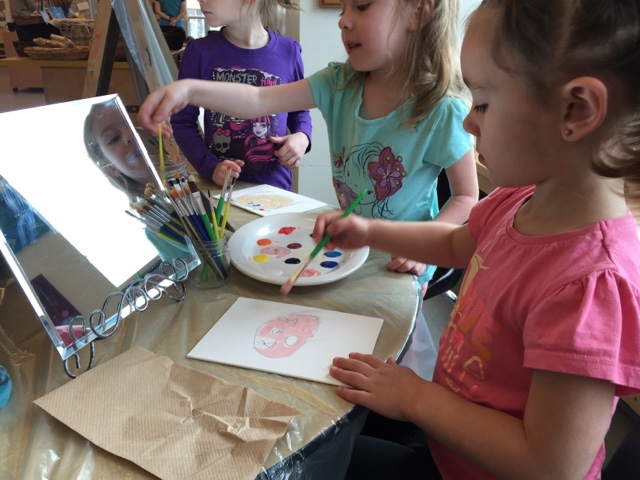
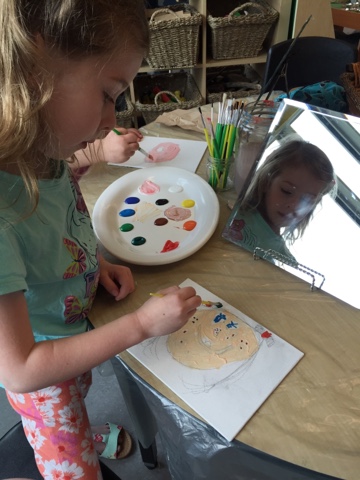
In our classroom we love using the power of observation and the language of art to share our ideas with others. This week we encouraged the children to visit the art area in order to paint a self-portrait to hang over their cubbies. We placed a large mirror at the table along with a variety of paint brushes and acrylics. Some children drew a pencil sketch on the canvas first and then painted over while others painted freely.


The children's attention to detail was inspiring; they noticed the shade of their skin, shape of their face, length of their hair, and even what expression they should be wearing in the painting.


They took their time studying the uniqueness of their reflection and representing their individuality and personality in the self-portrait. It was interesting to watch the artist work; behind him or her were a few admirers watching the process and waiting patiently for their turn to paint. The conversations were low and focused as the artist's work was admired and decisions were made as to which colours they would be using for their piece.


The paintings were hung over each cubby along with a new, framed photo of each child.


We hoped to honour each child's individuality and spirit through the use of photography and paint. We think the results are simply stunning! Check out this new display next time you visit our room!


Wednesday, November 25, 2015

Generating Wordles with Grade 8 Technology Buddies

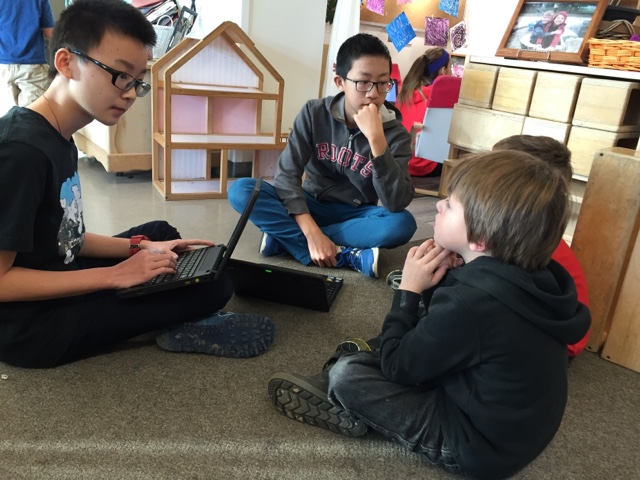
Wordles are 'word clouds' and are a great way to capture a lot of information on a subject in an aesthetic way. Today we met with the Grade 8 class to do some partnered technology work. Each kindergarten child shared what he or she loved about school and their Grade 8 buddy used this information to generate a personalized wordle. The Grade 8 prompted the kindergarten child by asking thoughtful questions about school in order to promote reflection and rich oral language.


Here are a few examples of the completed Wordles. It was amazing to review these with the children and see what they loved about school! Copies will be coming home shortly - why don't you consider engaging your child is a discussion about how they created the Wordle and what their favourite parts of school are?


Wednesday, December 4, 2013

Self Portraits

Today we read the big book " In The Mirror" during shared reading time. 


We thought it would be interesting to set up an art provocation for the children and ask them to consider what they saw in their mirror.  


The children were very eager to participate and took some time examining their reflections. This lead to some great conversations about facial features and expressions. 


The children had to carefully select the pastels that best represented their interpretation of what they observed. 


Their attention to detail and enthusiasm for the task were inspiring!


We can't wait to see what other portraits are drawn at this centre for the rest of the week!


Related Posts Plugin for WordPress, Blogger...