Showing posts with label documentation panels. Show all posts

Sunday, March 30, 2025

Overcome the Math Blahs to Reinvigorate Joyful Math Play and Learning

Looking for some professional development to help you refresh your math program using play and exploration? My next workshop is just for you! Join me with Early Childhood Investigation Webinars on April 16 at 2 pm Eastern Time. 


 Workshop description:

Do you feel less confident or enthusiastic about incorporating math experiences into your early childhood program? If so, you’re not alone! Many early educators feel more comfortable teaching language and literacy than math. This hesitation may stem from your own experiences as a young learner.

If you’re looking for inspiration to bring joyful math moments into children’s play and make this learning visible to families, this webinar is for you! Young children are curious about Math-related concepts and Math connects to every aspect of a developmentally appropriate practice in early learning. In this idea-filled session presented by experienced educator, researcher, and writer Deanna Pecaski McLennan, we’ll reimagine what math looks like in early childhood. You will explore ways to reinvigorate your practice with hands-on, integrated activities that excite and engage young learners based on Deanna’s real-life examples from her kindergarten classroom.

Discover how to create invitations for young children to explore math through art, literacy, and outdoor play. We’ll focus on designing learning spaces where children see themselves as mathematical thinkers, valuing their ideas in meaningful and authentic ways. Drawing from her extensive experience and her books, Deanna will inspire you to approach math with curiosity, take risks, experiment with new strategies, observe deeply, and collaborate with children as co-learners. Let’s transform the way we think about early math together!

In this workshop you will:

  • reflect upon your definition of math and where it can be found in the early childhood classroom
  • explore stories, vignettes, and photos illustrating how educators can develop learning environments that foster curiosity and wonder in mathematics
  • gather practical and easy to implement suggestions for how to invite children to engage in mathematical play throughout the day
  • learn ways to document children’s experiences to make math learning visible to families and the greater community

Monday, February 27, 2017

Emergent Learning in the Early Years: Digital and Deliberate

On Thursday, February 9 I had the pleasure of being invited along with Jocelyne Brent to present "Emergent Learning in the Early Years: Digital and Deliberate" for TVO. In this webinar I shared the many ways we purposefully use technology to support, extend, document, and share the inquiries happening in our classroom. For those of you interested, you can view the webinar here:

https://youtu.be/SkwumPSkG3w


For easy location here are some links to the top technologies that I use in our classroom to support play, inquiry, communication and documentation. Click on the title to access links to various blog posts that further describe the technology and how we use it in our classroom.

1.  Children documenting their own learning using iPads.

2.  Using time lapse photography as a documentation tool.

3.  Creating digital documentation panels using iMovie.

4.  Encouraging digital community and voice using Padlet.

5.  The versatility of QR codes to inspire, research, document and share.

6.  Unplugged coding!

7.  Going old school with overhead projectors.

8.  Why Blog?

9.  Technology Buddies and Wordles

10. The Power of Twitter in the Classroom


Monday, November 12, 2012

Speech Bubble Writing

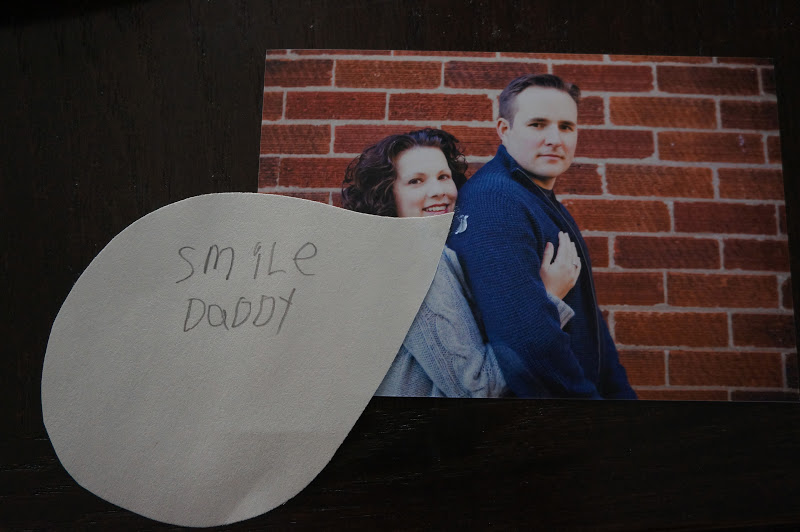
If you're like me, you have hundreds of printed photos with no real purpose. I usually keep them in a large box and the kids like to go through them once in a while. This past weekend we decided to use them as motivation for writing. 

Each child went through and chose their favourites.


Using a pre-cut 'speech bubble', Cadence wrote what she thought the person in the photo might be saying. It was a great mini lesson on what speech bubbles are, what the context of a picture is (the people, setting, activities, etc.), and what a good statement might be. We discussed how some statements might be factual to help describe the picture, and others might be fictional and meant to entertain.


I loved reading what Cadence decided to write for each picture!


Caleb did some writing too!


In addition to being a fun way to use up old photos and encourage writing, teachers who use photos for assessment purposes might consider using speech bubble writing to help children reflect upon their activities in photos, and then add these to children's portfolios or a documentation panel in the classroom.
Related Posts Plugin for WordPress, Blogger...