“Every morning you have two choices: continue to sleep with your dreams, or wake up and chase them.”
I am a Reggio Emilia inspired Full Day Kindergarten teacher and mother to three young children. This blog is meant as a communication tool for the families of our children and as a learning tool for the many educators who follow us. Please feel free to comment on posts and participate in our collective understanding of emergent curriculum.
Sunday, July 24, 2022
A Writer's Dream Come True
Saturday, May 21, 2022
Daily Math Talks with Young Children
“Mathematics is a very broad and multidimensional subject that
requires reasoning, creativity, connection making, and interpretation of
methods; it is a set of ideas that helps illuminate the world; and it
is constantly changing.”
―
Jo Boaler
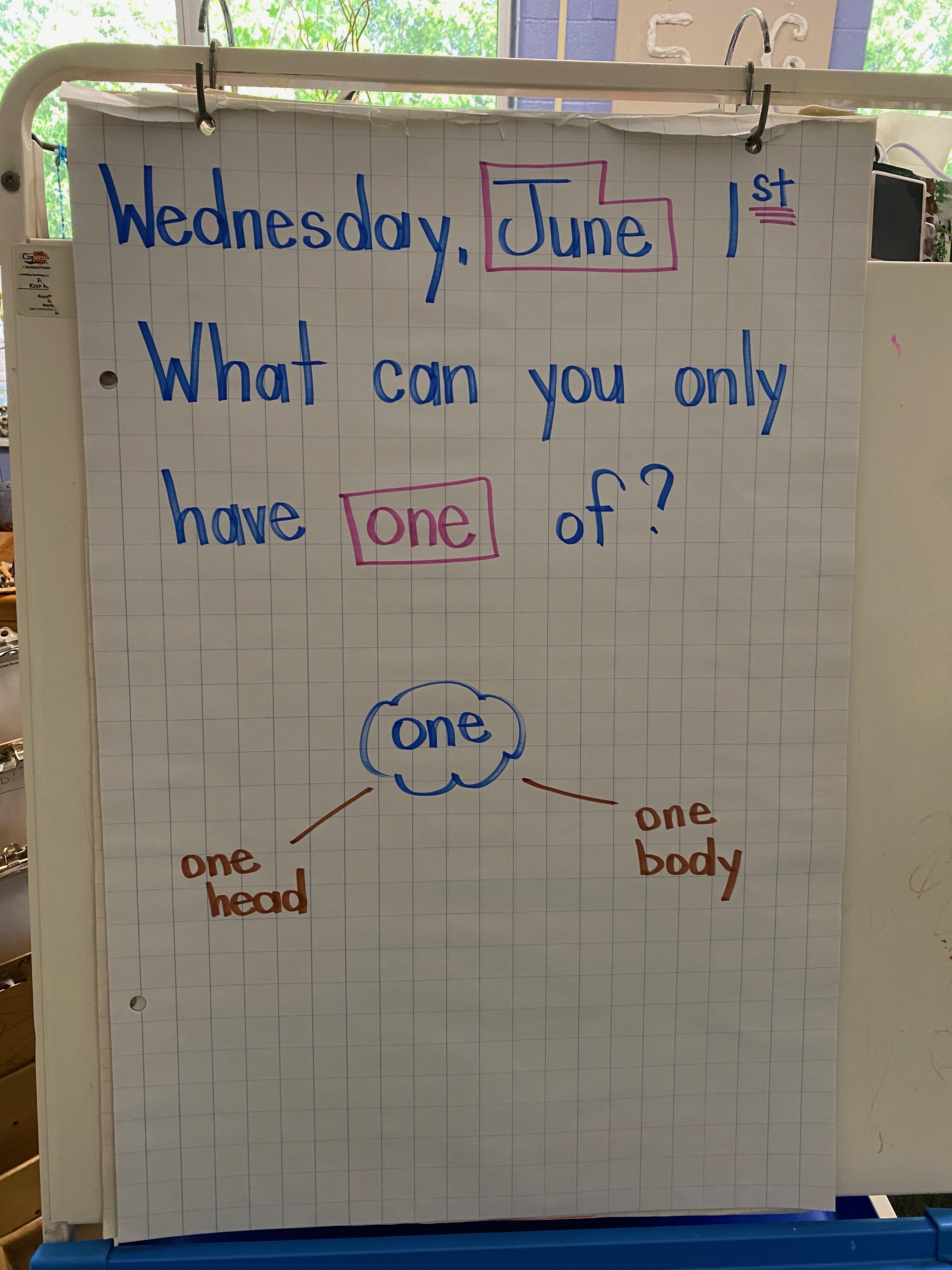
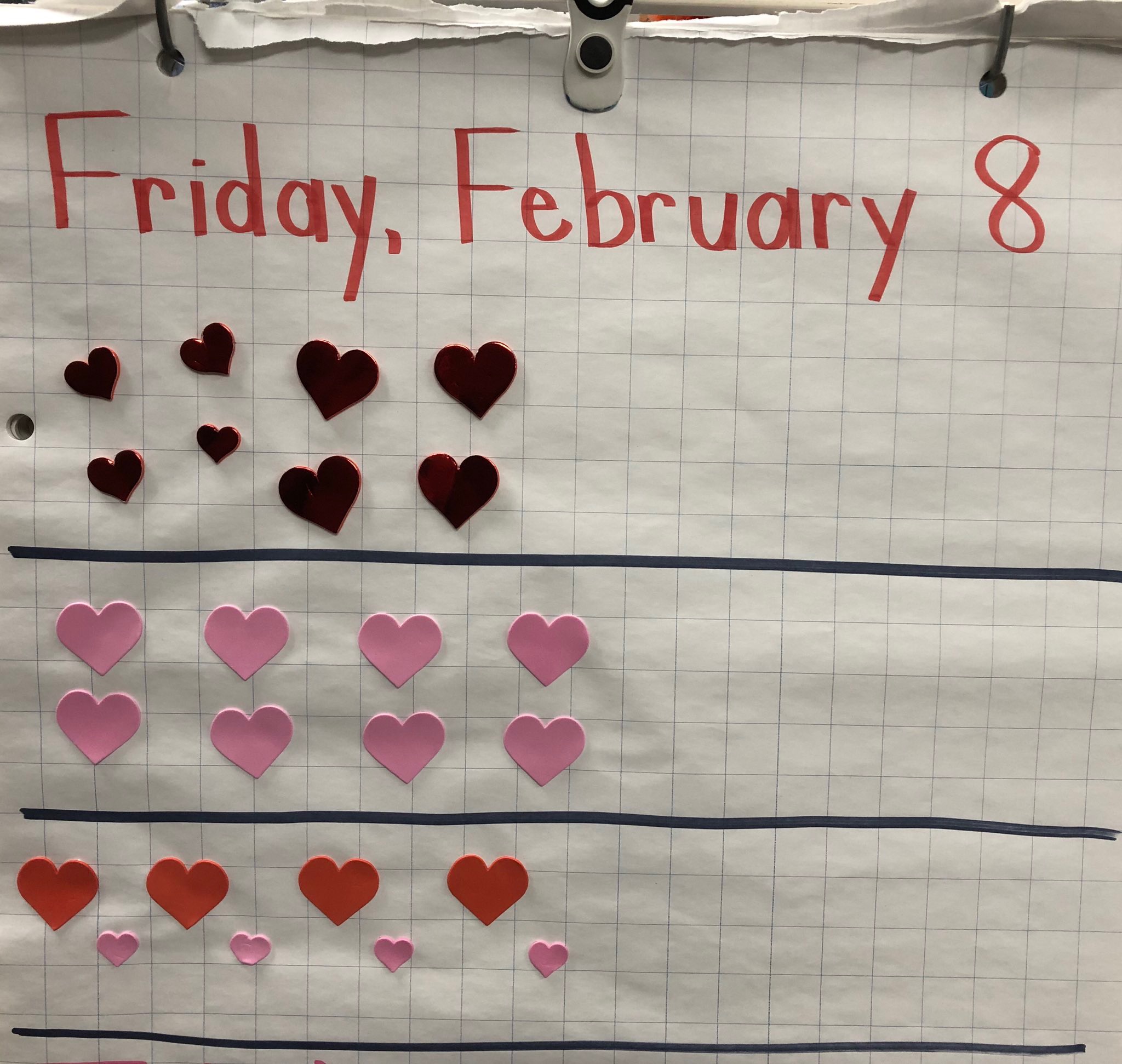
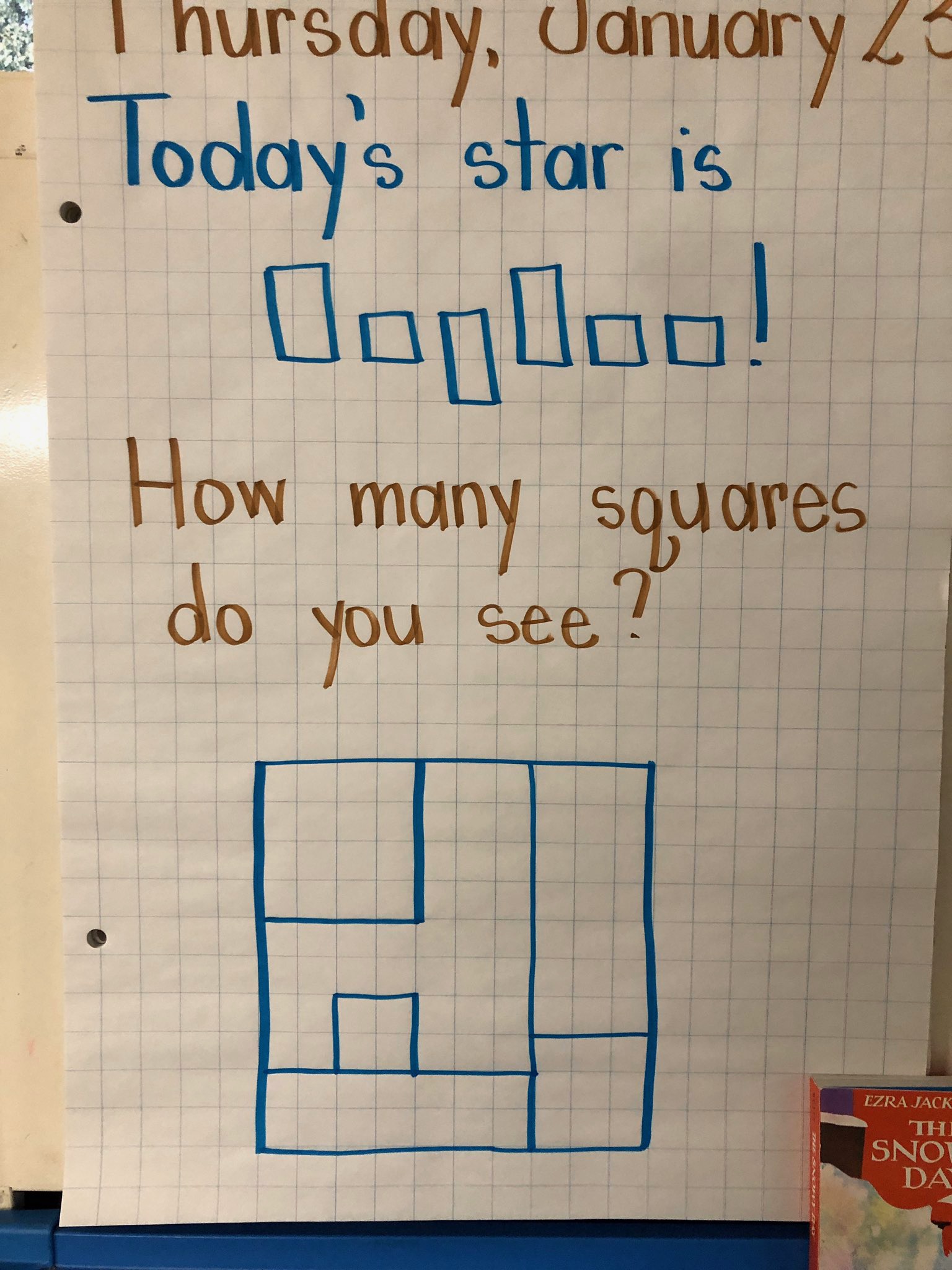
Math talks are a great way to engage children in open-ended explorations that invite them to think critically and creatively about a concept. An effective math prompt to facilitate a rich math discussion will be layered; it should be open-ended with multiple entry points for engagement. Even children as young as kindergarten are capable of participating in complex math conversations. In our classroom I aim to invite children into a math talk at least once a day; I sometimes use the numerical date on our morning message as the spark for exploration. Other times an interesting photo or collection of loose parts will be engaging and incite children into further exploration. I try to vary the invitations I provide in order to diversify the math we discuss and to reach as many learning interests as possible.
Recently I posted two Instagram Reels regarding our daily math talks that has generated many questions regarding how we engage young children in robust discussions about math each morning. There was much interest in these math prompts and many educators reached out with questions regarding how I create these prompts.
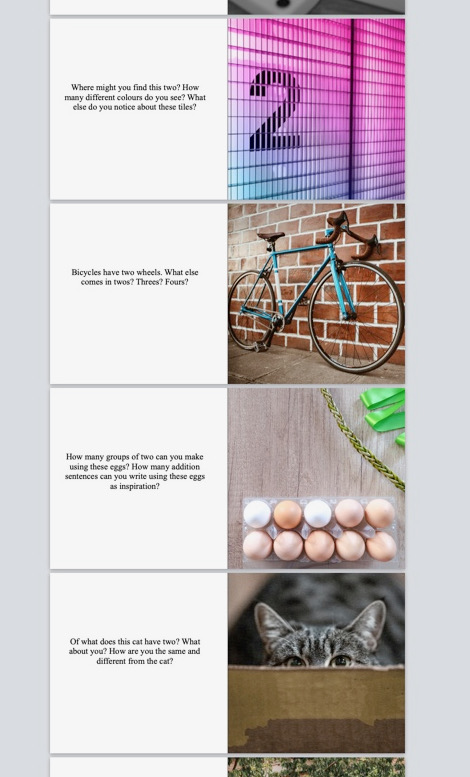
To help support educators who are interested in starting daily math talks with children, I have published a book called Calendar Math: Daily Prompts for Math Explorations with Children.
To help give an idea of what this book is about, and to help educators create their own math prompts, here are the first few pages of the book!
Thursday, April 28, 2022
The Wonder of Trees
"Between every two pines is
a doorway to a new world."
John Muir
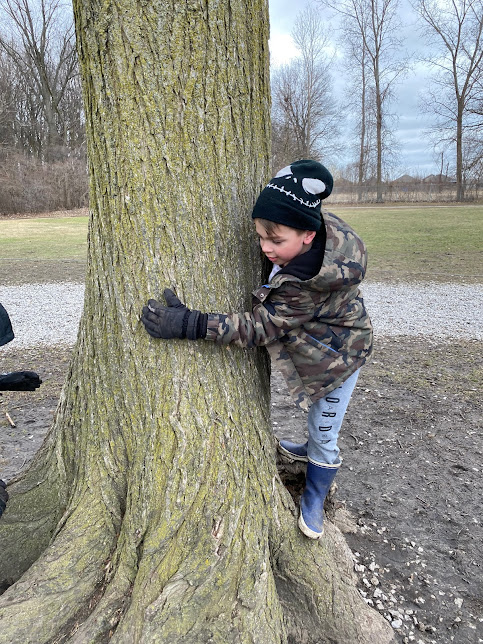
"Look at me!" Kyle called as he stood on his tiptoes. "I can reach so high. If I jump I can reach even higher!"
"That's nothing. I bet I can reach higher," Asher responded.
"Ok, let's see you do it!" Kyle laughed. "I can reach this high." He jumped and slapped a spot on the tree.
Asher copied the movements, jumping and tapping the tree in a different place.
"Who was higher?" they called to me.
"I'm not sure," I answered. "It's hard to tell where you each touched and compare the spots. You'll have to think of a way to mark and measure to be accurate."
Harper had been standing next to me watching the boys.
"I know," she said. "What if you each hold a piece of chalk in your hand. When you jump you can touch the tree and leave a mark."
"Oh good idea!" I answered. "And we can check our wonder wagon to see if we have any tools that measure."
"Like a measuring stick!" Harper answered.
Spending time outside in nature each day is important for children's growth and development. There is a misconception that a robust outdoor program needs numerous tools and materials in order to be successful. However in my practice I have found that often the best inquiries spark from examining and exploring natural elements in our play yard. One of the most intriguing artifacts that children love to explore is a tree. Trees are usually easy to find, diverse, and offer endless possibilities for child-centred inquiry. Responding to children's observations and wonderings about trees can inspire rich math, literacy and science work.
Interested in exploring the trees in your surroundings with children? Here are some ideas for getting started.
Tell stories about the interesting markings you find on trees. Children love to hypothesize about unique things. Ask children to imagine how a spot ended upon a tree, or look for the math within the markings (here the knot on the tree appears to be made from concentric circles).
Explore the different textures you feel on trees. Many children are sensory learners who enjoy exploring their surroundings through touch. Encourage children to feel different parts of a tree (e.g., bark, leaves, blossoms) and describe what they feel. Sensations can be categorized and sorted (e.g., making a pile of smooth leaves).
Research the different objects that grow on trees. The life cycle of trees often results in the creation of flowers and fruit. This growth pattern can be observed and tracked over time.
Inquire about what living things make their homes in trees. Each area is unique with specific animals and insects using trees as shelters. Nests can be observed and described (e.g., a robin's nest is perfectly circular). Children can be encouraged to draw pictures detailing what they see.
Hypothesize the age of a tree using different clues. The rings on a stump can help determine the age of a tree as well as its type and size. Look for stumps and ask children to count as many of the concentric circles as they can see. They can estimate the age of the tree. If a tree is still standing children can estimate how tall or old it might be.
Build gross motor skills and perseverance by climbing trees. Building resiliency, grit and perseverance helps children in all aspects of their learning. Climbing trees encourages these skills as well as being a great physical experience that many children enjoy.
Investigate how trees change over time by exploring decomposition. Logs left over time provide a wonderful opportunity for children to become curious about how it has transitioned from tree to rotting wood. Many insects make their homes in and under logs. Ask children to tell stories about what they think might have happened to fell the tree, or investigate who has been using it as shelter.
Search for clues on the tree to guess who might have visited before you. Holes in the bark can tell stories of what animals have been searching for food in the bark, or using the tree as shelter. Children can observe bark for changes over time and conduct research.
Ponder why some trees stay green all year while others lose their leaves. Coniferous trees do not usually drop their needles. Ask children to describe and categorize the trees in the yard or neighbourhood, and observe them over the course of several weeks or months.
.jpeg)
Monday, January 10, 2022
Stand Up Sit Down
Due to the great feedback I've received I have turned the 'Stand Up Sit Down' slides into a video that educators can use in their physical or virtual classrooms. This fun activity can be an icebreaker for a new group of students, a minds-on activity before a main lesson, or used during transition times.
Check it out on YouTube: Stand Up Sit Down
See, Think, and Wonder Math Routine Using Videos
Math is all around us! As an educator I love helping children discover the authentic ways we use math in our everyday lives! As children recognize the integrated, meaningful ways math helps our world work, their interest and confidence in the subject will grow. Exploring the authentic math that exists in our surroundings may help nurture children’s interest and confidence, building a strong foundation for subsequent experiences.
The ‘see, think, and wonder’ routine is a specific sequence of steps that guides children’s thinking regarding a specific observation. Children first describe what they see, focusing on their power of observation. Next, they interpret these observations and articulate connections to what they have seen. Finally, they share a question or wondering about the object in order to guide their future thinking work.
The 'Winter Day - See, Think and Wonder' video can be used in physical or virtual learning spaces to help facilitate math conversations. At first children can be invited to carefully observe each photo and share what they see. Ask children to use rich description as they articulate their observations. Next, ask children to make personal connections to the information presented in the text and photos. They can articulate what they think about the question prompts in the text, or make inferences about the information shared in the photos. Finally, ask children to share what they wonder about the text and photos. Educators can pause the video at any point to give children more time to engage in math conversation about their observations and wonderings.
As children engage in conversation, reflect upon their ideas. What are children curious about? What do they notice in the foreground, and background of each photo? What connections can they make to the video? What experiences do they have that relate to the objects or situations being presented? Is there something they are interested in learning further? How might they go about conducting mathematical research if they have access to these objects or scenarios in real life? What knowledge do they need to have in order to research their question? What tools and supports might help them in their quest? How can they share their findings with others?
After the children have explored the video, consider asking them to co-create their own version of the media in the form of a 'See, Think, and Wonder' class book. Children can illustrate pictures and write their own narratives. Invite children to look around their homes and communities for other seasonal situations to explore. Perhaps children can digitally document what they find and add these to their own Winter Day book. Images can also be gathered and shared in a video form. The possibilities are as endless as the questions children ask.
Saturday, January 8, 2022
Math-ercise Videos
Interactive videos can be a great way to engage children in virtual learning spaces, or can be used in the physical classroom as warm ups to lessons, during transition times, or even during lunch times when children are finished eating (especially during Covid when only half the children can be eating at once and the other half of the class requires something to work on).
I have created some simple math-ercise videos that educators and families can use to help engage children in exploring math concepts. These ask children to look at a math equation and complete the exercise that corresponds to the answer they feel is correct. Children complete the exercise for 20 seconds and then get 5 seconds of rest as the correct answer is displayed. I feel that the physical nature of the videos will be engaging for children and add a kinesthetic feature to math learning. Videos can be paused and mini number talks can occur if educators wish.
The first video explores adding to 10.
Math-ercise Workout - Adding up to 10
The second video explores adding to 20.
I will continue to create videos and add them to this blog post over time. I am hoping to explore subtraction, multiplication and division facts.
Educators may wish to create their own videos/presentations to explore other math concepts (e.g., number patterns, doubles).
Get a copy of the files here to use at your own pace in your physical or virtual classroom. This gives you the option to pause the power point and explore each slide or personalize it to best meet the needs of your students. Music and transition times are embedded within the presentation so all educators need to do is change the equations and answers on each slide. Playing the presentation should run it without the need to manually forward each slide.
This version is not animated: PDF Math-ercise File
Get a copy of the Power Point file here: PPTX Math-ercise File.
Get a copy of the Google Slides file here: Google Slides Math-ercise File
Feel free to share with others! Feedback in the comments always appreciated!
Wednesday, January 5, 2022
Stand Up Sit Down
Here is a fun activity to get children moving as they respond to a prompt. Look at the photo and respond to the 'stand up if you..." prompt accordingly. Children can then create their own statements for their peers to consider. Providing time for children to reflect upon and discuss their ideas regarding the stand up/sit down prompts can encourage rich oral language as children consider the photos and verbal prompts and make connections to their own lives and experience.


.jpeg)
.jpeg)
.jpeg)


.jpeg)
.jpeg)
.jpeg)
.jpeg)
.jpeg)


.jpeg)
.jpeg)

.jpeg)