Thursday, November 10, 2022

Enjoying Books Longer

 "Books are a uniquely portable magic."

Stephen King

As an educator I have dozens of favourite books. I love sharing a wonderful text with children during whole group meetings. It's enchanting to become lost in the story with them, and discover parts of the text that I might not have noticed before. Children are careful observers! They point out aspects of books that I have missed even though the books are worn and well loved...small details in the illustrations, joyful narrative, and connections to the world around us. With each reading the book becomes more special and I feel a deeper understanding of what the author and illustrator might have been trying to convey in their telling of the story. 

Because I have so many favourite books I used to treat them like fast food - rushing through text after text and not usually spending more than a day on each. However I have realized that reading books with children is like enjoying a five course meal - better slowly savoured and attuned to the overall experience. This year my goal was to read one book for at least a week - usually one reading per day. I was worried that the children might become bored but after a few months of using this strategy I have noticed the opposite happen. Children are extremely engaged and our conversations about the story tend to deepen each day. I feel like we are learning so much more. Each reading I tend to focus on a different element of the book - listening comprehension, careful attention to the illustrations, a review of new and interesting vocabulary, connections to other books we have read and questions the children might have that need further attention. We have also looked for other versions of the stories (e.g., animated videos, poems, songs) and compared these to the original. Children have been eager to retell the stories in the drama center and sensory tables, and families have been reviewing and reading versions of the texts at home too. Overall it's been an incredibly positive experience. 

I've also noticed that:

~with each subsequent reading children become more familiar with the story and confident sharing their ideas in our discussions

~over the course of the week the children's interest in the characters and understanding of the plot seems to deepen and grow

~children ask richer questions and make more significant connections as they gather more information from the book with each new reading

~as familiarity with new vocabulary grows children appear more comfortable using the words in other learning opportunities

~many children thrive with comfortable routines and hearing a story over and over is reassuring to them, especially first thing in the morning

~with each reading we are able to explore concepts of print more fully (e.g., speech bubbles, the shape and size of fonts)

~we have noticed that the front and back covers and end pages also offer opportunities to make connections and ask questions

~enjoying the text together with children is a bonding moment as we enjoy a special book together

~ often the books lead to some pretty interesting inquiries that extend beyond whole group that the children enjoy researching further

~this approach gives me more time to differentiate experiences related to the text to meet the needs of learners

~children often notice and wonder about math and science questions that are teased from the book with each discussion

I'm excited to continue with this reading strategy and see how far we travel!

Sunday, October 23, 2022

Mother Nature as Mathematician: Learning Outdoors without Commercial Materials

“In every walk with nature, one receives far more than he seeks.”

John Muir


In our program we spend at least one hour outside each day exploring our play yard and interacting with nature rain or shine (excluding dangerous weather). Although we are fortunate to have an ample collection of materials to use, there are many days that we bring nothing extra outdoors with us. We ask children to interact with the world around them and spend time immersed in nature. Challenged to create play opportunities using only natural elements encourages children to pay close attention to what the world offers and they often wonder about objects and phenomena that they might not otherwise have noticed (e.g., the strength of the wind, an interesting insect, the size of leaves). It's also a great way to encourage children to become resourceful and use their imaginations. In land-based learning knowledge is shared and a respect for nature is encouraged.

 
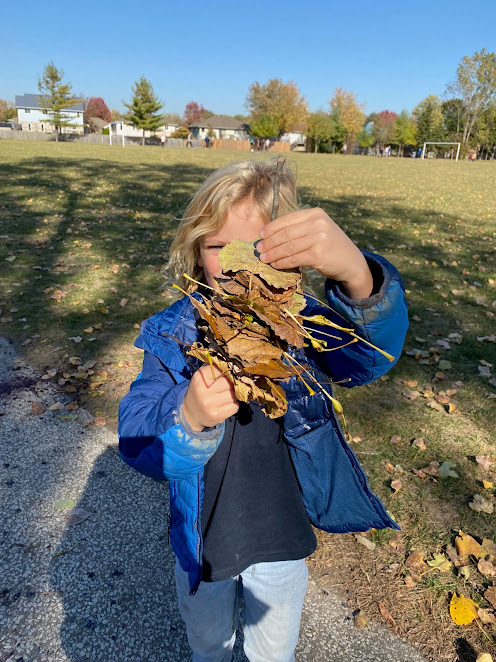
Curious about the size and colours of leaves, the children were encouraged to gather a leaf collection on a stick. This helped them practice fine motor skills and they were eager to quantify the leaves they collected.
 
Much of what the children discover is mathematical. Mother Nature tends to be a beautiful mathematician offering a variety of sizes, shapes and patterns in natural objects. Children are curious as they describe, classify and sort what they find into collections. How many times have you found an assortment of rocks in a child's pocket? Being outdoors without toys also facilitates amazing risky play and children are eager to quantify their achievements (e.g., how fast/high/far can my body move compared to my friend's?). Risky play is an amazing way to encourage math learning in kids (see this post for more information). 
 
I'm often asked by others how children become so attuned with their surroundings and invested in their work in the natural world. I believe that it is because we spend so much time outdoors that children are so immersed and excited. As educators we act as play partners with the children and explore together. We use a 'notice and wonder' thinking routine where we think aloud about something we are curious about (e.g., "I see the leaves swirling in a circle on the pavement. I wonder what is causing them to move that way.") and model for children how we might go about exploring this further (e.g., "I think I'm going to record what I see using my device so I can watch the leaves moving again and think about why this is happening."). I also really enjoy standing away from children and just listening to their observations and theories about the world around them. The things they notice, and the questions they ask, provoke some of the deepest math learning experienced in our program. Children are deeply invested in their work. 
 
Since children become so aware of their surroundings, they are often quick to notice changes. The landscape evolves as the weather and seasons shift and these patterns offer many mathematical learning opportunities. Knowing the land so well also means that children become invested in caring for it and understanding how and why we need to be sustainable learners. 

The children were proud of their abilities to balance on a wiggly log. They decided to count as they stood on it, and see if they could beat their 'time' with each subsequent try.

 After finding a pair of ladybugs in the grass the children created a 'home' for them using natural loose parts. Interesting discussion occurred regarding what the ladybugs would need in their home, and what size would be best for each feature (e.g., bed, kitchen).

 The children enjoyed picking dandelions one spring day. We challenged them to see who could find the longest and shortest stems. Without measuring tools the children had to figure out how to fairly measure each stem. 

Although we are lucky to have a lovely, large play yard to use, exploring nature can happen anywhere. Even a puddle has the potential to spark children's imaginations and facilitate rich discovery and discussion. If your space is limited, consider going on nature walks around the community in which your school is located. Perhaps a trail or garden can be visited nearby. Field trips are also a fun option (e.g., orchard, farm). Bringing natural objects into the classroom is another way to help children connect with nature (e.g., pumpkins, sticks, acorns) and continue their explorations after outdoor time has ended.
 The children marvelled at the circumference of the large trees located near our school. We asked them how they might measure and compare the trunks in order to find the largest one.

 After making snowballs on a winter day the children thought it would be fun to see how many they could stack inside angled branches of a tree.

 
Prints in the snow always spark rich conversation about who (or what) might have visited the yard. 

 
Dew drops on a web discovered early one morning led to fascinating theories about how strong a web must be. 

 
Finding fossilized rocks and identifying shapes and patterns leads to some great imaginative thinking about what might have lived within the rock long ago.
 
Some tips for getting started:
  • Learn more about your local habitat so that you can facilitate discussions with children regarding interesting objects and events that occur in your area (e.g., native plants, migration patterns).
  • Go on guided walks to help children practice using their senses to observe the world around them. Scavenger hunts focused on the senses can be fun and spark inquiries (e.g., listening walks, bird hunts).
  • Start collections of objects found outdoors that can be displayed in classroom (e.g., feathers, seeds, dried flowers).
  • Provide challenges for children that will help them interact with natural materials (e.g., Can you build a house for the ladybug? Can you find and order ten sticks from largest to smallest?).
  • Use tech to support your work outdoors. There are many great apps that can help you identify leaves and insects. Posting ideas and questions on social media can facilitate discussions with others from different areas.
  • Take photos and videos of children's work outdoors and share this for reflection during a consolidation circle. Use the discussion to help spark future work outdoors (e.g., Today we found many flower patterns in the garden. I wonder if there are patterns on other living things in our yard.).  
It's rare that we don't visit the outdoor space. On the days when it is too stormy or cold to head out, we often find children watching the outside world through the windows. In a time when children may suffer from a Vitamin N(ature) deficit, spending unstructured time outdoors without the distraction of toys or teacher-prepared materials may spark a deep love of nature and facilitate rich math learning that would not be possible otherwise.

Sunday, September 25, 2022

Algebra in Kindergarten? Absolutely!

 "Pure mathematics is, in its way, the poetry of logical ideas."

Albert Einstein

 
When you think about algebra you might have memories of sitting in a high school math class, searching for unknown values in linear and quadratic equations. Those long ago math courses may seem far removed from today's kindergarten classrooms but did you know that it is essential for educators to promote algebraic reasoning in early childhood education?

I devoured the most recent issue of Young Children (Volume 77, Number 3), especially the article Promoting Algebraic Reasoning in the Early Years by Lindsey Perry. 

In her work Perry advocates for algebra in early math programs that explore two main ideas: composition and decomposition of numbers and properties of operations. According to Perry (2022) algebraic reasoning "involves seeing and describing patterns and relationships between quantities that may be unknown...which builds upon students' understanding of patterns and relationships with known quantities and values" (pg. 17). Perry posits that if children can observe and describe number relationships they can begin to symbolically represent relationships between numbers. 

Composition and Decomposition of Numbers

When children compose they understand that a number can be put together using its parts (e.g., 5 plus 5 equals 10). Decomposition is the opposite where a number can be broken apart in different ways (e.g., 10 can be broken into 8 and 2 or 7 and 3). When children compose and decompose numbers they understand how to manipulate numbers in different ways, which helps them become flexible when solving calculations. For example mentally adding 68 + 22 can become easier when children realize that the ones values total 10 and then add this to the tens value (10 + 60 + 20). Adding 68 plus 22 is the same as adding 10 plus 60 plus 20 but the second strategy may be easier to mentally calculate for many people.

Properties of Operations

Properties of operations encourage children to work flexibly with numbers in order to recognize and manipulate their relationships. This helps them simply calculations in order to more efficiently and accurately solve them. For example the order of addends (numbers added together) does not matter in order to arrive at a sum. 

a + b = b + a 

6 + 4 = 4 + a therefore a must be 6.

The commutative property applies to addition and multiplication. The order of numbers can be switched and it does not change the answer of the operation.

2 + 7 = 9 and 7 + 2 = 9

4 x 5 = 20 and 5 x 4 = 20

The inversion property states that all integers have an inverse number that when added equal zero. 

3 + (-3) = 0

Although complicated young children can play with inversion when they become interested in, and work flexibly with equations.

3 + 2 - 2 = 3

So how can early childhood educators encourage children to participate in activities that promote early algebra? Here are some simple activities that can be used regularly to build children's confidence, ability and interest in number sense.

Equation Line


Provide children with a variety of subitizing cards and math symbols (addition sign, subtraction sign, equal sign). Encourage children to arrange the cards in different ways in order to create equivalencies.

 Make 5 (or 10)

Show children a total number of cubes (starting with 5 and then 10 is helpful). Hide the cubes behind your back and remove some. Show children the remaining number of cubes and encourage them to calculate how many are hiding.

Singing Songs with a Five/Ten Frame

When singing popular songs and finger plays with children (e.g., 5 Little Monkeys, 10 in the Bed) add a five or ten frame as a visual and manipulate the number of counters in the frame to match the number being sang. 

Counting Beads

   
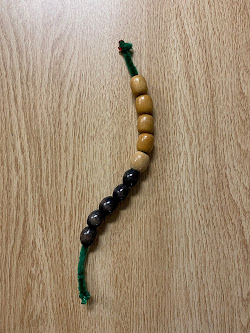
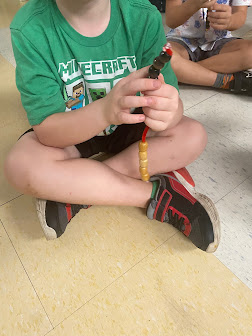
A string of counting beads can easily be made using two colours of wooden beads secured on a pipe cleaner. Encourage children to use these when playing number games or engaging in number talks.

Domino Sort

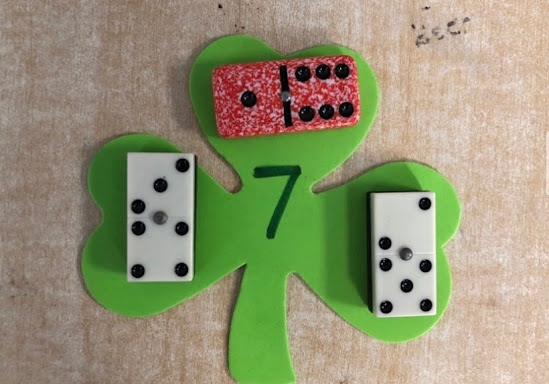
Provide a mat for children (here a foam shamrock has been used but any shape will work). Write numbers on individual mats. Encourage children to sort dominoes and match their quantities to the mats in order to represent the many different dot arrangements possible for each number.

Roll a Ring

 
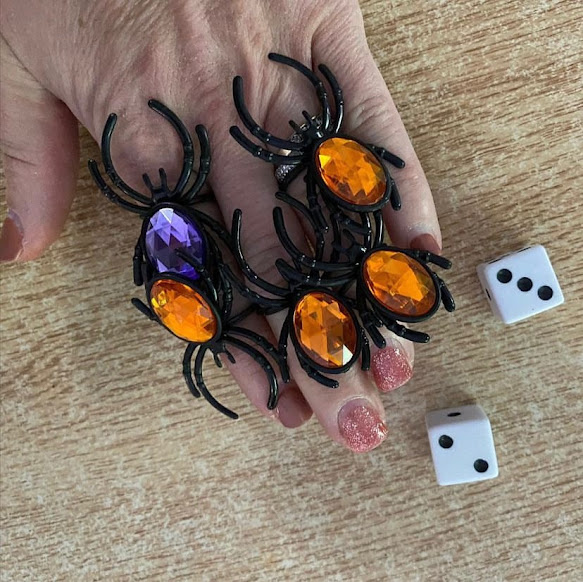
Seasonal rings are a fun tool to use in math games. Provide children with dice and encourage them to roll and add (or subtract) the numbers. Children can then wear the corresponding number of rings on their fingers. If two players play the game, they can each roll and wear rings and then compare hands to see who has more or less.

Name Equations

 
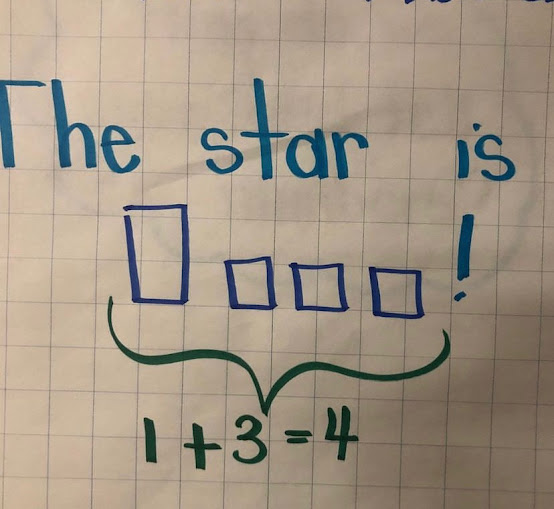
We enjoy representing children's names with boxes and encouraging them to think about the number, size and shape of the letters. These boxes are also fun to represent at equations so that children can play with their names and integrate a bit of math into literacy.

Calendar-based Number Talks


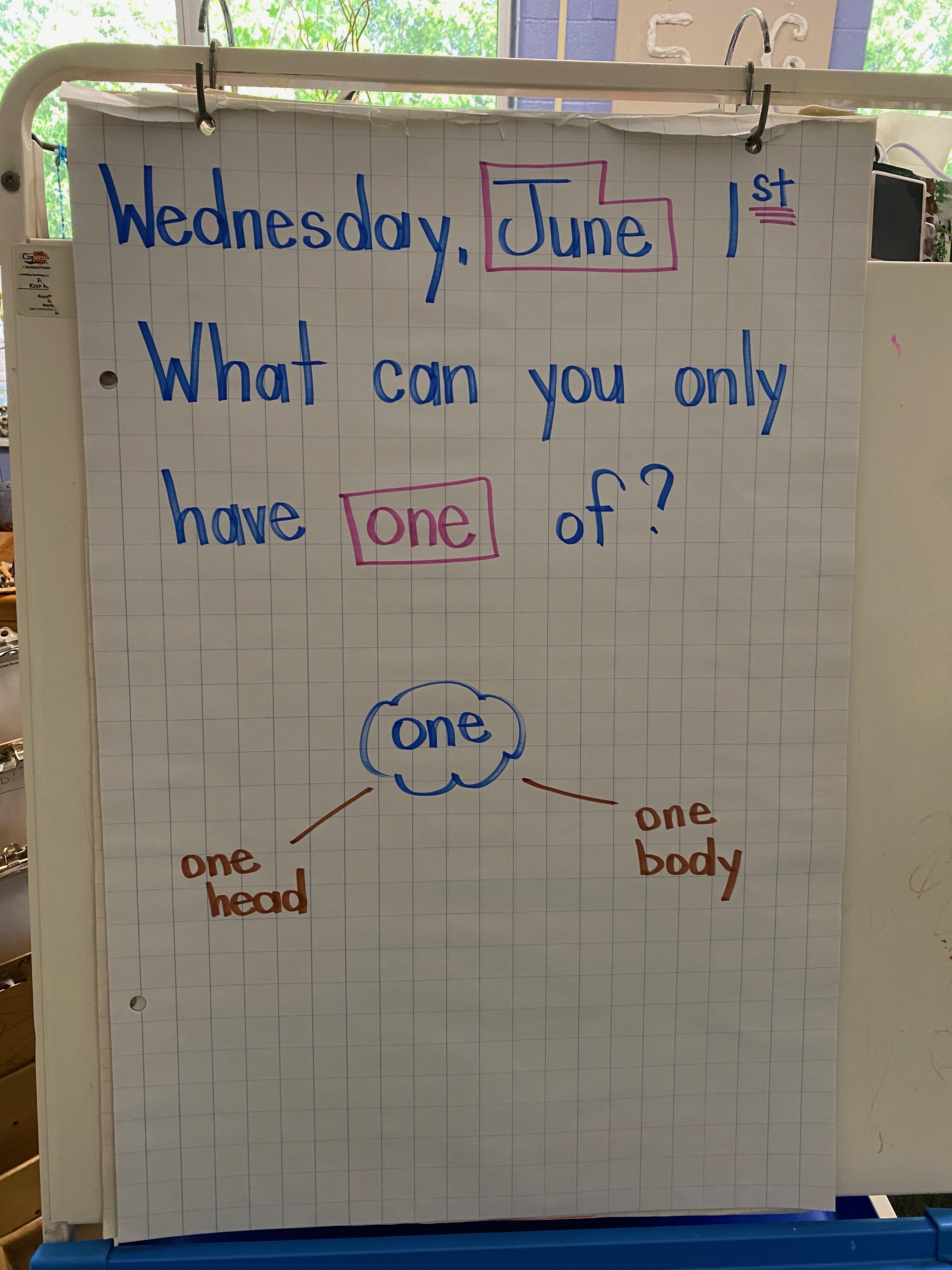
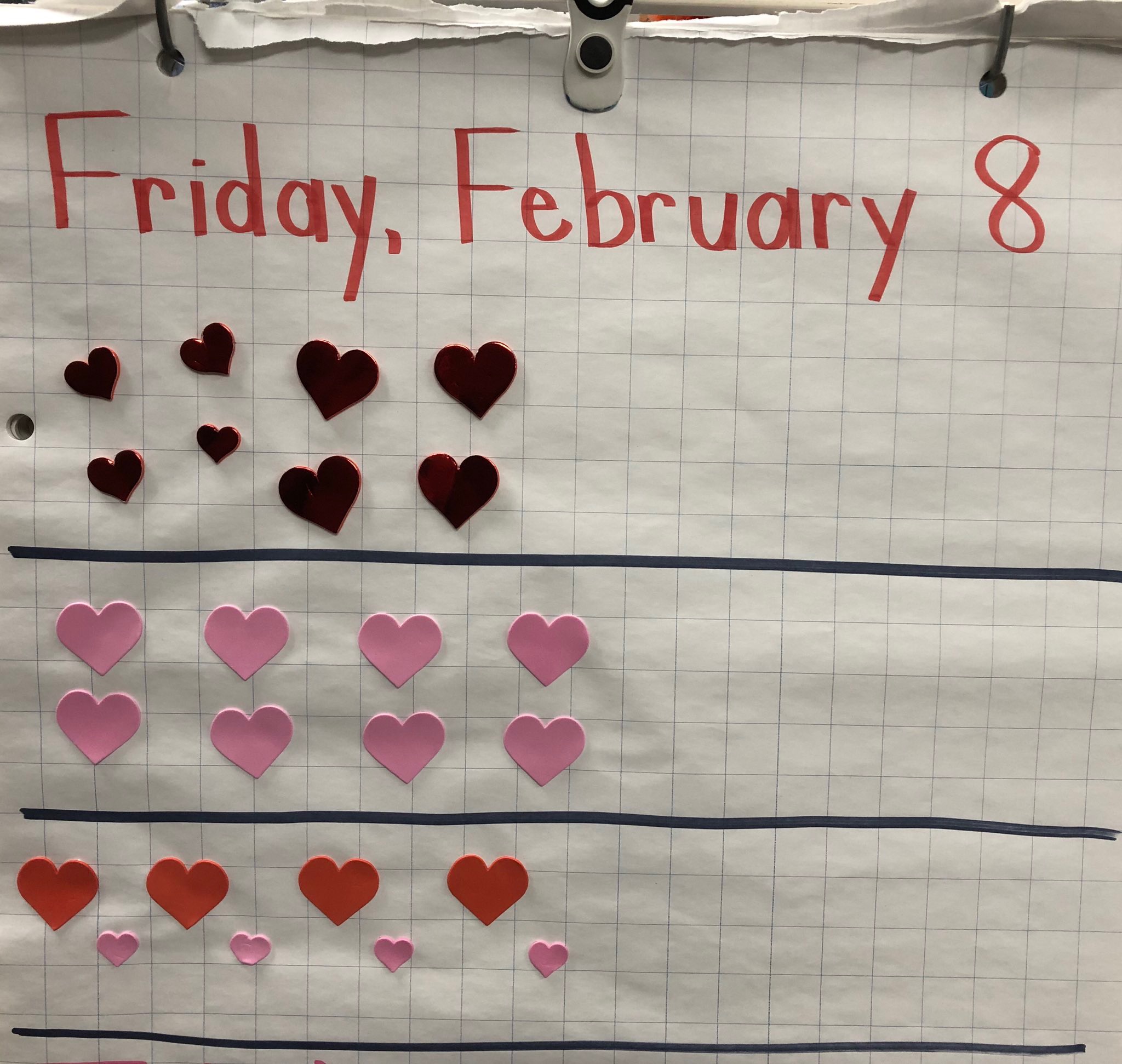
Morning message is a great time to encourage a daily number talk. We often represent the date in different ways (e.g., dice faces, dominoes, tallies, frames) and then encourage children to calculate the number by paying careful attention to the representations and operation signs used.

Which One Is Wrong?


Another favourite number talk is 'Which One is Wrong'. Different equations are displayed and children are challenged to explore each one using manipulatives (e.g., cubes, bead strings) to find the incorrect one. 

What other activities do you use to help children with early algebra? Let's connect on social media @McLennan1977!

Friday, September 2, 2022

Creating a Sensory Wall for Children

In our classroom we have a discovery area where children are invited to explore materials that focus specifically on the senses. We enjoy including resources that support exploration of light and colour (e.g., light table, sensory jars). Many loose parts are also in this area (e.g., stones, shells). The materials are stored on a small wooden shelf so they are easily accessible for children.

The shelf floats in the middle of the room as an anchor for the space. The back was covered in blue felt. We wanted to maximize all areas of this space and because there are many children with sensory needs in the class we decided to turn the felt area into a sensory wall.

The first step was to measure the space and plan out how the materials would fit together. I found this easiest to do on a flat working space. This way I could piece the material together like a puzzle and ensure they were diverse and interesting to explore.

Once I was satisfied with the way it looked I attached each piece to the felt wall using hot glue. I know that over time as children explore the pieces may fall off, but I am hopeful that I will be able to quickly and easily reattach them. I love how the sensory wall is low enough for all children to access. They will be able to sit and explore, or touch it while they walk by. The materials also match the colour scheme and decor in this calming space and do not stand out.

I found myself enjoying the materials and know that the children will too!

Tuesday, August 23, 2022

Documenting Children's Learning Using Instagram Reels

It was my absolute pleasure speak as keynote at the Canadian Early Mathematics Education Conference in quaint Kingston, Ontario on August 22, 2022. In addition to being able to stroll the downtown area and marvel at the beautiful campus of Queen's University, I meet many amazing educators who connected with me regarding early math learning, humbled me with kind comments about my work, and fascinated me with interesting questions regarding the teaching and learning of mathematics in the early years.


My presentation focused on sharing stories from my classroom in hopes of inspiring educators to consider how they might create opportunities for joyful math in all areas including art, literacy, the classroom environment, routines, and outdoor learning. I also shared information regarding the documentation I collect regarding math learning and how children can help co-create this documentation as part of assessment process. 


Throughout my presentation I shared many Instagram reels that I had created this past school year. These were often meant to be quick, easy and entertaining ways to make the learning visible for children, families and the community. I embedded the clips throughout the presentation to help highlight specific ways math could easily be integrated into other subject areas. I also spoke to how Instagram reels could be used as a form of documentation.

I was not surprised that the majority of conversations I had with educators after my presentation were regarding Instagram reels. Many people were curious to learn more. As a result I thought it might be helpful to blog about this and share the ideas beyond the conference.

There are many reasons why I would encourage any educator to consider creating reels as a form of communication regarding learning and special events happening in the classroom. I can think of many more, but here are my top ten:

1. Instagram reels are an engaging way to share information in a format that appeals to a viewer's senses and emotions. Catchy sound effects, music, text, stickers, hashtags and filters can be used to enhance photos and videos that help amplify the message you are hoping to send. In this reel I'm hoping to show in a humorous way how messy kindergarten children can get when exploring the outdoors, and that it's normal and healthy.

2. Instagram reels can help educators share best practices with others using social media, helping them reach beyond their immediate learning community and idea share with many others. I like to post reels that explain teaching strategies or that challenge traditional ideas or routines that others might be curious about. For example here is a reel that encourages educators to think beyond traditional 'calendar' during morning message.

3. Instagram reels can help explain the steps behind a specific activity so others can try it themselves. This way of explaining the process appeals to visual learners who would rather watch a video than read steps. The size of reels also mean that the instructions should be succinct. This reel explains how to create textured watercolours using simple materials.
4. Instagram reels can help educators unpack activities for families and the community so the learning can be made visible. This might be especially helpful for experiences that families might be unsure about including messy sensory experiences. I tried to use this reel to explain the rich learning that happens in mud play.
5. Instagram reels can help change a viewer's perception of a non-preferred subject or task. For example I try to use reels to show the beauty and wonder of mathematics because so many people still default to their negative experiences and consider it a cold and solitary experience. I want to portray math as beautiful and interconnected to nature and our everyday experiences. This reel shows a few examples of math integrated in areas of the classroom.
6. Instagram reels can be co-created with children and used as a form of communication to provide a summary of the week's experiences. They can very effectively replace weekly newsletters or bulletins meant to share news from the classroom. Children can suggest clips to include and educators can chose salient videos that highlight the rich learning that has occurred. This reel highlights some of the events that happened in one week in the spring.
7. Instagram reels can be used to give families and the community tours of the classroom and other school spaces. I have shared tours of my classroom during kindergarten registration when potential families are viewing the school, during Covid closures so families could virtually step into their children's learning space, and also as a way to share with other educators who might be looking for new ways of organizing their space. This reel is a flashback to a previous classroom I had in hopes the ideas sparked conversations and starting points for educators.
8. Instagram reels are a fun way to share a bit about yourself to your school community. I like to create a few personal ones that show my interests, pets and family in order to humanize me to my school community and make myself relatable. This definitely depends on one's comfort level to allow others to take a small step into your life and might not be for everyone. This reel was created on a sunny, lazy Sunday in my backyard.
9.  Instagram reels help educators connect with a 'professional learning community' or PLC. Use a rich wording when describing your work. Adding hashtags to your reel will also help audiences find your work as well as having it appear in the reels section of the app. It can be liked, shared or commented upon by others. Many times creating reels will help an educator connect with other like-minded people, and it's very enriching to view reels created by others. An Instagram PLC will provide endless opportunities for networking and collaboration! This reel piggybacked on a sound trend and was meant to show math in very different ways.
10. Instagram reels are a fun, creative outlet! I am always engrossed in creating these and love the challenge they provide. Involving students in their creation helps a class become producers and not just consumers of information. When co-creating and reflecting upon reels, children engage in digital documentation and can appreciate the depths of their work and understanding, and plan next steps for action. I love how this reel coordinates a fun song with the child's math game.
Tips to get started:
*find educators to follow on Instagram that work in your field, or share interests - use hashtags to help locate experts and other interesting people
*watch the reels stream in your Instagram wall - even though many of these videos are not related to education, they are entertaining and can spark ideas for your reel creation
*use up to 30 hashtags to describe your work - the more you use, the better viewers can locate your work
*capture as many videos and photos as you can in your classroom - you never know what might turn out to be interesting and important to include in a reel
*ask children to share ideas for photos and videos, or invite them to include their own work to make reels authentic and meaningful
*take photos and film videos vertically to make them fit properly into the Instagram formatting. Horizontal images and videos can still be used, but they have a large black frame around them which makes them appear small and harder to view
*use filters, stickers, locations, text, etc. to enhance your work
*jump on trends and modify them for educational use in order to help your reels be discovered by others
*reels (unless they have sound copyright or restrictions) can be saved to your phone or computer, and mashed with other tech - you can share these saved videos on twitter, in digital documentation programs like Edsby or Seesaw, or added to a blog (like I have here) to get the most out of your work

To see more of my reels and connect on Instagram please follow @McLennan1977!

Sunday, July 24, 2022

A Writer's Dream Come True

“Every morning you have two choices: continue to sleep with your dreams, or wake up and chase them.” 

For as long as I can remember I have always wanted to be an author. I dreamed of writing books that would inspire people. I especially hoped to help educators and children overcome their hesitations and fears regarding math learning, and view math as a beautiful and complex subject that could be discovered everywhere in the world around us.

It was with much excitement that my dream became reality. I was thrilled to publish multiple books regarding both math pedagogy and practice. I was thrilled to find out this summer that many of my books are now available through a favourite Canadian bookstore of mine - Indigo. Thank you to all of you who have helped to support my writing; from those who have proofread and given suggestions for improvement, to those who use the books in their classrooms each day - I am forever grateful!

You can find the books at Indigo here: https://bit.ly/3PSxBJu


Saturday, May 21, 2022

Daily Math Talks with Young Children

  “Mathematics is a very broad and multidimensional subject that requires reasoning, creativity, connection making, and interpretation of methods; it is a set of ideas that helps illuminate the world; and it is constantly changing.”
Jo Boaler

Math talks are a great way to engage children in open-ended explorations that invite them to think critically and creatively about a concept. An effective math prompt to facilitate a rich math discussion will be layered; it should be open-ended with multiple entry points for engagement. Even children as young as kindergarten are capable of participating in complex math conversations. In our classroom I aim to invite children into a math talk at least once a day; I sometimes use the numerical date on our morning message as the spark for exploration. Other times an interesting photo or collection of loose parts will be engaging and incite children into further exploration. I try to vary the invitations I provide in order to diversify the math we discuss and to reach as many learning interests as possible.

Recently I posted two Instagram Reels regarding our daily math talks that has generated many questions regarding how we engage young children in robust discussions about math each morning. There was much interest in these math prompts and many educators reached out with questions regarding how I create these prompts.


In our program we have a morning circle time. This circle is our first whole group gathering time for the day and helps set a positive atmosphere in our classroom. It is also a time to celebrate being together, and share news from our homes. We often use it as an opportunity to read a story and discuss any new and exciting activities or additions to our classroom space about which the children should know in order to be successful for the day. 
 
When I first started teaching kindergarten many years ago it was expected that the morning circle would begin with 'calendar time' where children would put a sticky number on a large grid to depict the day and there would be an extensive discussion about the calendar (e.g., day of the week, month, year). However over the years I realized that this was a very teacher-directed task and not as meaningful a use of our time. After reading Sherry Parrish's work on number talks I was inspired to use our morning message as an anchor for math talks. Wanting to still introduce the date to students, the numerical representation of the date became the foundation for our number talks most days. Sometimes I would use other prompts depending on the events and interests emerging in our classroom. If you would like to read more about number talks in kindergarten, you can access an article I wrote for the Journal of Teaching and Learning here: Joyful Number Talks in Kindergarten
 
I enjoy participating in a professional learning community with educators on social media and often tweet or Instagram my number talk prompts. Many educators have reached out to me how I create these open ended math talks, and to ask if I would consider sharing some ideas to try. Here are some examples of number talks we have used in the classroom. Feel free to share your own ideas in the comment section or tweet/instagram me @McLennan1977. 
 

To help support educators who are interested in starting daily math talks with children, I have published a book called Calendar Math: Daily Prompts for Math Explorations with Children

To help give an idea of what this book is about, and to help educators create their own math prompts, here are the first few pages of the book!


Related Posts Plugin for WordPress, Blogger...