"I think all of these have four wheels."
"No, the truck in the middle has 8. You just can't see the other four because they are on the other side."
"I like the red car best. It goes faster than the others."
"The red car has a number 5 on it. That's because it came in fifth place."
"No, the number five is because there are five cars on these pages. The other ones just don't have numbers on them."
* * * * * * * * * *
Have you ever taken time to appreciate the beautiful art that exists on the end pages of books? This year my goal has been to really slow down and enjoy books together with the children. Sometimes my literacy appetite is so great that I just can't wait to read all these wonderful books in my collection - we rush through book after book each day, gorging ourselves without slowing down to appreciate their intricacies. It's hard not to - there are so many amazing children's books in the world and I'm eager to share as many of them with my class as possible. However the educator in me knows it's important to take our time so we really get as much out of each book as possible. Appreciating the book's design, the illustrations, text, even choice of font, can all help empower children as well rounded readers. There is so much to be discovered within books when we appreciate each text.
Kassia Wedekind, co-author of Hands Down, Speak Out: Listening and Talking Across Literacy and Math, challenges us to think about "how we can mathematize end pages of books". She gives the example from the book Creepy Pair of Underwear by Aaron Reynolds. The end pages feature an array of mini underwear pictures (always a perfectly humorous topic for any elementary school student!). Kassia suggests that children can examine the array and use different strategies for calculating the total number of objects. Children can then be challenged to write different equations to show a deeper understanding of their thinking.
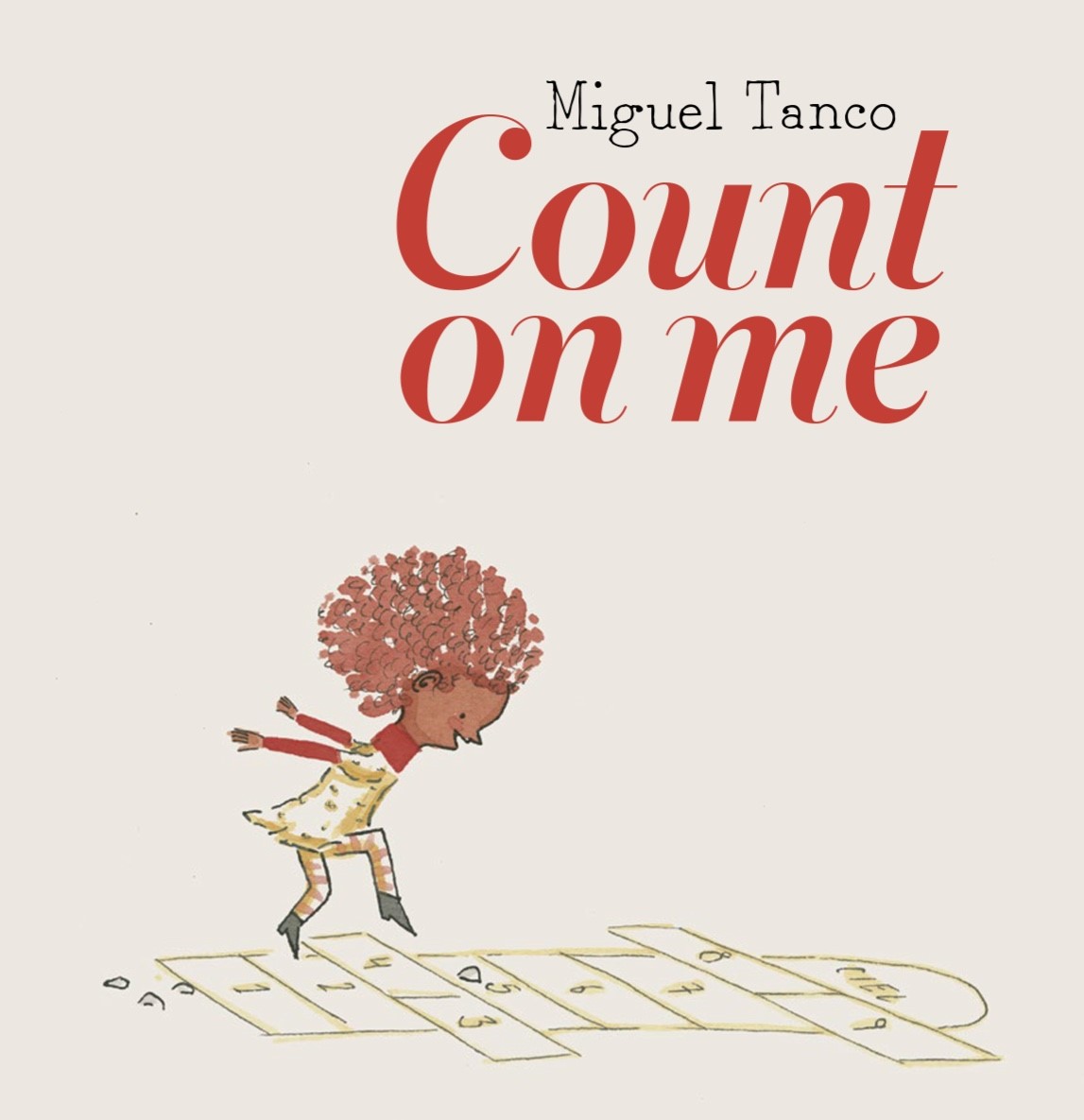
Looking to extend this idea we read Count on Me by Miguel Tanco. This book helps readers uncover the beautiful math that exists in the world around us (e.g., geometric shapes on playgrounds, sharing during dinner time). After reading the book for pleasure, I reintroduced it again to children and asked them to take notice of the cover and end pages specifically. They immediately noticed the vibrant pattern on the inside cover, and made the connection that a small portion of the pattern was also visible on the spine.
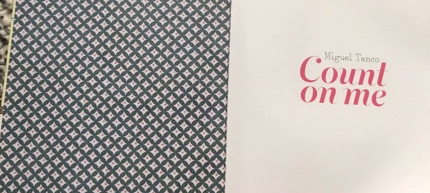
Participating in their discussion while honouring their ideas by including them in an idea web is always challenging for me. It's hard to listen attentively, talk, and record what is being said at the same time. I tried my best to capture some of their thinking on a large chart paper. Most children were eager to discuss the intricate crisscross pattern and curious about what other objects in our yard had this same design (e.g., many noted the fence also looked like this). Towards the end of our conversation the idea of quantity arose, and children wondered if the estimate of 30 diamonds was correct. Many felt this number was too small and thought counting by rows would be an easier way to find out. A next step for us might be to place the book along with different loose parts (e.g., gems, buttons), chart paper and a hundreds chart and challenge children to see how many diamonds they can count in the pattern. I also wonder if helping children to calculate a large quantity by creating groups of counters using a friendly number such as 5 or 10 might work. It's okay if we don't arrive at an answer to this question - the process of working towards it is just as important in my opinion.

Interested in exploring end pages with children in order to provoke deeper math thinking and exploration? After you find a book that is meaningful for children and has beautiful end page art, consider using some of these question prompts:
- What do you see?
- What do you think about ____?
- What does this remind you of?
- What do you like/dislike about these pages?
- Why did the author/illustrator choose this design for the inside of the book?
- What meaning does this end page have now that we've read the story?
- What connections to this design can you make?
- What math do you see?
- What math questions do you have?
- How might we find an answer to your question?
- If you were the author/illustrator how would you have designed the end pages?
- How would you improve this design?
- How would you change this design to emphasize patterning/quantity/shape/colour/etc. more prominently?
- Can you draw your own unique end page for a book you've written?
- What would you ask the author/illustrator personally about this piece?
Connecting math and literacy is a wonderful way to help children appreciate how connected the world is and find authentic problems to explore in their lives!