Showing posts with label photos. Show all posts

Tuesday, April 25, 2023

Calendar Math: Daily Date-Inspired Prompts to Inspire Math Talk

Math talks are regular, short conversations about purposeful math problems with children. These are intentionally crafted to invite children into specific math situations, helping them to improve their mathematical confidence and abilities. Math talks are meant to be open-ended opportunities that have multiple entry points and approaches for interpreting and solving the problem. To learn more please read my article Joyful Number Talks in Kindergarten available here:


The Journal of Teaching and Learning

Vol. 13, No. 2 (2019) pp.43–54

https://jtl.uwindsor.ca/index.php/jtl/article/view/5684/5082


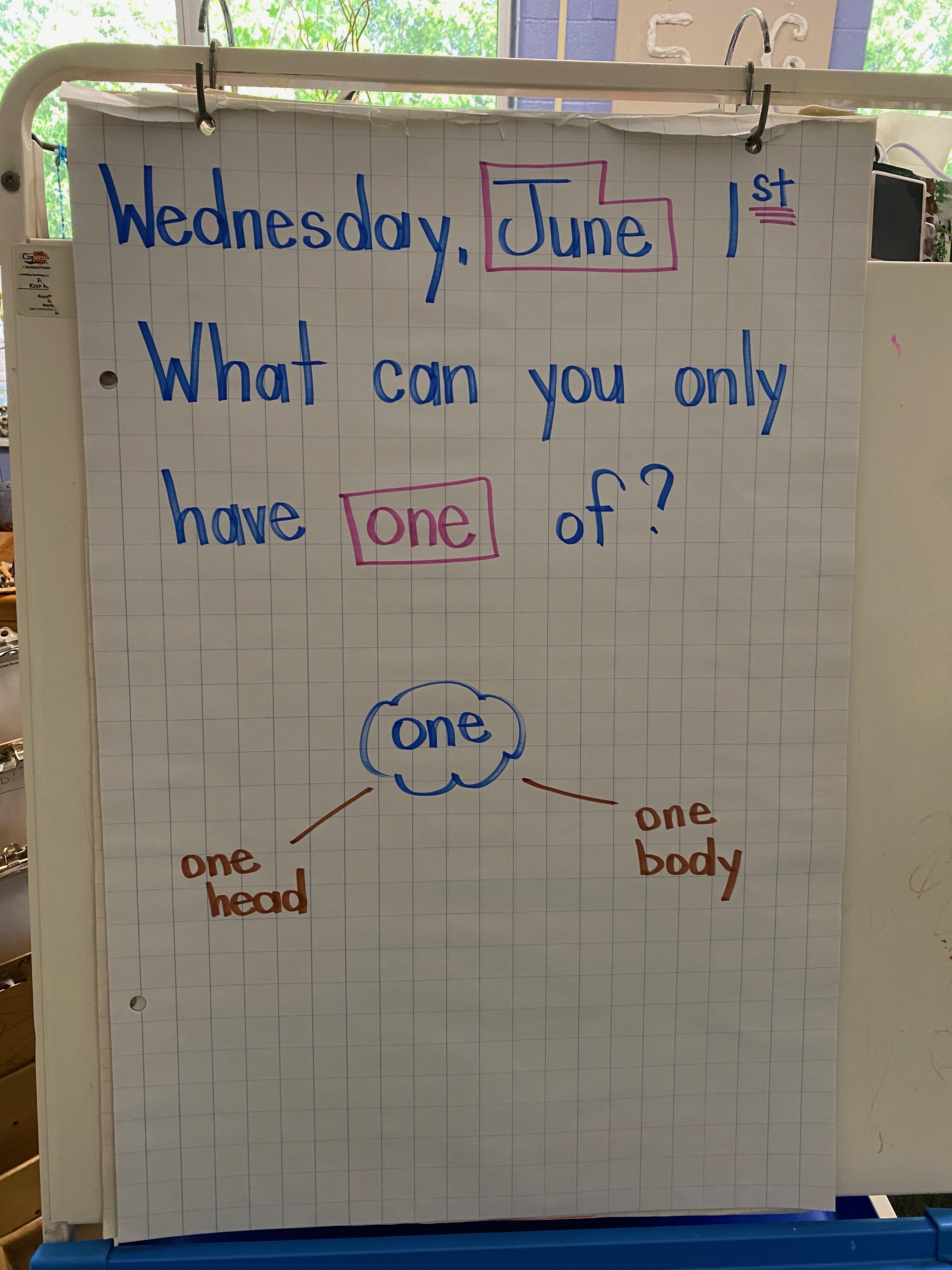
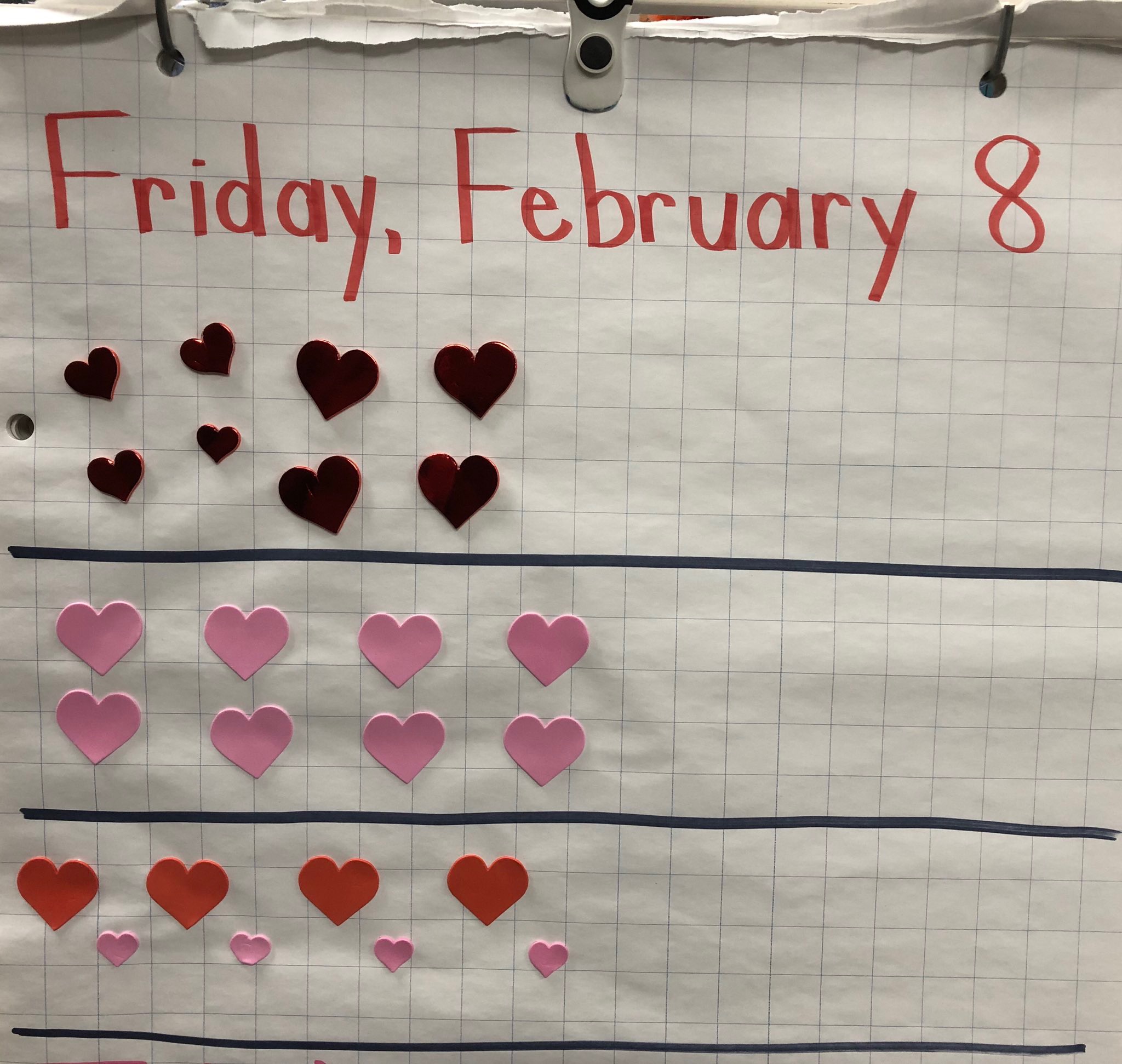
In my classroom I engage children in daily math talks during our first whole group time together. I often use the date as a focus for the number talk. For example, if the date is December 10, I use the number ten as the focal point of our math exploration. 


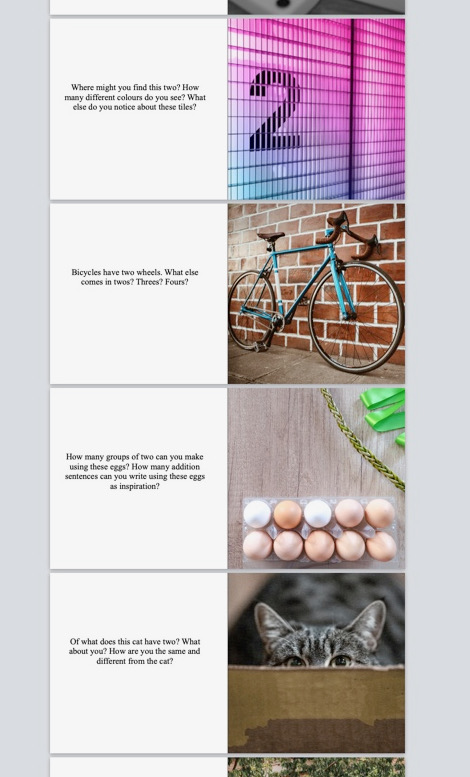
Over the years I have shared my math talks on social media and have been asked repeatedly to create a guide to support educators who wish to engage their students in math talks. This served as the inspiration my book Calendar Math. This book provides photo prompts and accompanying questions is that educators can use these to engage children in regular conversations in the classroom. In the book each calendar date (numbers 1 through 31) has four different pages with accompanying prompts. Use them for different months and also as sparks for creating your own daily number talks with children. 


To help educators get started here is a collection of photos representing the numbers 1 to 31 available as a PDF file. They can be digitally projected or printed and used as part of your morning math talk. Feel free to use them to support and supplement math discussions with your students!


Sunday, April 16, 2023

Using Outdoor Discoveries to Inspire Rich Math Talks

"It's the little details that are vital. Little things make big things happen."
John Wooden

Now that spring is emerging muddy conditions are common in our school yard. Although some educators shy away from messy spots, I find they are often one of the best places to notice and name rich, authentic math.

One morning the children were exploring the yard and noticed interesting tracks on the path. They took their time observing the different prints they found. They wondered who had been visiting the space and how the markings were made. They noticed that the prints appeared to be dried in the dirt and preserved in the thick mud. 


The tracks that fascinated us the most were those made by animals. Our school is located near a wooded trail and our yard is frequented after hours by coyotes, deer, geese, wild turkeys and dogs. The children compared the different tracks and used their prior knowledge to try and identify the animals. We also used a handy animal tracks identifier to help us as the difference between some tracks is minimal.
 
               
The children were also very curious about the shoe/boot tracks that they found alongside the animal tracks. Within each we noticed intricate shape and line details that differentiated them from one another. We identified many shapes including circles, diamonds, hexagons and squares. There were also many different lines in each - straight, wavy, and zigzag.


We wondered if our footwear matched any of the tracks. The children examined each other's feet to see if they could find a match between their shoes and any of the tracks. This inspired rich observation and discussion as small details were noted and comparisons were made. 
 
In order to capitalize on this interest I printed large photos of a shoe and animal print and brought them to our whole group discussion. I asked the children to consider what was the same and different about each print. I also used the thinking routine 'see, think, and wonder' to facilitate math talk and help the children mathematize the photos. 
We also brought this interest in prints to our art center where children were invited to paint our spare classroom boots and stamp them to see what kinds of prints they made. 
Once the tread prints were dry the children brought them to our whole group gathering time and we continued to observe and discuss the shapes and lines we saw in each. The children grouped the prints according to similarities and also compared the size of the marking to their feet in order to see which was the bigger foot. 
 
As spring weather continues to bring rain, the children's interest in tracks endures. The children are now curious about how long an entire track path is, how deep the prints are in the mud and how much space is in between each print. They wonder about how far and fast the person or animal might have been travelling and use these clues to help them hypothesize the speed and distance. Each time a discovery is made in the yard I carefully document the findings using photos and videos so we can bring the information back to our whole group conversations and build our collective knowledge about tracks. 

Our next step will be to record ourselves making tracks in the mud using digital tools. We will use the different recording options on our smart device including time lapse photography and slow motion recording. These will be interesting to watch and will hopefully help us understand more clearly how the distance, pressure and speed of movement will affect the way a print is made in mud. Stay tuned! 

Looking for a resource to support mud play? Check out my book Muddy Math available on Amazon!

Tuesday, August 23, 2022

Documenting Children's Learning Using Instagram Reels

It was my absolute pleasure speak as keynote at the Canadian Early Mathematics Education Conference in quaint Kingston, Ontario on August 22, 2022. In addition to being able to stroll the downtown area and marvel at the beautiful campus of Queen's University, I meet many amazing educators who connected with me regarding early math learning, humbled me with kind comments about my work, and fascinated me with interesting questions regarding the teaching and learning of mathematics in the early years.


My presentation focused on sharing stories from my classroom in hopes of inspiring educators to consider how they might create opportunities for joyful math in all areas including art, literacy, the classroom environment, routines, and outdoor learning. I also shared information regarding the documentation I collect regarding math learning and how children can help co-create this documentation as part of assessment process. 


Throughout my presentation I shared many Instagram reels that I had created this past school year. These were often meant to be quick, easy and entertaining ways to make the learning visible for children, families and the community. I embedded the clips throughout the presentation to help highlight specific ways math could easily be integrated into other subject areas. I also spoke to how Instagram reels could be used as a form of documentation.

I was not surprised that the majority of conversations I had with educators after my presentation were regarding Instagram reels. Many people were curious to learn more. As a result I thought it might be helpful to blog about this and share the ideas beyond the conference.

There are many reasons why I would encourage any educator to consider creating reels as a form of communication regarding learning and special events happening in the classroom. I can think of many more, but here are my top ten:

1. Instagram reels are an engaging way to share information in a format that appeals to a viewer's senses and emotions. Catchy sound effects, music, text, stickers, hashtags and filters can be used to enhance photos and videos that help amplify the message you are hoping to send. In this reel I'm hoping to show in a humorous way how messy kindergarten children can get when exploring the outdoors, and that it's normal and healthy.

2. Instagram reels can help educators share best practices with others using social media, helping them reach beyond their immediate learning community and idea share with many others. I like to post reels that explain teaching strategies or that challenge traditional ideas or routines that others might be curious about. For example here is a reel that encourages educators to think beyond traditional 'calendar' during morning message.

3. Instagram reels can help explain the steps behind a specific activity so others can try it themselves. This way of explaining the process appeals to visual learners who would rather watch a video than read steps. The size of reels also mean that the instructions should be succinct. This reel explains how to create textured watercolours using simple materials.
4. Instagram reels can help educators unpack activities for families and the community so the learning can be made visible. This might be especially helpful for experiences that families might be unsure about including messy sensory experiences. I tried to use this reel to explain the rich learning that happens in mud play.
5. Instagram reels can help change a viewer's perception of a non-preferred subject or task. For example I try to use reels to show the beauty and wonder of mathematics because so many people still default to their negative experiences and consider it a cold and solitary experience. I want to portray math as beautiful and interconnected to nature and our everyday experiences. This reel shows a few examples of math integrated in areas of the classroom.
6. Instagram reels can be co-created with children and used as a form of communication to provide a summary of the week's experiences. They can very effectively replace weekly newsletters or bulletins meant to share news from the classroom. Children can suggest clips to include and educators can chose salient videos that highlight the rich learning that has occurred. This reel highlights some of the events that happened in one week in the spring.
7. Instagram reels can be used to give families and the community tours of the classroom and other school spaces. I have shared tours of my classroom during kindergarten registration when potential families are viewing the school, during Covid closures so families could virtually step into their children's learning space, and also as a way to share with other educators who might be looking for new ways of organizing their space. This reel is a flashback to a previous classroom I had in hopes the ideas sparked conversations and starting points for educators.
8. Instagram reels are a fun way to share a bit about yourself to your school community. I like to create a few personal ones that show my interests, pets and family in order to humanize me to my school community and make myself relatable. This definitely depends on one's comfort level to allow others to take a small step into your life and might not be for everyone. This reel was created on a sunny, lazy Sunday in my backyard.
9.  Instagram reels help educators connect with a 'professional learning community' or PLC. Use a rich wording when describing your work. Adding hashtags to your reel will also help audiences find your work as well as having it appear in the reels section of the app. It can be liked, shared or commented upon by others. Many times creating reels will help an educator connect with other like-minded people, and it's very enriching to view reels created by others. An Instagram PLC will provide endless opportunities for networking and collaboration! This reel piggybacked on a sound trend and was meant to show math in very different ways.
10. Instagram reels are a fun, creative outlet! I am always engrossed in creating these and love the challenge they provide. Involving students in their creation helps a class become producers and not just consumers of information. When co-creating and reflecting upon reels, children engage in digital documentation and can appreciate the depths of their work and understanding, and plan next steps for action. I love how this reel coordinates a fun song with the child's math game.
Tips to get started:
*find educators to follow on Instagram that work in your field, or share interests - use hashtags to help locate experts and other interesting people
*watch the reels stream in your Instagram wall - even though many of these videos are not related to education, they are entertaining and can spark ideas for your reel creation
*use up to 30 hashtags to describe your work - the more you use, the better viewers can locate your work
*capture as many videos and photos as you can in your classroom - you never know what might turn out to be interesting and important to include in a reel
*ask children to share ideas for photos and videos, or invite them to include their own work to make reels authentic and meaningful
*take photos and film videos vertically to make them fit properly into the Instagram formatting. Horizontal images and videos can still be used, but they have a large black frame around them which makes them appear small and harder to view
*use filters, stickers, locations, text, etc. to enhance your work
*jump on trends and modify them for educational use in order to help your reels be discovered by others
*reels (unless they have sound copyright or restrictions) can be saved to your phone or computer, and mashed with other tech - you can share these saved videos on twitter, in digital documentation programs like Edsby or Seesaw, or added to a blog (like I have here) to get the most out of your work

To see more of my reels and connect on Instagram please follow @McLennan1977!

Saturday, May 21, 2022

Daily Math Talks with Young Children

  “Mathematics is a very broad and multidimensional subject that requires reasoning, creativity, connection making, and interpretation of methods; it is a set of ideas that helps illuminate the world; and it is constantly changing.”
Jo Boaler

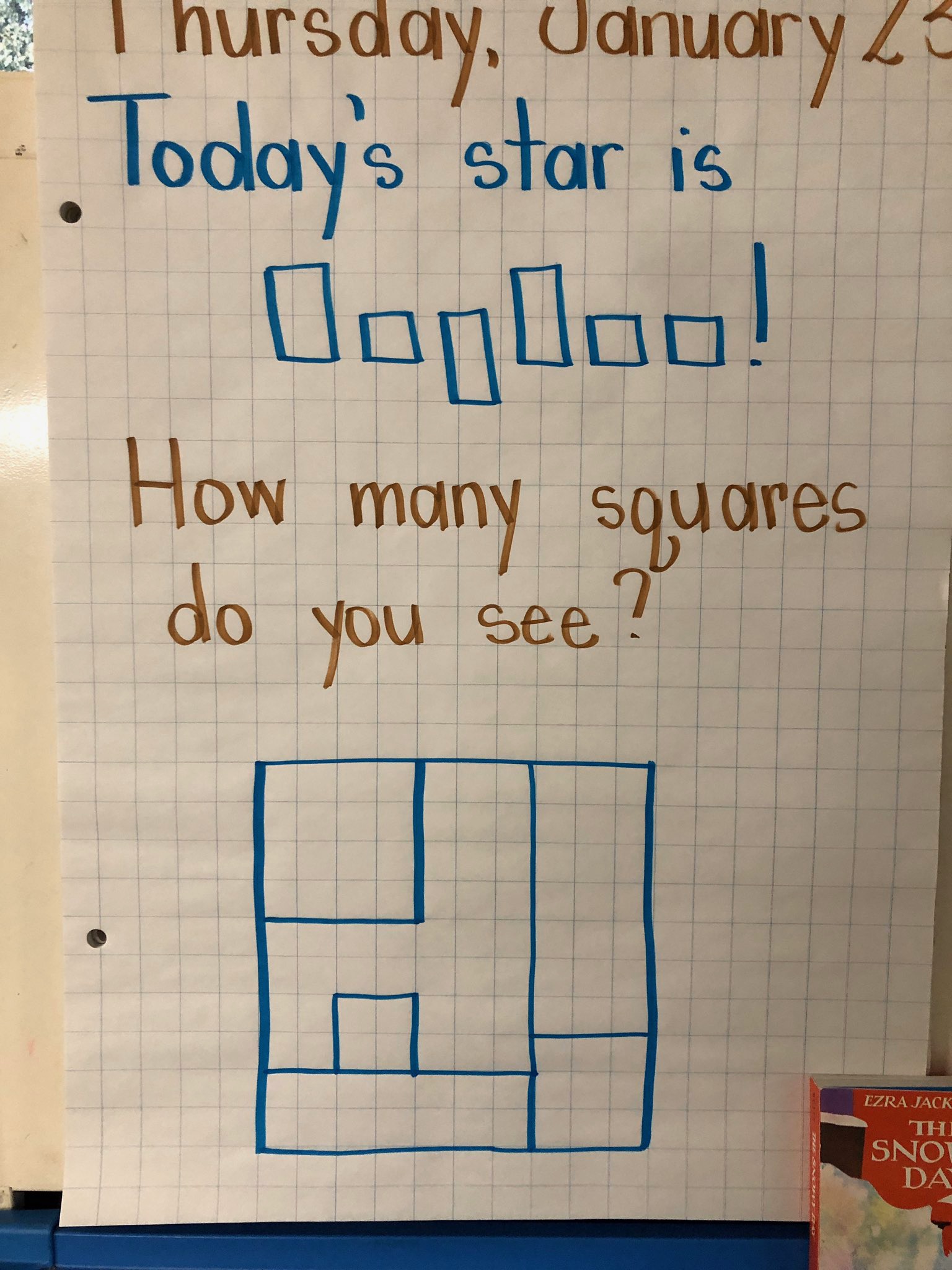
Math talks are a great way to engage children in open-ended explorations that invite them to think critically and creatively about a concept. An effective math prompt to facilitate a rich math discussion will be layered; it should be open-ended with multiple entry points for engagement. Even children as young as kindergarten are capable of participating in complex math conversations. In our classroom I aim to invite children into a math talk at least once a day; I sometimes use the numerical date on our morning message as the spark for exploration. Other times an interesting photo or collection of loose parts will be engaging and incite children into further exploration. I try to vary the invitations I provide in order to diversify the math we discuss and to reach as many learning interests as possible.

Recently I posted two Instagram Reels regarding our daily math talks that has generated many questions regarding how we engage young children in robust discussions about math each morning. There was much interest in these math prompts and many educators reached out with questions regarding how I create these prompts.


In our program we have a morning circle time. This circle is our first whole group gathering time for the day and helps set a positive atmosphere in our classroom. It is also a time to celebrate being together, and share news from our homes. We often use it as an opportunity to read a story and discuss any new and exciting activities or additions to our classroom space about which the children should know in order to be successful for the day. 
 
When I first started teaching kindergarten many years ago it was expected that the morning circle would begin with 'calendar time' where children would put a sticky number on a large grid to depict the day and there would be an extensive discussion about the calendar (e.g., day of the week, month, year). However over the years I realized that this was a very teacher-directed task and not as meaningful a use of our time. After reading Sherry Parrish's work on number talks I was inspired to use our morning message as an anchor for math talks. Wanting to still introduce the date to students, the numerical representation of the date became the foundation for our number talks most days. Sometimes I would use other prompts depending on the events and interests emerging in our classroom. If you would like to read more about number talks in kindergarten, you can access an article I wrote for the Journal of Teaching and Learning here: Joyful Number Talks in Kindergarten
 
I enjoy participating in a professional learning community with educators on social media and often tweet or Instagram my number talk prompts. Many educators have reached out to me how I create these open ended math talks, and to ask if I would consider sharing some ideas to try. Here are some examples of number talks we have used in the classroom. Feel free to share your own ideas in the comment section or tweet/instagram me @McLennan1977. 
 

To help support educators who are interested in starting daily math talks with children, I have published a book called Calendar Math: Daily Prompts for Math Explorations with Children

To help give an idea of what this book is about, and to help educators create their own math prompts, here are the first few pages of the book!


Wednesday, January 5, 2022

Stand Up Sit Down

Here is a fun activity to get children moving as they respond to a prompt. Look at the photo and respond to the 'stand up if you..." prompt accordingly. Children can then create their own statements for their peers to consider. Providing time for children to reflect upon and discuss their ideas regarding the stand up/sit down prompts can encourage rich oral language as children consider the photos and verbal prompts and make connections to their own lives and experience.


Get a copy of the slides to use in your classroom here: Stand Up Sit Down

Related Posts Plugin for WordPress, Blogger...