Showing posts with label growth mindset. Show all posts

Tuesday, August 20, 2024

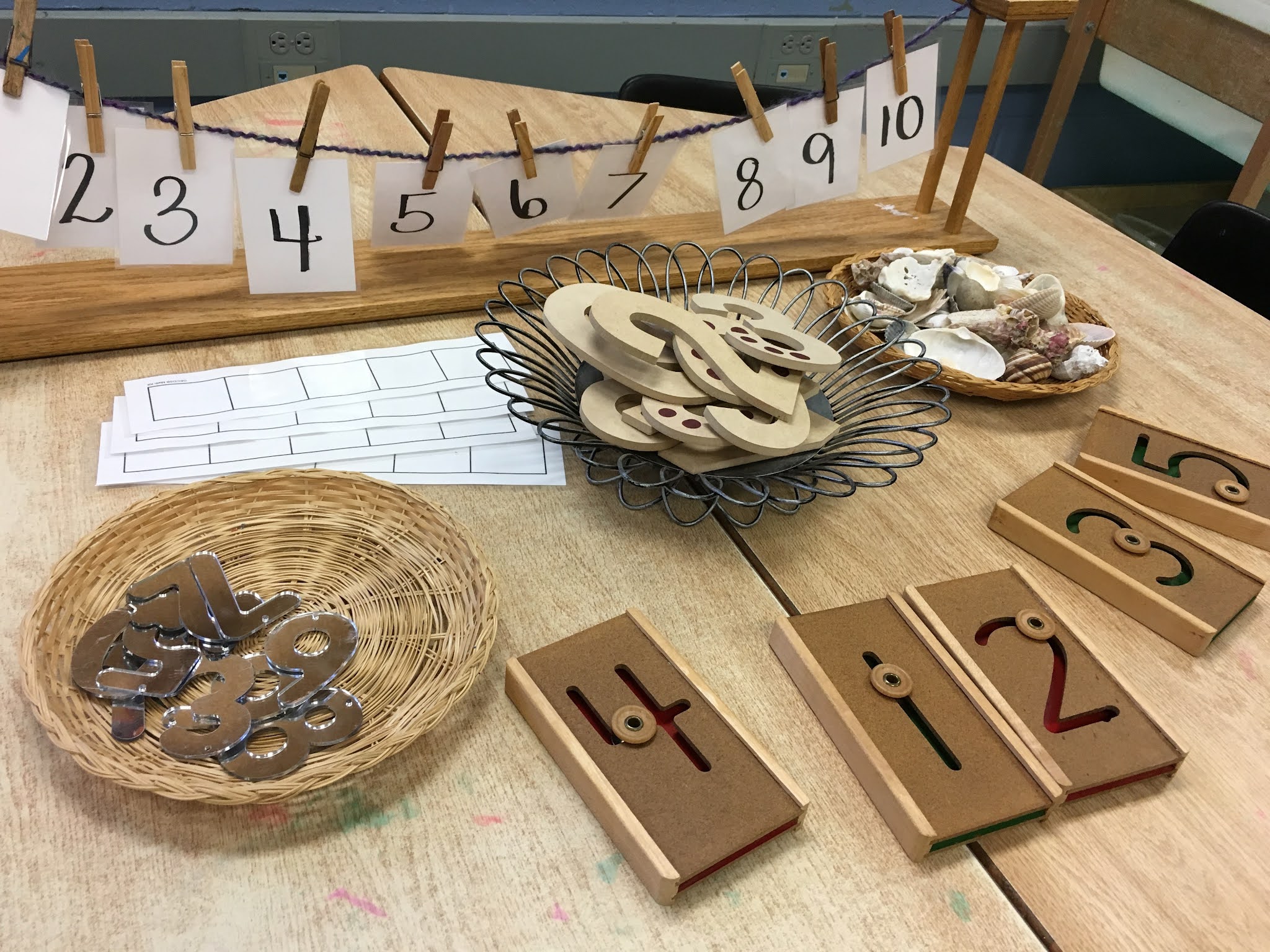
Cultivating a Mathematically Rich Learning Space

It's almost Labour Day! This time of year always fills me with hope. Although it's sometimes sad to be leaving the fun and comforts of summer - spending time with my children, sleeping in, enjoying the back yard with my pup - it's exciting to think of the possibilities of another school year. Like a blank canvas waiting to be painted our classroom evolves and changes over time as the children and I learn and explore together. 

As we head back into the school year many educators are working thoughtfully to create environments that are rich with math possibility. In Reggio Emilia the environment exists as the 'third teacher' inspiring, supporting, and extending children's learning in rich and complex ways. I have been contacted by many educators asking for advice on how to best set up their classroom and routines in order to create as many opportunities for authentic math as possible. This has inspired today's blog post - how to cultivate a math rich learning space for children at the beginning of another school year.

I thought it would be easiest to create this as a 'math check list' with points to read and consider. When I reflect upon my own math pedagogy and practice, these are what I think stand out as mathematically meaningful for the educators, children and families that share our space. Although this check list isn't all inclusive, I thought it might spark some ideas to support and inspire as we enjoy the final weeks of summer and return soon to our classrooms with open eyes, minds and hearts.
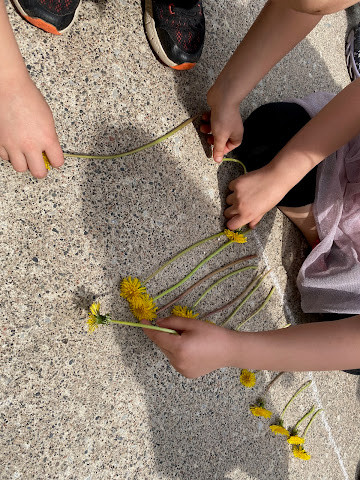
1. Make math a part of every space in the classroom and child's school world. In the classroom are there math tools and materials available for use beyond a 'math center or math shelf'? Do children see how math relates to every subject in the space (e.g., how materials are sorted and stored on the toy shelf, how measurement is used when children decide on a size of paper to use for their project)? Can they translate math tools and ideas into other spaces in their immediate school world (e.g., see how math relates to their walks in the hallway or work in the gym)?

2. Ground and build math concepts into known objects for children. When introducing, extending or innovating a math idea is it organic and natural to the child's explorations and world? For example, it is more natural to engage children in an exploration of measurement if they measure things in their immediate world using the stick they are playing with, instead of using a standardized ruler (e.g., "Can you find something the same length as your stick in the yard?", "What is taller than your body?").
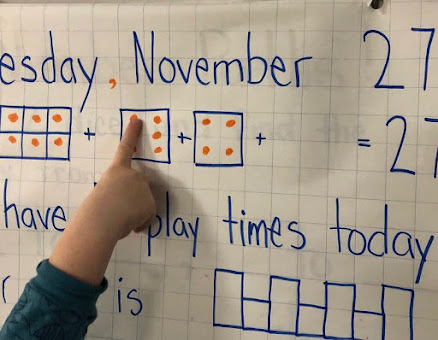
3. Use available math moments with children. In our classroom we have a large block of uninterrupted play each day. It's sometimes challenging to manage children, materials and activities during center time. However I try to engage with children as much as possible in the activities, and take on the role of 'play partner' together with them. When I am actively playing I am able to closely observe what they are saying and doing, helping me to identify and extend the rich math learning that is organically occurring (e.g., helping children to recognize why their tower keeps falling, using math terms when they equally share the play dough, introducing math ideas as they discuss how many cars are in their parking lot).

4. Become a math role-model for children, families, and colleagues. Even if math isn't your favourite subject, how do you discuss it within your school and classroom? Are you excited by new activities and resources? Do you demonstrate a growth mindset? When mathematical situations arise with children that you aren't sure of, can you use these opportunities to showcase positive thinking and problem-solving? Share your new math learning with others - suggest articles and books you're reading and post these throughout your classroom to enhance documentation displays. 

5. Find the math in everything. Many educators plan forward by choosing curriculum and programming expectations and then building activities to fulfill these. Try back-mapping activities from time to time; embrace child-centered, organic experiences and then deconstruct them in order to identify the rich math concepts and curriculum expectations that they utilize. You'll be surprised to find that math happens in almost every experience children have in the classroom.

6. Try looking at life through a mathematical lens. When planning invitations for learning in your classroom see what math you can sneak in as well. Changing one or two elements of the experience might be enough to engage children in rich math. It reminds me of how I used to sneak veggies into my children's meals - a little can go a long way!


7. Collaborate mathematically with colleagues. Share new ideas and resources informally. It's easy and effective to create math invitations and activities and share these within your school or division. If every educator plans one or two activities and these are shared, children will benefit from many rich and interesting games and activities without the burden of planning and preparation it would take one educator to accomplish the same.

8. Record and celebrate your math moments. Help children, families, and colleagues recognize that math happens everywhere in the classroom by creating a documentation display with photos, anecdotal observations and connections to curriculum. This bulletin board can be built over the course of the school year as artifacts of learning are continually added by staff and students. Keep sticky notes nearby and invite observers to record their own ideas and share them by posting the notes within the documentation.

9. Engage families in joyful math with children outside of school. Consider ways that you can promote and extend math for children after school. Encouraging families to play math games and activities together with their children will not only provide children with additional meaningful math moments, but it may help older family members reconcile their fear or dislike of math.

10. Build your collection of math stories, songs and games. Children love to sing, dance and play games. Ask colleagues to share their favourite games and activities, and use these to help with transitions and other 'math moments' throughout the day. Quite often the words in songs can easily be improvised to match something happening in your classroom, and many rich storybooks have mathematical elements and problems embedded within them that can inspire children.

These are just a few of the ways in which I cultivate a rich math space with children. I'd love to hear from you! Share your math ideas in the comments below, and consider following my Instagram @McLennan1977 for regular ideas from my classroom!

Friday, July 26, 2024

Book Review

"Exploring trees outdoors is an enjoyable experience that children love to do! Swinging from a branch, exploring leaves and bark, and observing gnarled roots are all favourite activities that also integrate rich learning. Heading outside to explore the yard uses children's excitement and enthusiasm for sensory and nature experiences to inspire rich mathematical and scientific inquiries about what they are seeing and experiencing."


I was excited to see a review of my book Tree Math in the MAMT Spring Journal! You can access the review here!

Tuesday, November 7, 2023

Creating a More Inclusive Math Environment

I grabbed a coffee from a drive through this past weekend. While there I chatted with the employee working at the window. I asked him how his day was going.

"It was great until about five minutes ago," he said. "I just saw my former math teacher. I haven't seen him in years. Nice guy but I dreaded his class. I just never really felt like I belonged. I hated the math. Just couldn't relate. Seeing him brought up all those old feelings for me again."

As someone who loves math I was devastated to hear this story. As a kindergarten educator I try my best to cultivate a safe and supportive space where children feel like they are equal members of a democratic learning environment. I want kids to love math and see themselves as authentic mathematicians. Inclusive learning environments are ones in which children feel fully supported, and that their contributions and perspectives are equally valued and respected regardless of their identities or learning preferences. There is a sense of belonging for everyone.

Every child has the right to learn and reach his or her highest potential. This is especially important in mathematics, where growth mindset and differentiated learning and assessment approaches can make all the difference in how children interact within, and enjoy classroom explorations.

Inclusive math education ensures access to quality learning experiences for all children by meeting their diverse needs in a way that is responsive, accepting, respectful and supportive. Educators should work to diminish and remove barriers that may lead to children's disengagement and exclusion. 

There are many ways we can creative inclusive learning environments. Here are a few suggestions:

Critically Examine your Math Questions and Prompts

Consider the types of questions you ask children. Can they relate to what they are being asked? Are the questions relevant to their age, interests, strengths and needs? Is inclusive language used? I recall feeling troubled reading a question in my daughter's math work about the number of marriages that could be possible in a group of people when X number of men and women paired together. "What about gay couples?" she asked me when we reviewed her homework that evening.

Honour Student Voice in the Learning Process

Consider asking children to create the parameters for math work together in class. As an educator reflect upon the math work you ask children to complete - do they have a voice in the explorations and activities? Does math work ebb and flow around natural learning situations in the classroom or does it exist in isolation from children's lives? In our classroom we often explore new math tools together and play with how they might be used before I suggest a more formal or structured approach. I try to include children's ideas as much as possible.

Encourage Unconventional Ways of Representing Math

Consider the ways in which you ask children to explore math ideas and showcase their understanding. Do you tend to default to paper and pencil activities? Do children work only from worksheets or textbooks? Are you able to encourage children to use their hundreds of languages (e.g., painting, drawing, building) to explore math problems and share their findings with others? In the photo this child is exploring multiplication by creating an array with sticky notes. In our classroom we try to represent math thinking using innovative, non-traditional ways of knowing and being that are self-selected by children whenever possible.

Invite Family Knowledge into Math Experiences

Consider how you can welcome families into your math activities in order to enhance children experiences. Do family members have interesting jobs and hobbies that can be shared to help supplement children's understanding of math concepts or how math is used authentically in the world? How do families feel about math learning? What is it they value as part of the math learning process? Are their feelings about math limiting their children's potential? What role can families play in supporting children's emerging confidence when learning new concepts (e.g., take home math games, reading math books together)? Share information about math learning with families to help them deconstruct tasks and engage more authentically with math explorations.

Use Diverse Learning Materials

Consider the types of materials that are offered to children. Are they diverse and meet the children's interests, strengths and needs? Do they offer multiple ways of engaging with math? Are they inclusive so all children feel a connection in some way to the experience? Offering math materials throughout the classroom and not just in a 'math area' helps children see the connection that math has to the world around them and their own lives. Invite children to co-construct math materials and visuals that are used throughout the learning space.

Examine your Assumptions and Biases

Sometimes educators default to teaching about math the way they were taught. When something is new or uncomfortable it might seem natural to revert back to familiar ways of knowing and being. Many educators do not enjoy math and subconsciously communicate this to children. Consider how you talk about math with others. Do you present a growth mindset when problems occur that you are unsure of how to solve? Do you approach new and interesting mathematical situations with a stance of curiosity and willingness to learn? Math is a beautiful and engaging discipline and talking about it as such will help learners experience positive associations with math learning. 

Hold High Expectations for all Students

Children are natural mathematicians. They are curious about the world around them and want to understand how it works and make connections to others. Offering low floor, high ceiling tasks encourage all children to enter into math explorations and helps differentiate tasks for their individual needs. Activities that relate immediately to a child's world and experiences will be more meaningful for them mathematically. Communicate your belief to children that they are capable of participating fully in rich math learning and hold them to high expectations. Provide as much time, space and support as needed to ensure children experience success.

Use a Community Approach to Learning

Math is a communal experience. Too often children have been asked to complete math tasks in quiet isolation while working at desks. Rethink how you invite children into math exploration and encourage noise, mess, and social exploration. Ask children to work together to solve math problems and share their thinking with others. Resist the urge to default to thinking that math should look and sound like it might have in your childhood. Share with families and the greater community that math learning is rich and layered when we all work together.  

Create Unconventional Learning Spaces 

Math can happen anywhere, anytime. Help children see the authentic and meaningful ways math connects to our world by looking for it beyond the classroom. Be open to math moments that arise in outdoor play and exploration, and be intentional about the whole and small group math experiences you encourage in areas like the gym, library and music room. Embrace the questions children ask that are mathematical in nature, especially those related to risky play (e.g., "How fast/far/high can I run/jump/climb?").


Wednesday, August 23, 2023

ETFO PLEY Chat - A Classroom that Fosters Mathematical Thinking

As an educator helping children develop a love of and appreciation for math is one of my greatest professional interests. I strive each day to engage children in authentic math learning through play and inquiry. I was super honoured and excited this past spring to welcome ETFO into our kindergarten classroom and record a number of chats regarding how children explore math in our classroom. 

All videos are now available here: A Classroom that Fosters Mathematical Thinking

The Beliefs that Drive Practice

Moving the Learning Forward

 Math is Relevant and All Around Us

Understanding how Children Develop Mathematical Understanding

Math Happens Everywhere

 Thinking Through a Mathematical Lens

Documenting and Communicating the Learning


Sunday, June 4, 2023

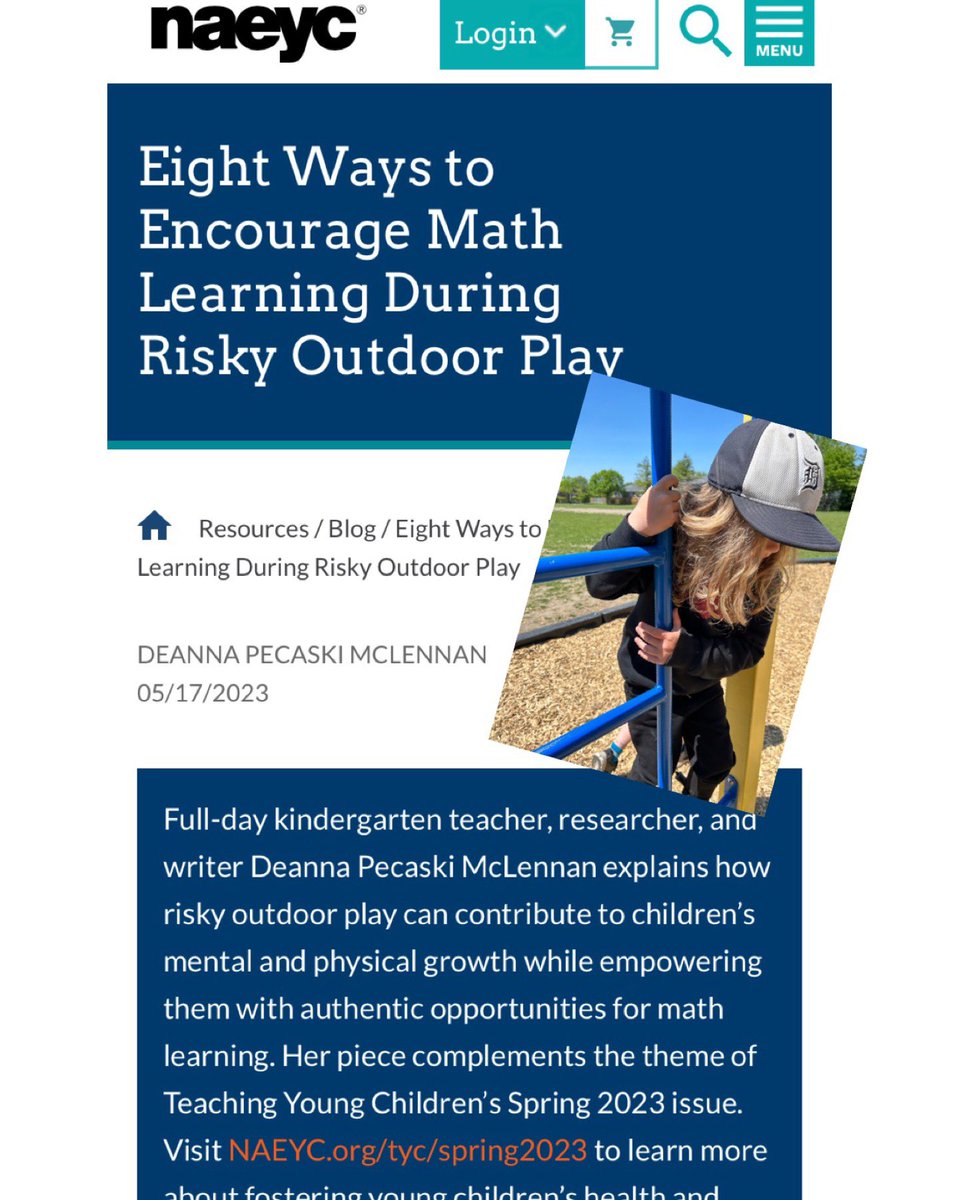
Eight Way to Encourage Math Learning During Risky Outdoor Play

This month I have a blog post featured on the National Association for the Education of Young Children's (NAEYC) website regarding how to engage children in math learning during risky, outdoor play. You can read the article here: Eight Ways to Encourage Math Learning During Risky Outdoor Play.

Image

Thursday, January 5, 2023

Daily Math Talks with Young Children


  “Mathematics is a very broad and multidimensional subject that requires reasoning, creativity, connection making, and interpretation of methods; it is a set of ideas that helps illuminate the world; and it is constantly changing.”
― Jo Boaler

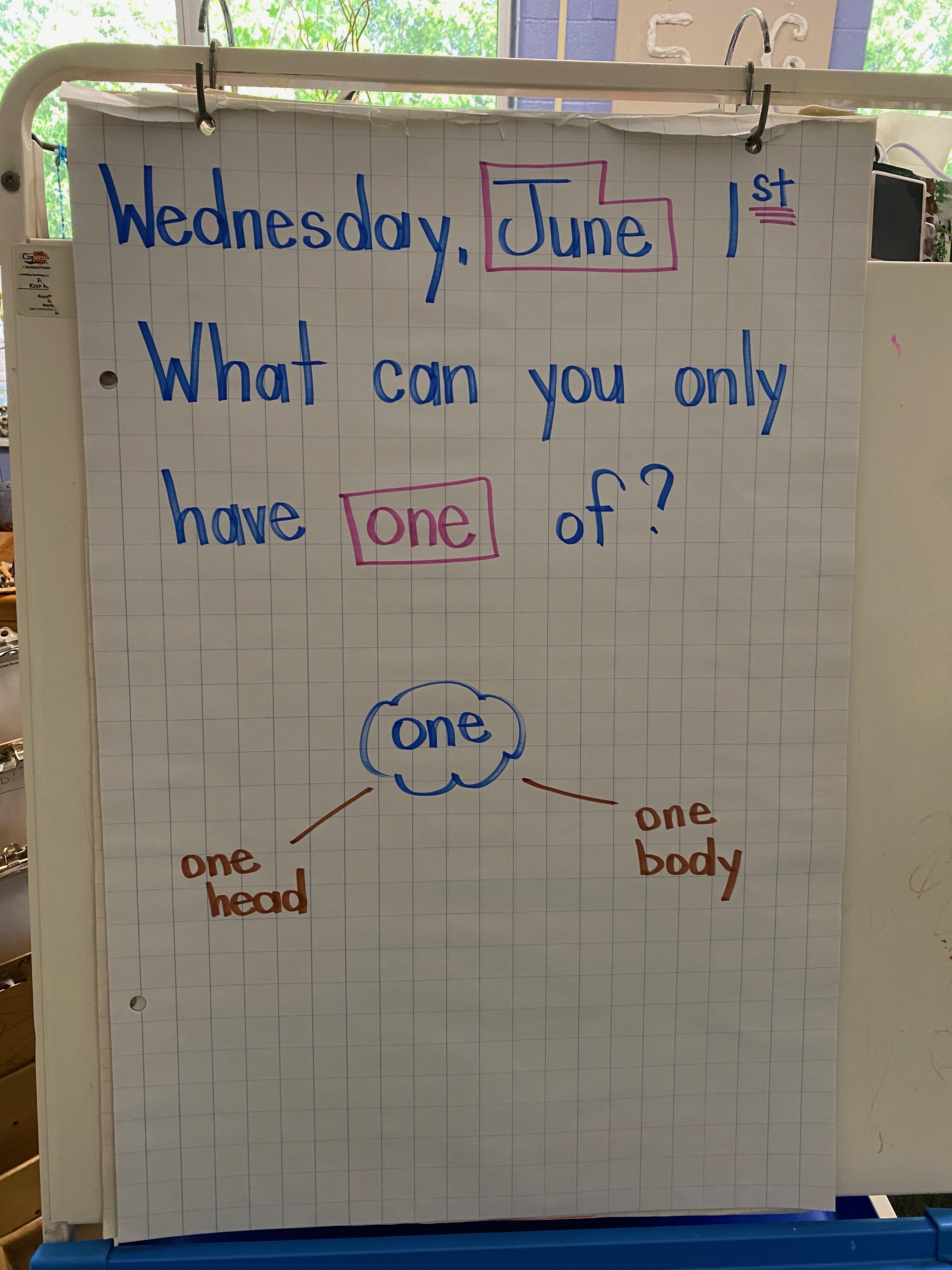
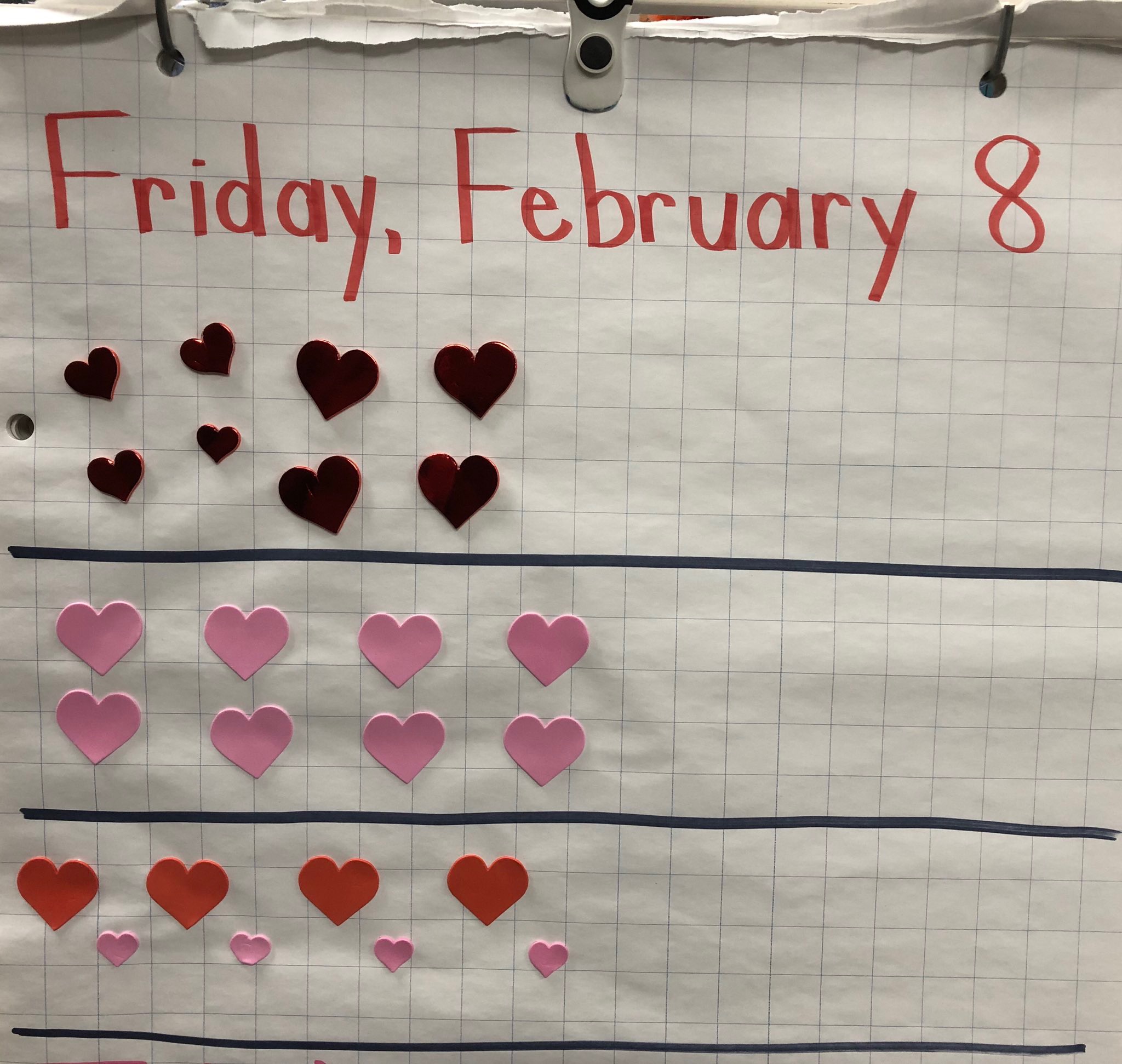
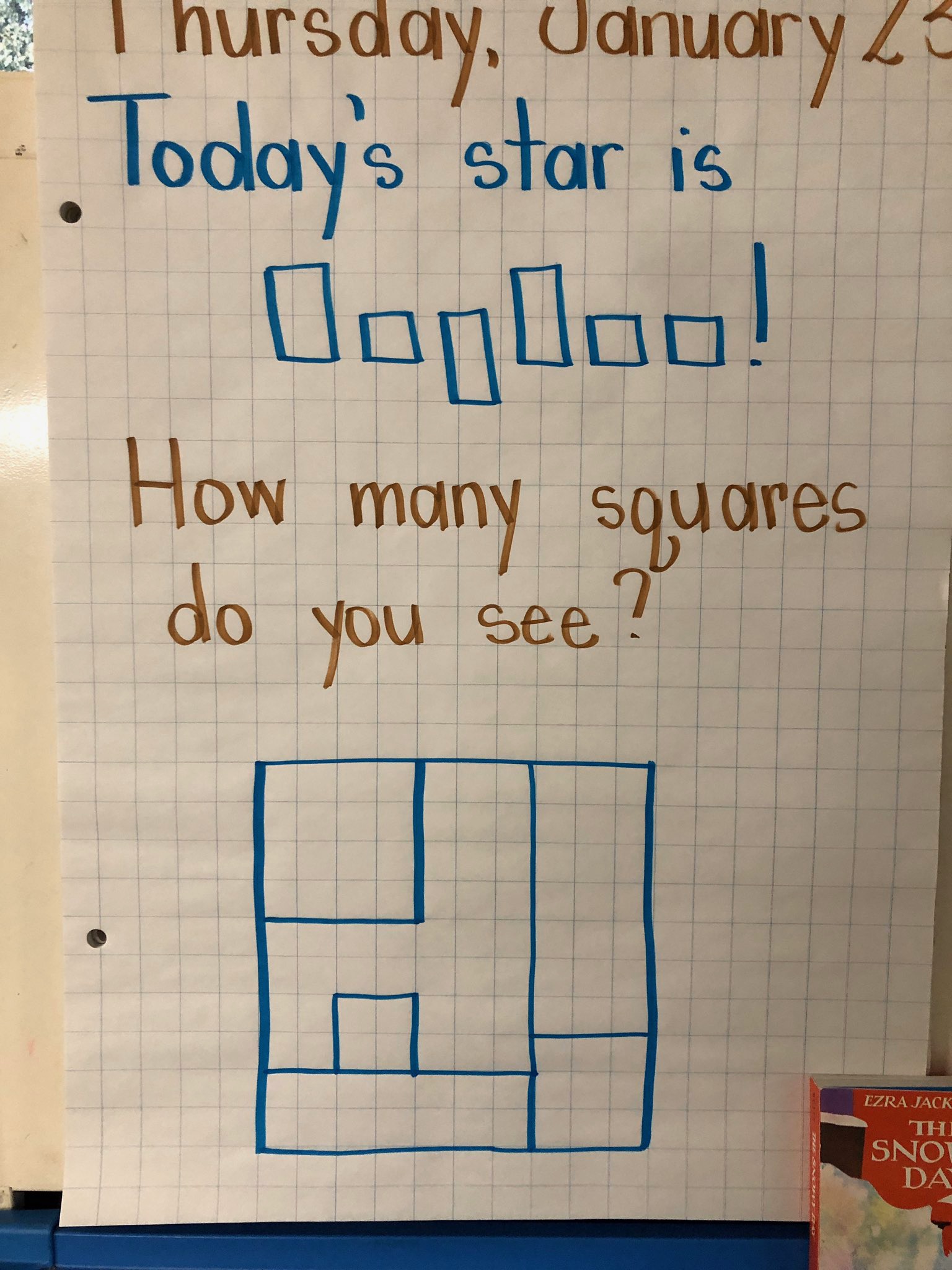
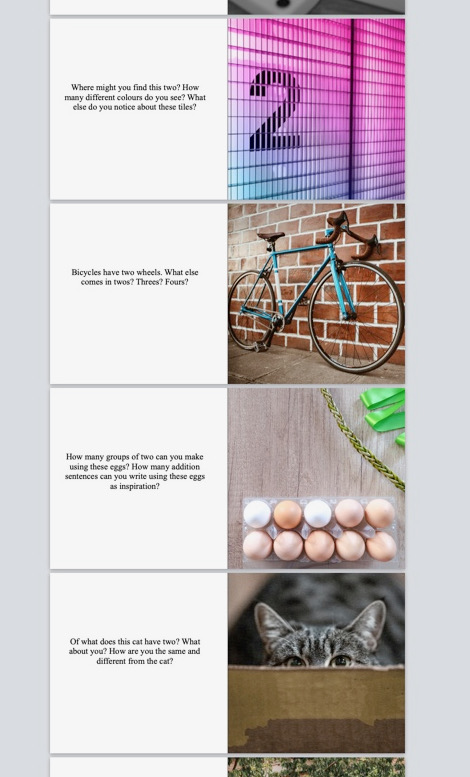
Math talks are a great way to engage children in open-ended explorations that invite them to think critically and creatively about a concept. An effective math prompt to facilitate a rich math discussion will be layered; it should be open-ended with multiple entry points for engagement. Even children as young as kindergarten are capable of participating in complex math conversations. In our classroom I aim to invite children into a math talk at least once a day; I sometimes use the numerical date on our morning message as the spark for exploration. Other times an interesting photo or collection of loose parts will be engaging and incite children into further exploration. I try to vary the invitations I provide in order to diversify the math we discuss and to reach as many learning interests as possible.

Recently I posted two Instagram Reels regarding our daily math talks that has generated many questions regarding how we engage young children in robust discussions about math each morning. There was much interest in these math prompts and many educators reached out with questions regarding how I create these prompts.


In our program we have a morning circle time. This circle is our first whole group gathering time for the day and helps set a positive atmosphere in our classroom. It is also a time to celebrate being together, and share news from our homes. We often use it as an opportunity to read a story and discuss any new and exciting activities or additions to our classroom space about which the children should know in order to be successful for the day. 
 
When I first started teaching kindergarten many years ago it was expected that the morning circle would begin with 'calendar time' where children would put a sticky number on a large grid to depict the day and there would be an extensive discussion about the calendar (e.g., day of the week, month, year). However over the years I realized that this was a very teacher-directed task and not as meaningful a use of our time. After reading Sherry Parrish's work on number talks I was inspired to use our morning message as an anchor for math talks. Wanting to still introduce the date to students, the numerical representation of the date became the foundation for our number talks most days. Sometimes I would use other prompts depending on the events and interests emerging in our classroom. If you would like to read more about number talks in kindergarten, you can access an article I wrote for the Journal of Teaching and Learning here: Joyful Number Talks in Kindergarten. 
 
I enjoy participating in a professional learning community with educators on social media and often tweet or Instagram my number talk prompts. Many educators have reached out to me how I create these open ended math talks, and to ask if I would consider sharing some ideas to try. Here are some examples of number talks we have used in the classroom. Feel free to share your own ideas in the comment section or tweet/instagram me @McLennan1977. 
 

To help support educators who are interested in starting daily math talks with children, I have published a book called Calendar Math: Daily Prompts for Math Explorations with Children. 

To help give an idea of what this book is about, and to help educators create their own math prompts, here are the first few pages of the book!


Saturday, May 21, 2022

Daily Math Talks with Young Children

  “Mathematics is a very broad and multidimensional subject that requires reasoning, creativity, connection making, and interpretation of methods; it is a set of ideas that helps illuminate the world; and it is constantly changing.”
― Jo Boaler

Math talks are a great way to engage children in open-ended explorations that invite them to think critically and creatively about a concept. An effective math prompt to facilitate a rich math discussion will be layered; it should be open-ended with multiple entry points for engagement. Even children as young as kindergarten are capable of participating in complex math conversations. In our classroom I aim to invite children into a math talk at least once a day; I sometimes use the numerical date on our morning message as the spark for exploration. Other times an interesting photo or collection of loose parts will be engaging and incite children into further exploration. I try to vary the invitations I provide in order to diversify the math we discuss and to reach as many learning interests as possible.

Recently I posted two Instagram Reels regarding our daily math talks that has generated many questions regarding how we engage young children in robust discussions about math each morning. There was much interest in these math prompts and many educators reached out with questions regarding how I create these prompts.


In our program we have a morning circle time. This circle is our first whole group gathering time for the day and helps set a positive atmosphere in our classroom. It is also a time to celebrate being together, and share news from our homes. We often use it as an opportunity to read a story and discuss any new and exciting activities or additions to our classroom space about which the children should know in order to be successful for the day. 
 
When I first started teaching kindergarten many years ago it was expected that the morning circle would begin with 'calendar time' where children would put a sticky number on a large grid to depict the day and there would be an extensive discussion about the calendar (e.g., day of the week, month, year). However over the years I realized that this was a very teacher-directed task and not as meaningful a use of our time. After reading Sherry Parrish's work on number talks I was inspired to use our morning message as an anchor for math talks. Wanting to still introduce the date to students, the numerical representation of the date became the foundation for our number talks most days. Sometimes I would use other prompts depending on the events and interests emerging in our classroom. If you would like to read more about number talks in kindergarten, you can access an article I wrote for the Journal of Teaching and Learning here: Joyful Number Talks in Kindergarten. 
 
I enjoy participating in a professional learning community with educators on social media and often tweet or Instagram my number talk prompts. Many educators have reached out to me how I create these open ended math talks, and to ask if I would consider sharing some ideas to try. Here are some examples of number talks we have used in the classroom. Feel free to share your own ideas in the comment section or tweet/instagram me @McLennan1977. 
 

To help support educators who are interested in starting daily math talks with children, I have published a book called Calendar Math: Daily Prompts for Math Explorations with Children. 

To help give an idea of what this book is about, and to help educators create their own math prompts, here are the first few pages of the book!


Related Posts Plugin for WordPress, Blogger...