Showing posts with label child centered. Show all posts

Sunday, March 30, 2025

Overcome the Math Blahs to Reinvigorate Joyful Math Play and Learning

Looking for some professional development to help you refresh your math program using play and exploration? My next workshop is just for you! Join me with Early Childhood Investigation Webinars on April 16 at 2 pm Eastern Time. 


 Workshop description:

Do you feel less confident or enthusiastic about incorporating math experiences into your early childhood program? If so, you’re not alone! Many early educators feel more comfortable teaching language and literacy than math. This hesitation may stem from your own experiences as a young learner.

If you’re looking for inspiration to bring joyful math moments into children’s play and make this learning visible to families, this webinar is for you! Young children are curious about Math-related concepts and Math connects to every aspect of a developmentally appropriate practice in early learning. In this idea-filled session presented by experienced educator, researcher, and writer Deanna Pecaski McLennan, we’ll reimagine what math looks like in early childhood. You will explore ways to reinvigorate your practice with hands-on, integrated activities that excite and engage young learners based on Deanna’s real-life examples from her kindergarten classroom.

Discover how to create invitations for young children to explore math through art, literacy, and outdoor play. We’ll focus on designing learning spaces where children see themselves as mathematical thinkers, valuing their ideas in meaningful and authentic ways. Drawing from her extensive experience and her books, Deanna will inspire you to approach math with curiosity, take risks, experiment with new strategies, observe deeply, and collaborate with children as co-learners. Let’s transform the way we think about early math together!

In this workshop you will:

  • reflect upon your definition of math and where it can be found in the early childhood classroom
  • explore stories, vignettes, and photos illustrating how educators can develop learning environments that foster curiosity and wonder in mathematics
  • gather practical and easy to implement suggestions for how to invite children to engage in mathematical play throughout the day
  • learn ways to document children’s experiences to make math learning visible to families and the greater community

Thursday, June 16, 2016

Each One My Child: An Open Letter of Healing and Hope

I have spent much time these last two days grieving for a child not my own, for a family I don't even know. By now news of the tragedy from Disney World has spread across news outlets and social media. And although it has been one of the most upsetting situations in recent months, it's hard for me to not read the latest information as I try and make some sense of this horrible tragedy. In my online travels I've been touched by how complete strangers have reached out to one another to offer shared sympathy and support. On her blog Scary Mommy shared something today that absolutely brought me to tears. In her plea for parents to stop judging one another and instead follow a path of kindness and understanding she wrote:

"To the mother and father who went for a walk on vacation for the last time with their little boy yesterday, I am deeply sorry that you had to experience the worst kind of tragedy possible, an accident. I grieve with you. Your baby was my baby. Your son was my son. I have nothing but love for you, love to help you get though the pain yesterday, today, and for what is gonna seem like a thousand tomorrows. I wrap my thoughts and prayers around your aching heart and soul. May the God of this universe in some miraculous way bring peace to you and your family."

Scary Mommy summarized perfectly what I have been feeling in my heart. An unbearable pain for a child and family miles away. And although we do not know each other, I carry their anguish with me. You see, I am an educator of young children. And although those in my care are not biologically mine, they are like my own. I love and care for them and want the very best for them. So when there is a devastating event that affects the lives of young children, even those I do not know, it personally affects me because I cannot help but imagine how I would feel if it were one of my children or students. It causes me to hug my own children a little tighter, and smile a little brighter in the classroom.


My sorrow drives me to do what often brings me solitude and reflection; write. Writing is a way for me to share my passion for early childhood with others. It helps me reflect upon my practice and consider how I might continue to better myself while advocating for the lives and education of young children. And as I was at school today, looking around at the classroom and considering how the last few weeks of school might look as we enter the middle of June, I was drawn to the idea of crafting this blog post. First as a way of releasing the emotions I have held within for the last few days, but also as a way of sharing with my families just how much I appreciate being a part of your lives. When I decided to become an educator, I could not have anticipated just how much of an impact the little children in my care would have on me. They have shaped who I am as a person, educator, and mother.

So to my cherished families, please know this. Your child's time in my classroom might be a brief moment in a long and wonderful childhood but their impact on me will last a lifetime. I am a better person for those whom I have known, whom I have cared for, whom I have loved. And although I am always thrilled when your child has mastered basics like learning to write, read or add, I am most satisfied when I see the look of wonder in their eyes in our classroom. To experience the moment of pure joy a child feels when seeing a rainbow in the sky, hearing the song of their laughter when catching a hopping insect, or quietly witnessing them caring for another are my most rewarding moments. These might not always been captured in our documentation or shared beyond the classroom but they are what make my role as an early childhood educator so magical and satisfying.

When the last day of school arrives and the walls are cleared of artwork and the centres tidied of toys, there will be an empty sadness hanging in our classroom for me. Your children are my children. Just like you, I want the absolute best in life for them. Their happiness is my happiness; your family is my family.  When that final dismissal bell rings and the children are gone, I will stand in my empty classroom and sigh, satisfied knowing that I did the best I could for them in our time together, but sad that this time is now done. Summers are a much needed way to refresh and recharge (many of you have noticed my extremely hoarse voice...) but as soon as August nears I will look forward to readying the classroom for another interesting year - with it bringing a new group of children who will become my own.


Thursday, June 9, 2016

Honouring Children as Artists

"Make the studio space beautiful, a place that nourishes the spirit and senses. If you have the resources, store paint in clear jars to bring vibrant color into the room. Bring lush green plants into the space. Pour glitter into glass jars and set them on the window ledge to sparkle in the sun. Arrange shells, rocks, or branches on shelves, or hang them on the wall. Tuck unexpected treasures into the studio; a vase of feathers, a basket of sea glass, or an abandoned bird's nest. Store paintbrushes in pottery jars. Create a space that stirs the imagination and awakens the senses."

Ann Pelo, The Language of Art, p. 8

Our children love art. The art studio is one of the most popular centres visited during free play and often the first children look to upon their entry to the classroom. They are curious to see what new invitation has been displayed and eager to explore the new tools and materials that have been added to the art shelves. 

This week we purchased some mini terracotta saucers for use with our watercolour paint pucks. The earthy colour and cool texture made it a perfect fit with the centre's neutral palette. We believe that art materials should be aesthetically displayed and accessible to children. When the beauty of the materials - the texture, size, shape and colour - are celebrated (instead of being hidden in a storage cupboard) and included as part of the classroom decor, children are inspired to use them in innovative ways to support their explorations and communicate their ideas and learning to others. The art centre is a place where children feel inspired and welcomed! We honour children and their ideas through the use of meaningful, beautiful, accessible materials that celebrate them as learners with endless potential!


Our watercolour paint pucks challenged us for a while, which is why we were so excited to find the terracotta saucer solution! In the past we had tried using the traditional tray, but we didn't like how we were limited to the colours that were stuck in the tray. The children will often ask for specific colour combinations depending on what they are creating. In the previous photo you can see that the colours of paint displayed match the flowers in the vase. The tray did not offer this as a possibility with its fixed number of spots. The plastic also retained the colours of the paint and the stains and messy nature of the tray were uninspiring. We weren't satisfied with this solution.


We've also tried displaying the pucks on a mirror, but that was also cumbersome. The paint would become stuck which made swapping out the colours for certain combinations depending on the provocation or experience very difficult. The glass mirror was also not easy to use when transporting materials outdoors. Plus the mirror just looks messy. We believe that honouring children and their work means providing accessible and aesthetic tools and materials that value them as equal members in our learning community and sends the clear message that they and their ideas are essential for our collective understanding and growth. 


We used individual terracotta saucers. By separating each paint into its own container, the colours could be easily integrated into the display of materials available to the children on the art shelves. This means that we are displaying more shades and varieties of materials in our colour spectrum, and children are now able to access any paint colour they might need for a project. They do not need to ask an adult for assistance because the materials are freely available whenever they might be needed.


Engaging children in rich, meaningful, integrated artistic activities outdoors is an important part of our program. Now that the paint pucks are easy to transport, the children are able to self-select the ones they need for a project and independently use these outside.


An added bonus? They look just as lovely when resting on a bed of grass too!


We also examined how we displayed our various shades of pastels in the centre. Normally they are sorted by colour using a white ice cube tray. Like the watercolour tray, there are many easy to see stains and the materials aren't very inspiring or enticing.


We reorganized the materials using the terracotta saucers and the pastels look just lovely sorted and displayed similarly to the paints!


Saturday, March 23, 2013

Honouring Children's Questions

A few weeks ago Cadence ran off the school bus and excitedly held something in her hand. It was an orange seed that she had saved from a snack the school had served. "I wonder if it will grow," she yelled to me as she ran across the front yard.


Seeing this as an excellent provocation for inquiry, we planted the seed in a clear cup, using cotton balls for soil. The cotton balls held moisture and the clear cup allowed us to observe the changes in the seed.


We also planted peas and bean seeds alongside the orange seed. I thought it would be interesting to compare the seeds to each other and see the differences in how they sprouted. We placed the cups in a sunny window and kept track of how many days it took for them to sprout by recording the number on a post it note.


This was an incredibly engaging activity. Each morning the kids would rush to the window to see what changes had occurred in the seeds. It was so interesting to see the root systems develop and stems grow longer until they bent upwards and reached out the cup. 


When it was time to transplant the seedlings to pots with real soil, we spent a few minutes examining them on the light table and discussing the names of each part of the plant. The root systems were so complex and it was really neat to observe them when illuminated by the light table.


We carefully transplanted the seedlings to little pots that can be planted directly in our garden as soon as it's warm enough. These are now sitting next to a sunny window.


The orange seed never grew. It turned moldy after a few days and then we threw it out. This lead to some really interesting conversations about why the kids thought it didn't grow (perhaps because oranges grow in warmer climates than ours?) and what the needs of plants and living things are. By honouring Cadence's question about whether the orange seed would grow, we spent three weeks exploring and examining how seeds grow and what living things need in order to thrive.

Tuesday, May 31, 2011

A Day in our Life

What exactly do children do when they have choice and control over how they spend their play time?

Make neat pieces of art.

Make a club house out of blocks.

Check out the tadpoles.

Engage in imaginative play.

Put together complex puzzles.

Share art with others.

Engage in some great writing.


Have snack together.


Enjoy books together in the reading area.


Draw and write in our journals.

Play cooperatively with others.

Make art together.

Work on the computer.

Make play dough.

And that was just in the first hour!

To read more about the importance of learning through play, read the article Want to Get Your Kid into College?

Wednesday, May 18, 2011

The Pet Store

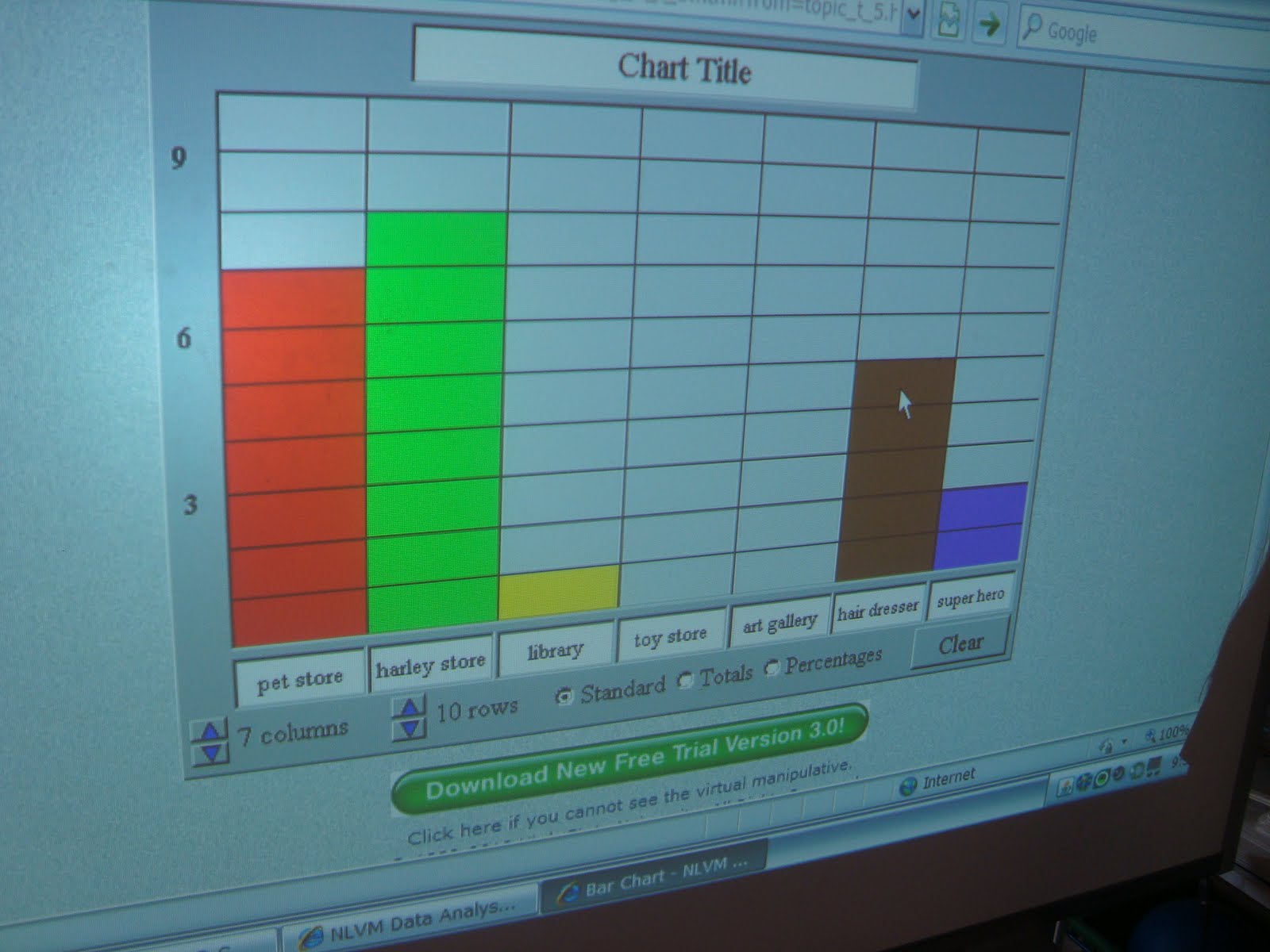
Noticing that the children were tiring of the house center, we asked them to suggest ideas for what the dramatic arts center could be next. There were many great ideas - a motocycle shop, restaurant, art gallery, pet shop, and super hero headquarters.

We put the children's ideas into a graph and had them vote for their favourite using the Smart Board.


The Harley Shop came in first with the Pet Store a close second.


The children decided to use the building center as the Harley Shop, so the dramatic arts center became the Pet Store. With Mr. Cipkar's help, the children quickly changed the center. They stored the house items away and thought of what they needed for a Pet Shop.


They made a list to help guide them.


Some children gathered animals and other materials from around the room, others wrote words and made labels for the objects.


The children were very creative in how they made cages for the animals. Some used baskets from around the room...


Others used hanging net baskets...


The stove and fridge were turned into cages too!


We turned a large bin into a fish aquarium, with real water and plastic fish floating within.


We painted a sign for the store.


The children labelled the animals' cages.


They decided on how much to charge for the animals and got their cash register ready.


At the end of the day, a happy customer purchased some fish!


The vet was called in for an animal that suddenly became sick, but after some medication it felt better!


We can't wait to see what other animal adventures await at our new center! We have encouraged children to bring in stuffed animals for the center (we've asked them to ask a family member for permission first). If you choose to allow your child to share his/her animals, please label them with your child's name. Thank you!
Related Posts Plugin for WordPress, Blogger...