Showing posts with label playscapes. Show all posts

Saturday, August 14, 2021

Small World Play and Math

 "Old things are better than new things, because they've got stories in them."

Kami Garcia

What is hiding in your cupboards and closets? For 20 years now I have kept an old, beautiful china set from my grandmother high up on my shelves. I can honestly say that I haven't used it once; life with busy children doesn't lend itself to tea parties and fancy dinners. Each time I opened the particular cupboard in which these beautiful objects were stored, I'd feel a sense of guilt. They were treasured by my Nana and used for special gatherings. Now they collected dust.

As I look ahead to the next school year, I am eager to bring beautiful, inspiring materials back into our classroom. Covid has meant that many children have been home with their families, isolated from the world. I anticipate a higher than normal level of anxiety and stress as we return to school, even if we are eager and ready for this new chapter. Having beautiful, interesting materials in the classroom space can often welcome children and pique their curiosity, helping them transition into the space and overcome their feelings of anxiety.

Last week I cleaned the kitchen and as I handled the china, I wondered if it could be integrated into the classroom as play props. Not only would that give the bowls and cups a sense purpose, they would beautify our space. I liked the idea of being able to enjoy them on a regular basis; each time I look at them they remind me of my grandmother and I love feeling her presence in my life.

I had been eager to use a small teacup set (found at Value Village) in some way. I knew that the children loved small world play, and that imaginative mini playscapes held potential for rich math learning. I decided to turn my china into a tea garden. In each piece I placed small stones at the bottom for drainage. I planted succulents in the potting soil because of their hardiness and ease of care. 

     
I anticipate placing these materials on a low shelf in the classroom. They will be a semi-permanent fixture there. They will beautify our space when not in use, and be accessible enough that children can access them without needing to move them around the classroom. I have always felt comfortable integrating fragile materials into our space. My experience has been that when children feel empowered as learners, they care deeply for the materials and handle them gently. I'm also prepared for the possibility of accidents. The children are capable and careful when something breaks and I am willing to trade this risk with the reward of using these materials.

I am purposely not adding character props to this learning invitation. I would rather see how children integrate other materials we have into their play (e.g., mini animals, wooden clothespin dolls), or create their own fairies and other figures at the art center. I also see potential for creating a similar invitation outdoors in some way (e.g., fairy door in a stump). As I observe the children I will take note of their ideas and interests, and help to scaffold and support the math learning as it emerges. Some math ideas I think might present include:

  • a discussion of proportional reasoning as children explore the size of the small world and create additional play props
  • an observation of pattern as children see, think and wonder about what they find on the china
  • practice with one to one correspondence as children set the table for a tea party and create additional props to support their storytelling (e.g., plates, forks, food)
  • STEAM as children create their own figures to integrate in this play (e.g., dolls, fairies) or create their own mini worlds (e.g., dollhouses from boxes)
  • observations of shape and size as teacups are compared to one another
  • connections with capacity as children consider how much liquid might fit into the cups, or create their own tea parties while playing in the mud kitchen or water table

I'm sure as children explore the materials additional ideas will emerge. I can't wait to see what they discover! I'm eager to search my closets for other materials to upcycle and bring into our learning space!

Wednesday, November 6, 2013

Spider Playscapes

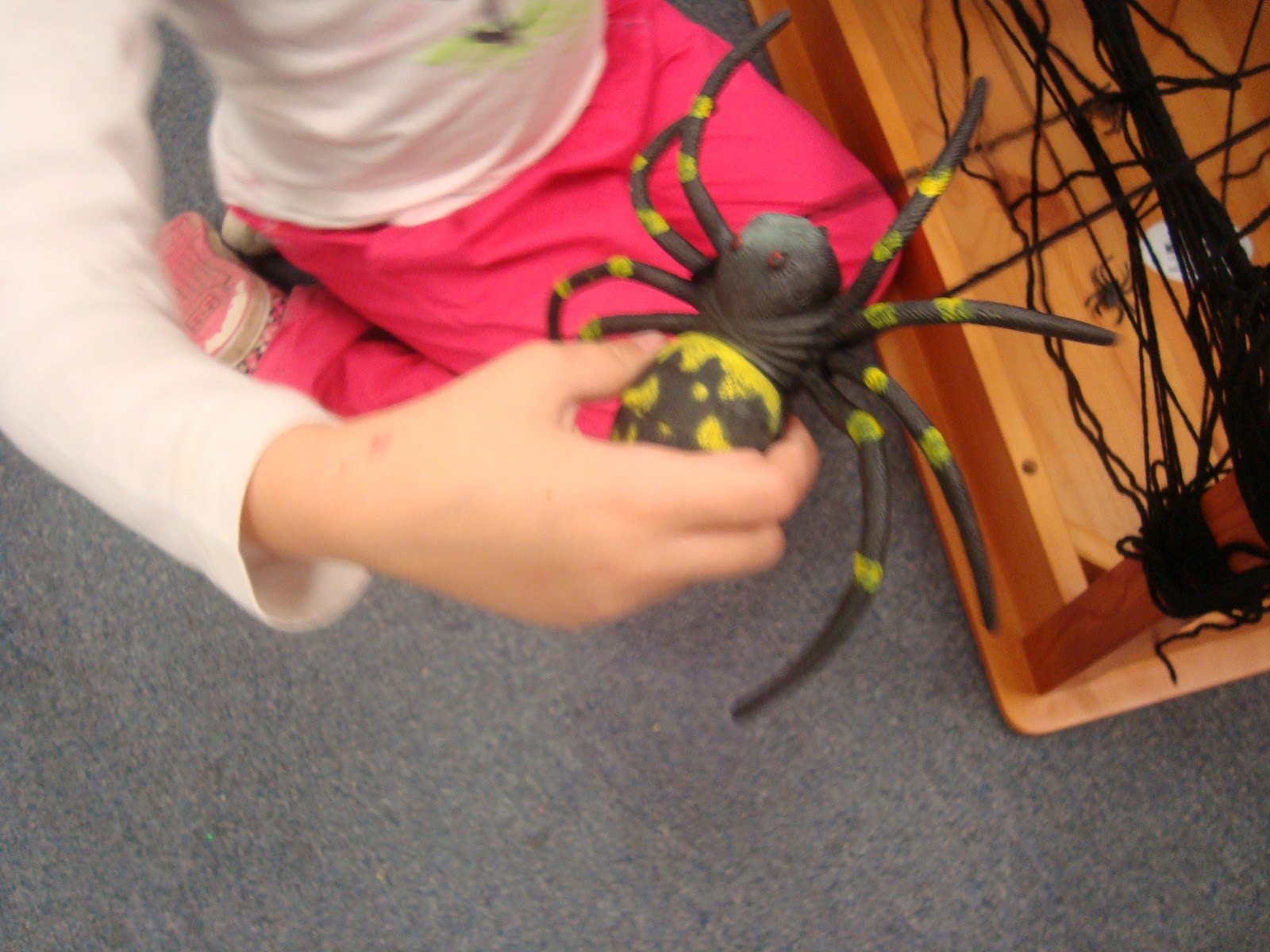
The children have been fascinated with spiders and how they make webs. We have put out a number of spider Playscapes, both inside and outside, in order to encourage the children to dramatize what they are learning about spiders. We are hoping regular handling of the plastic spiders will grow a sense of comfort and respect for spiders next time children find a real one in their house or yard. 

Tuesday, May 7, 2013

Fairy Playscape

I've been trying to get rid of a lot of our overly commercial toys the last several months. We have a plastic dollhouse that the kids haven't been very interested in. 


I have been thinking of a way to update it because I like how open and empty the dollhouse is. There is a lot of potential for creative play because there isn't much prescribed within the body of the house. After some thought I turned the house into a fairy house using natural materials like shells, rocks, and moss.


It took a very long time to hot glue the materials on the dollhouse, but the result was worth it! My daughter was thrilled when she saw it!


I was eager to capitalize on this interest, so I added a few props to enhance the play (fake grass, fabric flowers, large shells) and turned our sensory table into a fairy playscape.


The result? Hours of imaginative play! I'm eager to take this house outdoors into the garden when the flowers bloom and see how the play evolves as more natural elements from the yard and garden can be incorporated into the house.


My daughter decided to add a 'pool' for the fairies which was a shallow plastic bowl filled with water. It was interesting to add the water element to the playscape and created a whole new layer of exploration. The water drew her little brother in too!


Nothing like a dip in the pool to relax after a hard afternoon of imaginative play! My next goal is to encourage my daughter to design and create her own fairies using our art materials.


Monday, January 14, 2013

Insect Dramascape


Caleb has been very interested in insects lately so I turned our portable water table into an insect drama/playscape using some potting soil, sand, shells, and plastic insects. I also added a few branches for interest and different levels of play.


He was immediately drawn to the playscape and began to dramatize using the various props.


I joined in the play and we had a great conversation about what bugs in the winter do - this lead to some rich vocabulary building (e.g., burrowing, layers, hibernation).


Dramascapes are a great way to encourage creativity and sensory play in a small space. Tonight I plan on reading a few nonfiction books about insects to help build our understanding and hopefully inspire more adventures in the bin tomorrow!


Monday, October 31, 2011

Weaving a Spider Web

We wanted to capitalize on the children's interest in weaving and were inspired by a recent post by Teacher Tom (a blog we follow), so we asked the children how they thought they might be able to weave a spider web. We turned a small table upside down, gave the children balls of black yarn, and sat back and watched.


The children immediately began to work together, passing the yarn back and forth and weaving the web in, out, and around. Once in a while a child would move out of the way so he or she didn't get caught in the web.


What an interesting creation and great way to solve the problem of how to create the web.


Once the web was finished, we provided the children with plastic spiders and the web became a dramatic playscape!


Tomorrow we will add sticks, rocks, and greenery to the playscape to encourage even richer interactions between the spiders and children!

Monday, February 28, 2011

Ocean Playscape

We were just so captivated with the children's large painting that was made last Friday. The beautiful mix of colours - blue, white, and green - reminded us of a living ocean. We were inspired to create an ocean playscape using it as the background for play. We added plastic fish, seawood, and shells as props for the play. The children spent time working together to explore the materials.


Tuesday, January 18, 2011

Where the Wild Things Are Retell

We read the story "Where the Wild Things Are" today. In order to encourage the children to practice identifying the elements of the story (character, setting) and retelling the story in sequence, we turned our sand table into the book's setting!

The children created the characters and setting at our art table.


Experimenting with how to make tall trees.


Drawing the characters.


Referring to the book to double check what the characters and setting looked like.


The Wild Things in their treetops.


Max's Bedroom


In the story Max gets sent to his room for acting like a 'wild thing'. In his imagination he crosses a river in a boat to the land where Wild Things live. After becoming king of the Wild Things he gets homesick and goes back home. You can see in the following picture how the children have done an excellent job of depicting the setting of the story.


Retelling it together!

Related Posts Plugin for WordPress, Blogger...