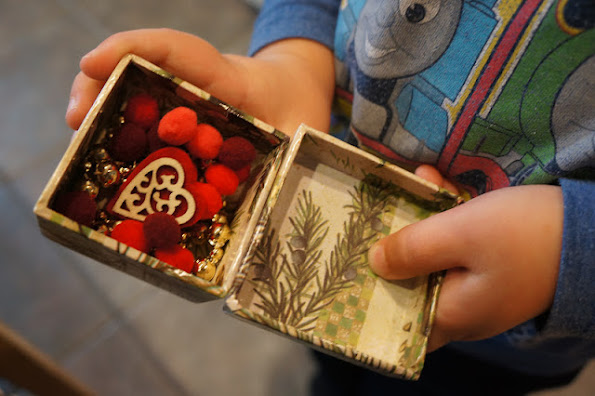
The holidays are such a lovely time of year to spend with children! However the last few weeks before the winter break can be hectic. Here are ten easy to assemble activities that can infuse playtime with math by capturing the magic of the season! Many of the seasonal loose parts included in these photos were found at the local dollar store. Enjoy!
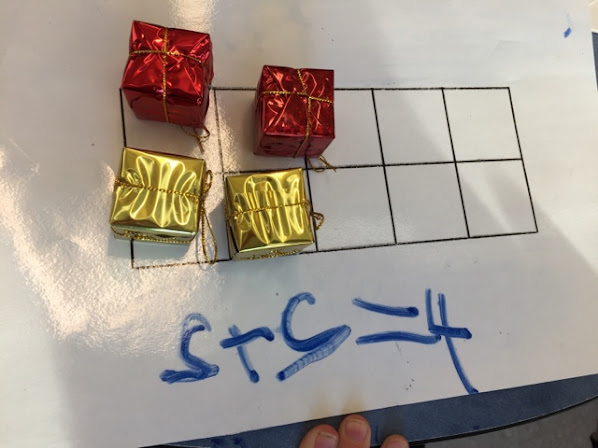
1. Count the Presents - offer children mini presents (or other seasonal trinkets including bells or ornaments) and number cards. Encourage children to match the corresponding number of objects to the cards. Children can also place presents on a laminated ten frame and write a corresponding addition or subtraction sentence using a dry erase marker.

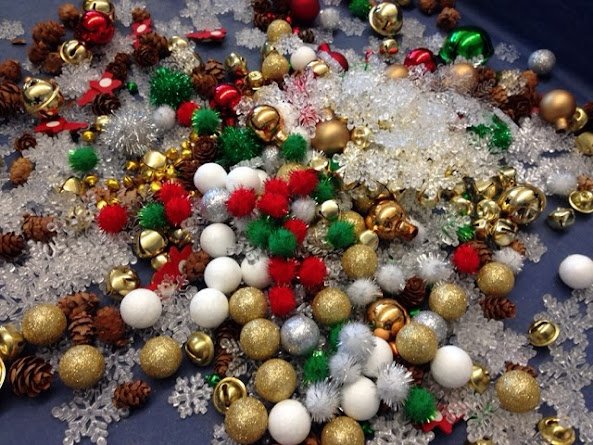
2. Holiday Sensory Bin with Mini Boxes - fill a sensory bin with seasonal trinkets and treasures. Add mini present boxes and encourage children to fill the boxes with different objects. Children can then use a hundreds grid to count how many objects fit in each box!
3. Catapult the Gingerbread Man to Safety - help mini Gingerbread Men land to safety over the river by firing them using catapults made from clothespins attached to blocks using elastics. This activity works fine motor muscles too!
4. Cookie Cutter Bell Count - display a collection of bells in a tray with a variety of seasonal cookie cutters. Challenge children to fill one cutter with bells and use a hundreds grid to count how many it holds. Which cutter holds the most? Least?

5. What's Inside the Presents? - fill different holiday boxes with loose parts. Encourage children to shake one at a time and estimate how many objects might be inside. They can then open the box and spill the objects out. Each object can be placed on a number grid and counted.
6. Fill a Tree with Trinkets - children can explore the concepts of area and perimeter by filling or outlining wooden trees (or other seasonal place mats or shapes) with a variety of bead strings, ribbons or small objects.
7. String a Pattern - secure a number of green pipe cleaners to a sturdy cardstock or cardboard base in the form of a tree. Encourage children to string beads to 'decorate' the tree using different patterns. Children can also count how many beads they use for each section.
8. How Many Elastics? - children can wrap a number of elastics around cookie cutters until they are filled. Encourage children to count how many times they wrap each elastic. For an added fine motor challenge have children remove the elastics one at a time.
9. Gingerbread House STEM Challenge - provide children with magnet shapes and challenge them to build an intricate gingerbread house. Ask them to search the room for various loose parts that will attach to the magnets and 'decorate' the house (e.g., here the staples in mini bows attract to the magnets).
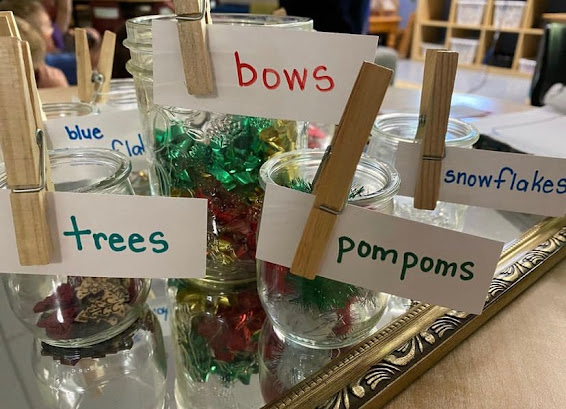
10. Holiday Guessing Jars - fill glass jars with seasonal loose parts. Encourage children to estimate how many objects are in each jar. The objects can then be shaken out and counted using math tools such as number grids and ten frames.
Looking for a book to support holiday math learning? Check out my book Holiday Math!



.jpeg)


.jpeg)


.jpeg)