Stop! Listen!”
We were outside lining up next to the school ready to head in and start our morning when Carleigh held up her hand indicating that she wanted her peers to halt their conversations and pay attention.
“Do you hear that?”
In the distance I heard what had caught Carleigh’s attention. It was the joyful ‘chick-a-dee-dee-dee’ of a Black Capped Chickadee, a friendly native bird that enjoyed foraging in the yard adjacent to our playground.
“It’s a pattern!” Emme observed. “I hear it too! I hear the dee-dee-dee part over and over.”
The chickadee continued its happy song and we stood as still as we could and listened.
“I hear it too!”
“Chick a dee, dee, dee! Chick a dee, dee, dee!” Carleigh sang-song and within a few minutes the rest of her peers joined in, repeating the cadence of the neighboring bird’s early morning song.

The natural world is waiting to be discovered and often the math that children first uncover is through mindful observation with their senses - sight, touch, taste, smell, and hearing. Children who emotionally connect with and nurture their surroundings will grow to be environmentally conscious and mindful of their impact on the earth. We spend at least an hour outside each day - this includes guided, teacher provided invitations and activities for learning, and also free exploration by children in the yard. This year we are also hoping to start 'Forest Fridays' where we walk the local nature trails in the community around our school on a weekly basis. The outside holds amazing learning for children. Helping children notice and name their mathematical findings by incorporating the senses increases their understanding and connection with the world. There are also many wonderful children’s books about the human body that can be used to introduce each sense and help children focus on paying attention to a particular sense when outside.
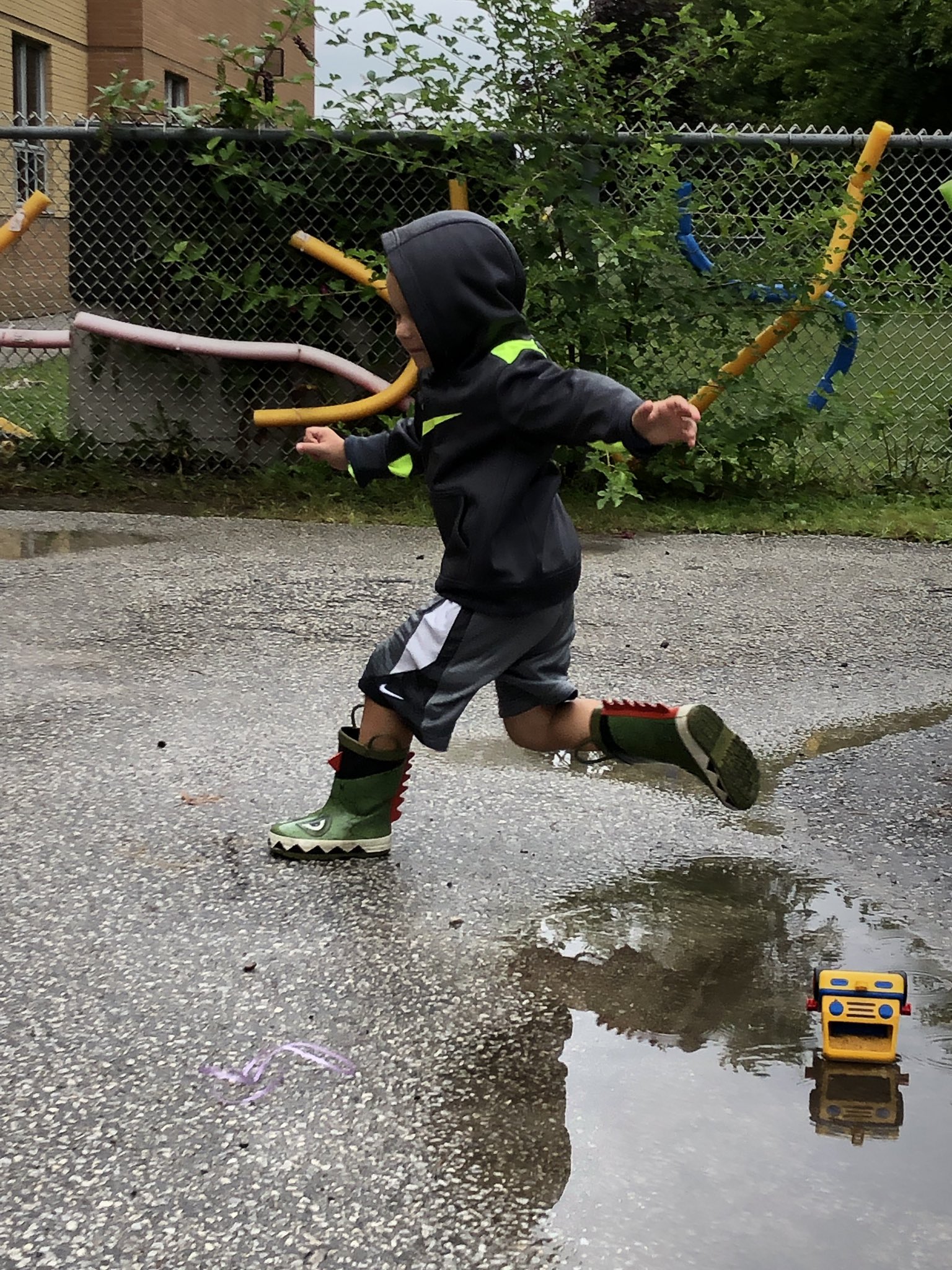 One of our favorite math activities is going on nature walks mindfully focused on one sense at a time. Children walk together and use technology to capture their findings (when going on a ‘hearing walk’ the children listened for different sounds in nature and we used the microphone feature of our iPads to capture what they discovered). Sometimes the math may begin to blend and blur with science topics. This is an important connection for children as they see the relevance and authenticity of math in their everyday life. It is also another way for educators to justify the time spent outside; integrating subjects such as math and science helps to fulfill more standards while making learning more meaningful and relevant to children's lives. So many children (and adults!) consider math (and science) to be 'textbook subjects' - ideas that are taught in a classroom in isolation from the rest of the world - when tangible and concrete exploration of these concepts is developmentally appropriate and helps children see the relationship between school subjects and their own lives.
Some suggestions of starting places include:
Sight
*Ask children to observe the world around them. Using your eyes/sense of sight, what do you notice? What do you wonder?” These open-ended prompts help children to think deeply about their surroundings and notice and name small details. It also empowers them to ask the math questions about the world around them instead of following the teacher's lead.
*What patterns can you see and identify in our space?
*What shapes do you notice in your surroundings?
*Can you locate different numbers or groupings of objects? A pair? A group of three, four, five, etc. *How many different shades of one color do you see?
*Can you group objects based on a sorting rule?
*What’s a reasonable estimate for something large - how many leaves are on the tree? How many ants might be in the garden?
*Can you search the yard and locate/match similar objects based on how they look?
*Play a game of “I Spy” using math language and encourage children to make predictions on what object you are referring to (“I spy with my little eye something larger than my hand…. Something taller than our fence…)
Touch
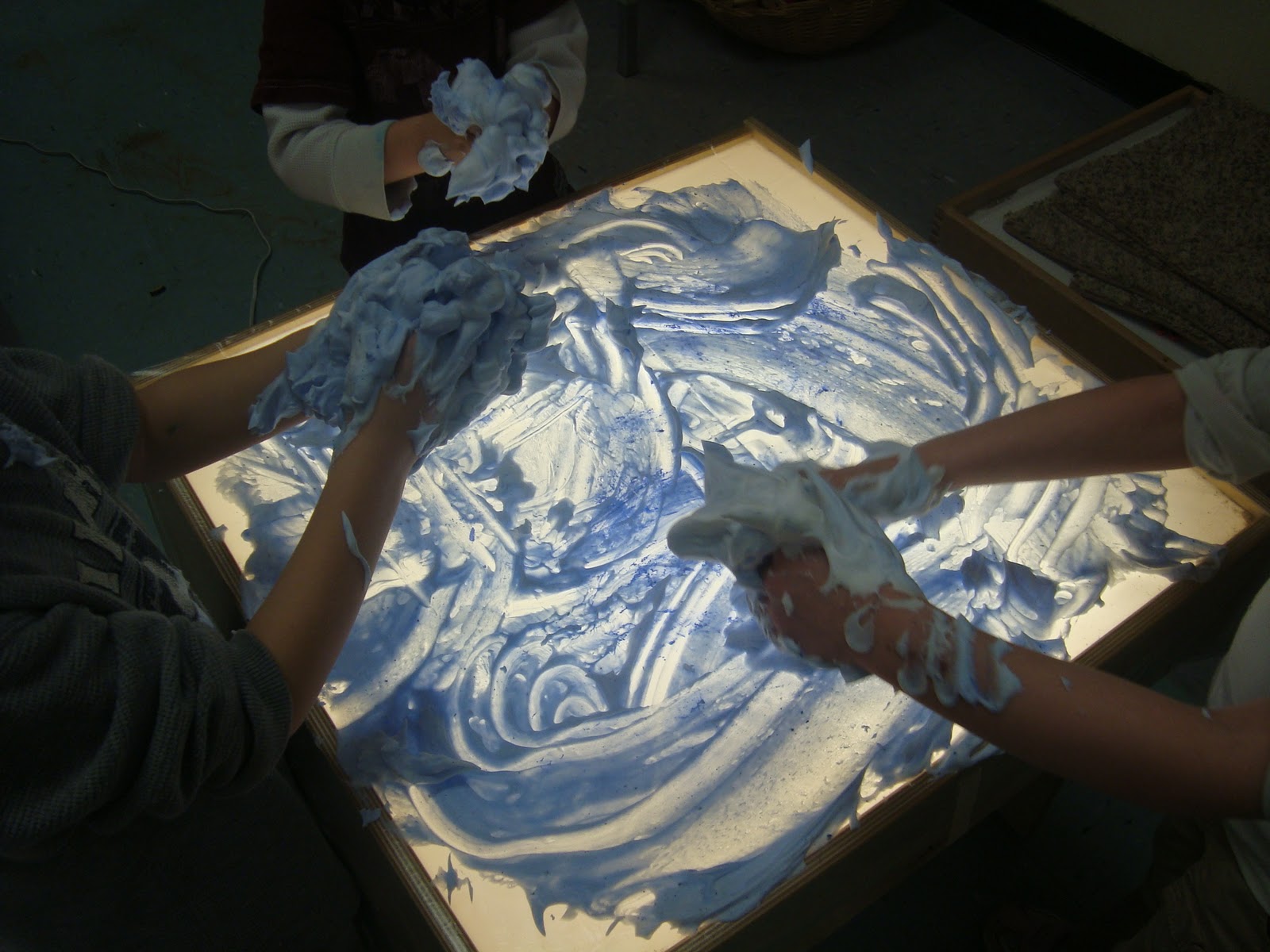
*How do different objects feel? Can you describe them? What do you notice? What's the same? Different? After children have shared their observations you can also highlight the size, shape and texture of the various objects.
*Can you describe the object in a mystery bag by how it feels? Can you guess what it is?
*Run your hand along a patterned object and describe what it feels like.
*Can you sort objects based on how they feel (hard, soft, squishy)?
*Encourage children to create a collage using natural objects they find in the yard. Identifying the object’s characteristics and then classifying and sorting helps children build data management skills. Children can discuss the inspiration behind their choices or their placement on the collage.
*Bring sculpting materials outside including play dough or clay and encourage children to sculpt it using natural loose parts. What prints can they make in the dough using different objects including pinecones, leaves or sticks? Can they see or feel patterns pressed in the dough? How do they describe these patterns to others? Can they continue a pattern?
*Give children touch challenges - who can find the heaviest item in the yard? How many children does it take to lift this object? Is it even possible to lift it? How do children problem solve when they find an object that cannot be moved? Can they find the lightest? Can children order a collection of rocks by weight (lightest to heaviest) or flowers by shades of the same color (lightest to darkest)?
*Ask children to feel different objects and describe their temperature. Are items hot? Cold? Can their properties change if heat or cold are added?
Taste
*Eat snack or lunch together picnic style - as children eat ask them to classify their food. What kinds of food do they have? Can they describe what they are eating using mathematical terms? (“This jam sandwich is so sticky I need to chew it ten times before I swallow!" "My celery stick takes five crunches to eat." "I lined up my crackers in a pattern!").
*Harvest seeds, fruit or veggies from a garden and ask the children to count how many of each item they have grown. Can children measure to see how long their fruit or veggies are? Provide samples of each food and have children vote on whether or not they enjoyed the taste. Children can write their own recipes using these harvested foods and experiment with preparing or cooking them in different ways.
*Offer children foods grown from the local area. After tasting samples of each ask the children to classify the foods using a common characteristic (crunchy, sweet, tangy, mushy, sour). Photos can represent each food and be placed in the appropriate place on a sorting ring or on a chart.
Smell
*Ask children to identify and describe the different smells they notice in various areas of the classroom, yard or school. What connections to the smells can they make?
*Encourage children to go on a ‘smell hunt’ around the yard and find natural items with different kinds of smells (sweet, strong, unpleasant). Children can place the object on a chart placed in a central location. After the hunt children can calculate how many of each item were found.
*Play a game of mystery smell. Place an object in a bag and have children close their eyes and smell. They can use language to describe the smell and then indicate whether or not they liked it by voting on a class chart.
*Children love to create their own ‘potions’ outside. Often when objects are crushed they release a stronger smell. Encourage children to create their own recipes or smell equations by gathering different objects outside and mixing them together. Children can also use large rocks to crush and mix the objects together. Provide clipboards and pencils so children can write down their ‘equations’ (10 rose petals plus a handful of grass equals a sweet and strong smell).
Hearing
*Ask children to mindfully sit on a blanket in the middle of the outdoor space and close their eyes and observe what they hear. Can they identify what the sounds might be? How many different types of sound can they count? Can they guess the direction and distance of each sound? What patterns can they identify (bird calls, insect chirps).
*Ask children to use their bodies to make different sound patterns. They can clap, stomp their feet, tap their knees, and snap their fingers in different rhythms. Play follow the leader where one child plays a pattern and the others have to repeat it. Children can articulate the pattern rules they hear (one clap, two stomps, one clap, two stomps).
*Study different animal calls - many have a repeating pattern in their sound. Play recorded animal calls on the iPad and ask children to describe what they hear. Challenge children to sit quietly in an area and try to get a bird’s attention by echoing its call. Record the noises you hear in the outside world and play these during quiet mindful time later on in the classroom.
*Create a musical wall by hanging recycled materials on a fence for children to explore - pots, pans, muffin tins, bells, metal pieces - and encourage children to create their own songs. These can be recorded as musical notations and ‘played’ by others. Encourage children to read other children’s music and play it using the materials provided.
*Provide a portable music source (wireless speaker, iPad) and encourage children to listen to and identify the different rhythms they hear. Add colourful scarves and other fun props to encourage big body creative movement incorporating patterning.
Encouraging children to internalize and make emotional connections to the world around them using the five senses cultivates strong eco-stewardship and math learning. In addition to guiding children through the teacher-initiated games and activities listed above, there are many more ways to cultivate a mathematically rich and responsive learning environment in any outdoor space.


.jpeg)


.jpeg)