Showing posts with label photography. Show all posts

Sunday, April 16, 2023

Using Outdoor Discoveries to Inspire Rich Math Talks

"It's the little details that are vital. Little things make big things happen."
John Wooden

Now that spring is emerging muddy conditions are common in our school yard. Although some educators shy away from messy spots, I find they are often one of the best places to notice and name rich, authentic math.

One morning the children were exploring the yard and noticed interesting tracks on the path. They took their time observing the different prints they found. They wondered who had been visiting the space and how the markings were made. They noticed that the prints appeared to be dried in the dirt and preserved in the thick mud. 


The tracks that fascinated us the most were those made by animals. Our school is located near a wooded trail and our yard is frequented after hours by coyotes, deer, geese, wild turkeys and dogs. The children compared the different tracks and used their prior knowledge to try and identify the animals. We also used a handy animal tracks identifier to help us as the difference between some tracks is minimal.
 
               
The children were also very curious about the shoe/boot tracks that they found alongside the animal tracks. Within each we noticed intricate shape and line details that differentiated them from one another. We identified many shapes including circles, diamonds, hexagons and squares. There were also many different lines in each - straight, wavy, and zigzag.


We wondered if our footwear matched any of the tracks. The children examined each other's feet to see if they could find a match between their shoes and any of the tracks. This inspired rich observation and discussion as small details were noted and comparisons were made. 
 
In order to capitalize on this interest I printed large photos of a shoe and animal print and brought them to our whole group discussion. I asked the children to consider what was the same and different about each print. I also used the thinking routine 'see, think, and wonder' to facilitate math talk and help the children mathematize the photos. 
We also brought this interest in prints to our art center where children were invited to paint our spare classroom boots and stamp them to see what kinds of prints they made. 
Once the tread prints were dry the children brought them to our whole group gathering time and we continued to observe and discuss the shapes and lines we saw in each. The children grouped the prints according to similarities and also compared the size of the marking to their feet in order to see which was the bigger foot. 
 
As spring weather continues to bring rain, the children's interest in tracks endures. The children are now curious about how long an entire track path is, how deep the prints are in the mud and how much space is in between each print. They wonder about how far and fast the person or animal might have been travelling and use these clues to help them hypothesize the speed and distance. Each time a discovery is made in the yard I carefully document the findings using photos and videos so we can bring the information back to our whole group conversations and build our collective knowledge about tracks. 

Our next step will be to record ourselves making tracks in the mud using digital tools. We will use the different recording options on our smart device including time lapse photography and slow motion recording. These will be interesting to watch and will hopefully help us understand more clearly how the distance, pressure and speed of movement will affect the way a print is made in mud. Stay tuned! 

Looking for a resource to support mud play? Check out my book Muddy Math available on Amazon!

Saturday, May 21, 2022

Daily Math Talks with Young Children

  “Mathematics is a very broad and multidimensional subject that requires reasoning, creativity, connection making, and interpretation of methods; it is a set of ideas that helps illuminate the world; and it is constantly changing.”
Jo Boaler

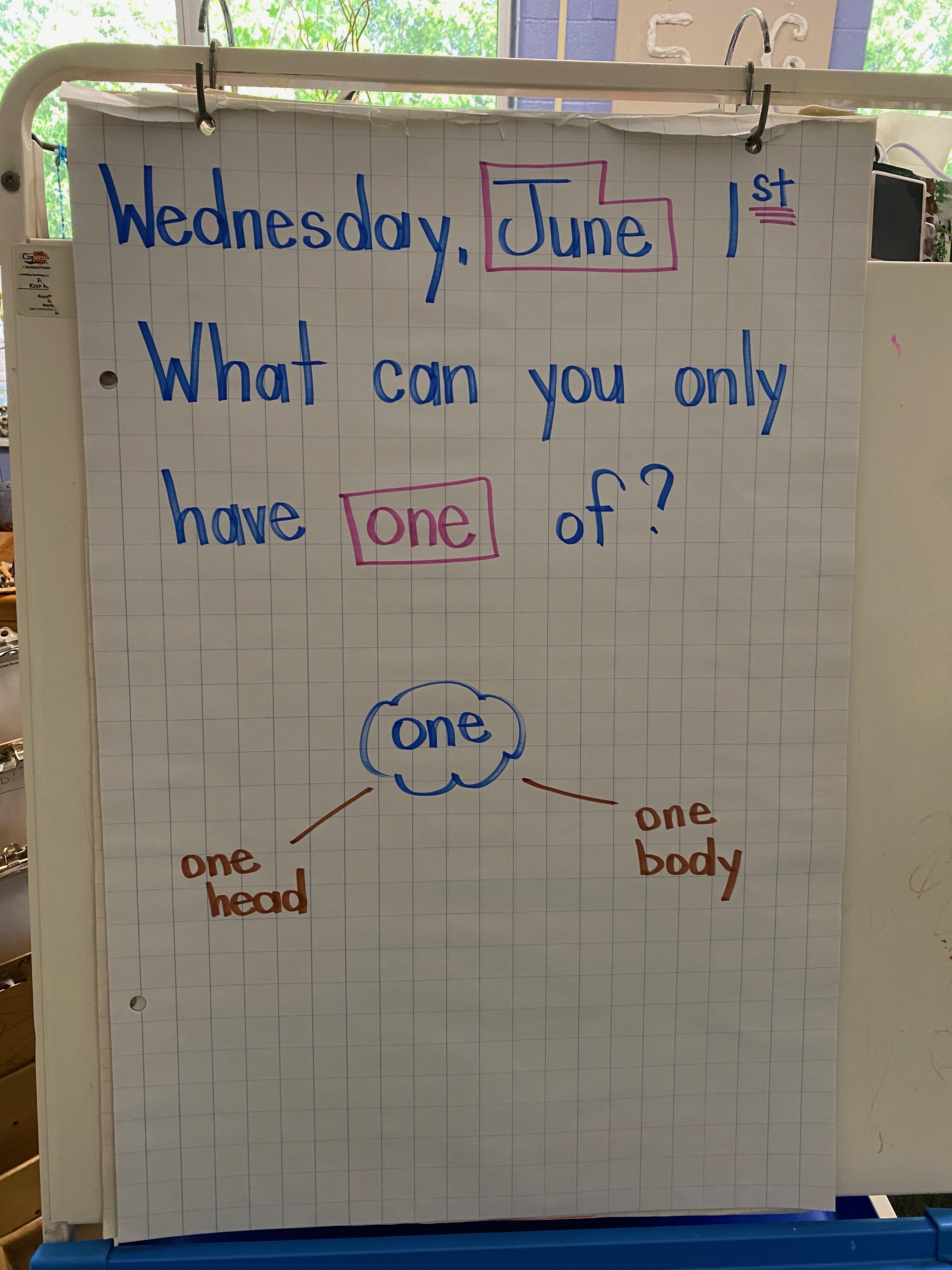
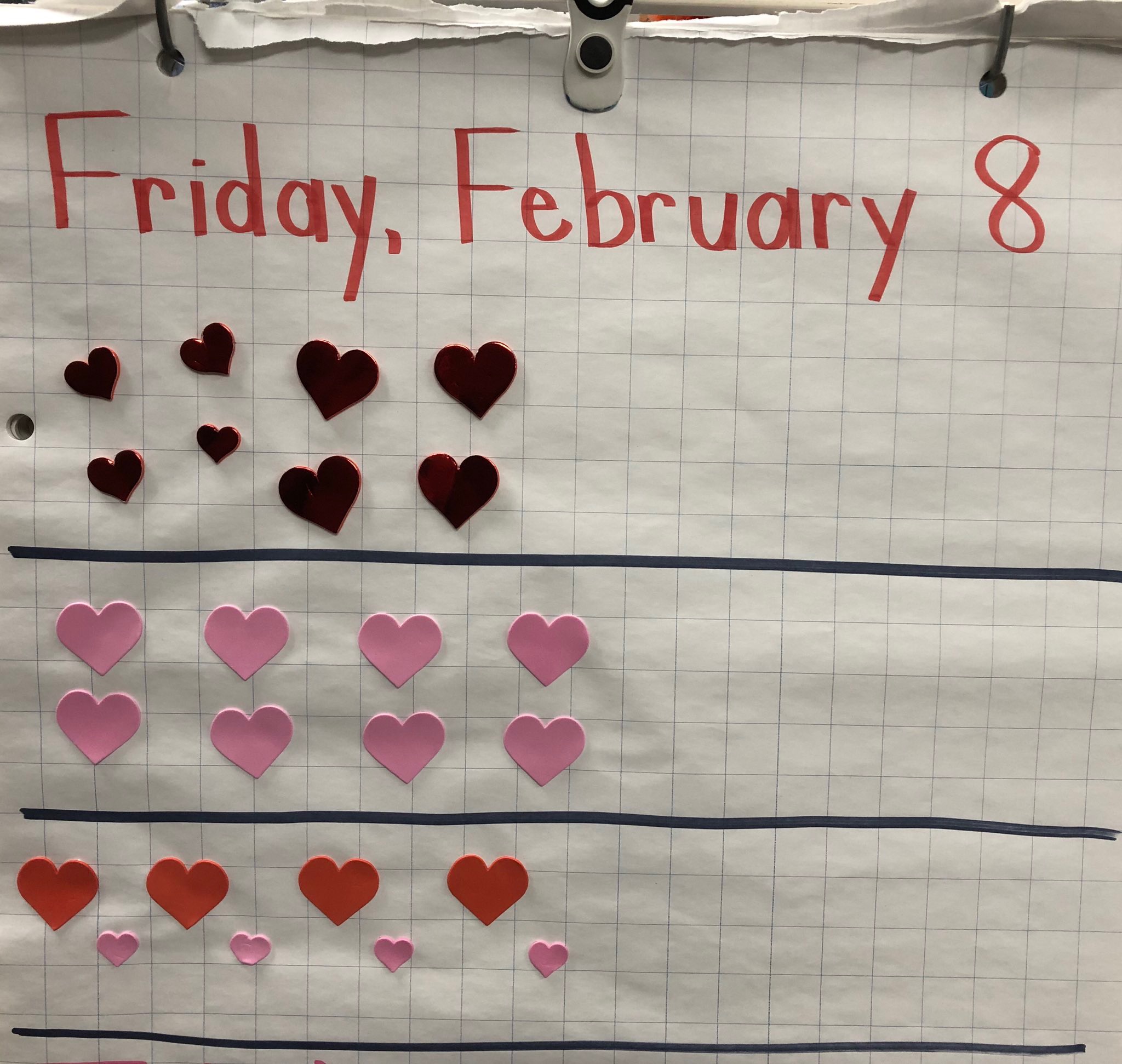
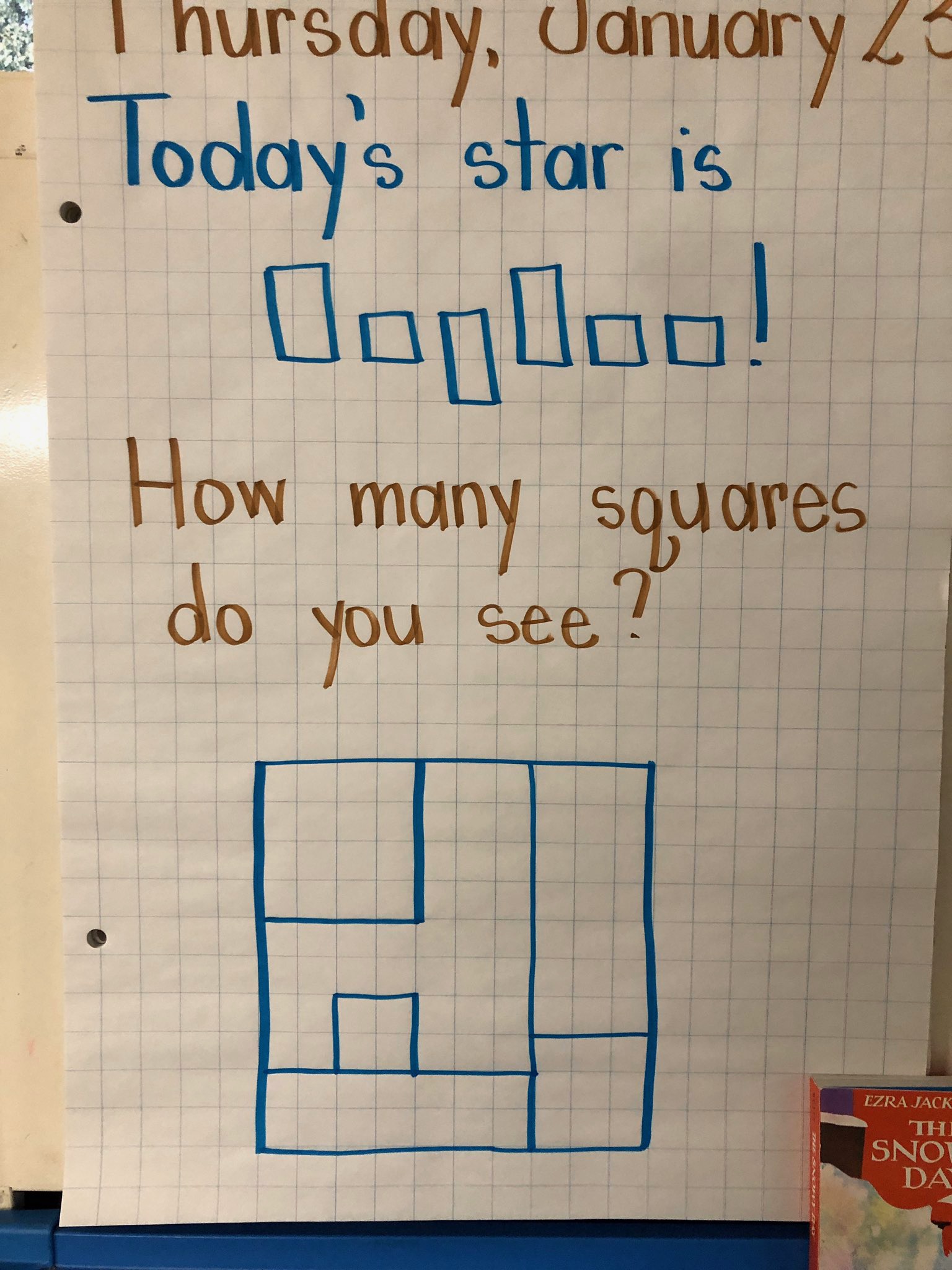
Math talks are a great way to engage children in open-ended explorations that invite them to think critically and creatively about a concept. An effective math prompt to facilitate a rich math discussion will be layered; it should be open-ended with multiple entry points for engagement. Even children as young as kindergarten are capable of participating in complex math conversations. In our classroom I aim to invite children into a math talk at least once a day; I sometimes use the numerical date on our morning message as the spark for exploration. Other times an interesting photo or collection of loose parts will be engaging and incite children into further exploration. I try to vary the invitations I provide in order to diversify the math we discuss and to reach as many learning interests as possible.

Recently I posted two Instagram Reels regarding our daily math talks that has generated many questions regarding how we engage young children in robust discussions about math each morning. There was much interest in these math prompts and many educators reached out with questions regarding how I create these prompts.


In our program we have a morning circle time. This circle is our first whole group gathering time for the day and helps set a positive atmosphere in our classroom. It is also a time to celebrate being together, and share news from our homes. We often use it as an opportunity to read a story and discuss any new and exciting activities or additions to our classroom space about which the children should know in order to be successful for the day. 
 
When I first started teaching kindergarten many years ago it was expected that the morning circle would begin with 'calendar time' where children would put a sticky number on a large grid to depict the day and there would be an extensive discussion about the calendar (e.g., day of the week, month, year). However over the years I realized that this was a very teacher-directed task and not as meaningful a use of our time. After reading Sherry Parrish's work on number talks I was inspired to use our morning message as an anchor for math talks. Wanting to still introduce the date to students, the numerical representation of the date became the foundation for our number talks most days. Sometimes I would use other prompts depending on the events and interests emerging in our classroom. If you would like to read more about number talks in kindergarten, you can access an article I wrote for the Journal of Teaching and Learning here: Joyful Number Talks in Kindergarten
 
I enjoy participating in a professional learning community with educators on social media and often tweet or Instagram my number talk prompts. Many educators have reached out to me how I create these open ended math talks, and to ask if I would consider sharing some ideas to try. Here are some examples of number talks we have used in the classroom. Feel free to share your own ideas in the comment section or tweet/instagram me @McLennan1977. 
 

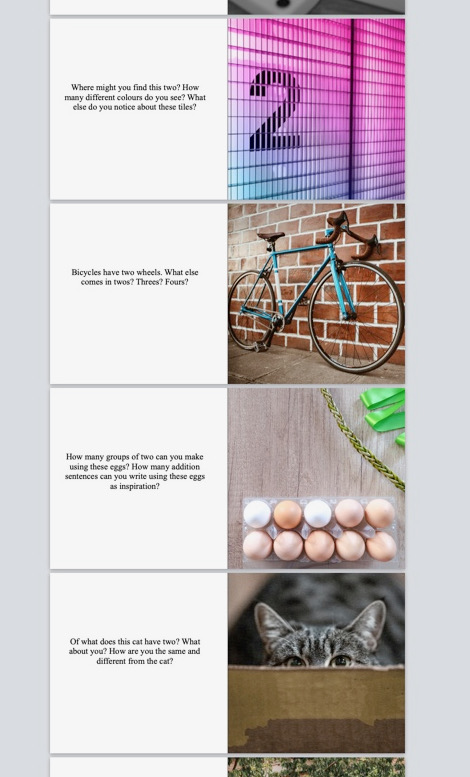
To help support educators who are interested in starting daily math talks with children, I have published a book called Calendar Math: Daily Prompts for Math Explorations with Children

To help give an idea of what this book is about, and to help educators create their own math prompts, here are the first few pages of the book!


Wednesday, April 20, 2016

Self-Portraits

"Art has the power to transform, to illuminate, to educate, inspire, and motivate."

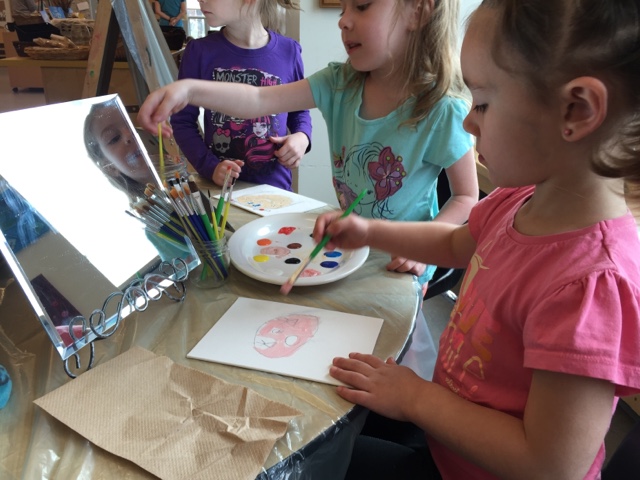
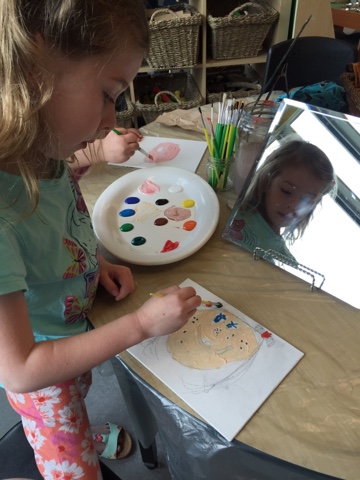
In our classroom we love using the power of observation and the language of art to share our ideas with others. This week we encouraged the children to visit the art area in order to paint a self-portrait to hang over their cubbies. We placed a large mirror at the table along with a variety of paint brushes and acrylics. Some children drew a pencil sketch on the canvas first and then painted over while others painted freely.


The children's attention to detail was inspiring; they noticed the shade of their skin, shape of their face, length of their hair, and even what expression they should be wearing in the painting.


They took their time studying the uniqueness of their reflection and representing their individuality and personality in the self-portrait. It was interesting to watch the artist work; behind him or her were a few admirers watching the process and waiting patiently for their turn to paint. The conversations were low and focused as the artist's work was admired and decisions were made as to which colours they would be using for their piece.


The paintings were hung over each cubby along with a new, framed photo of each child.


We hoped to honour each child's individuality and spirit through the use of photography and paint. We think the results are simply stunning! Check out this new display next time you visit our room!


Wednesday, November 11, 2015

Slides on the Light Table

We recycled some old slides by placing them on the light table for the children to explore. Many had never seen this old technology before. 


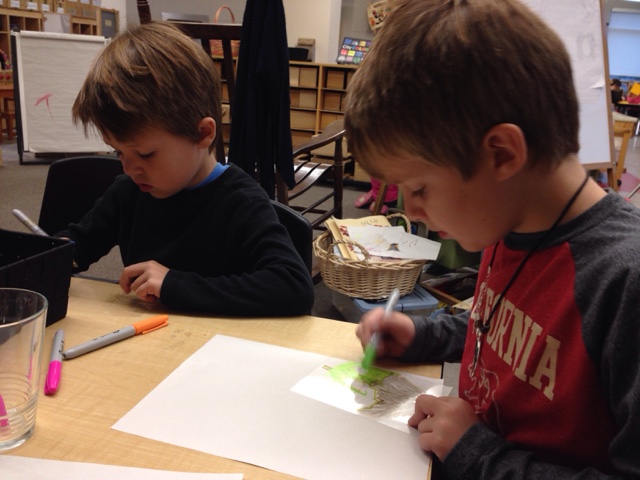
The children wanted to make their own slides so we offered overhead transparencies and permanent markers at the writing centre. 


It was so interesting to see our 'slides' on the light table. 


An interesting way to learn about old technology and explore on our own!
Related Posts Plugin for WordPress, Blogger...