"Look deep into nature and then you will understand everything better."
Albert Einstein

The
children were gathered around a large landscaping rock, working
together to arrange twigs and flowers they had picked from the ground
nearby.
"I
think that this side should be the living room and the bedroom can be
over here," Jack gestured as he spoke. "The living room will be next to
the bedroom and the ladybug can crawl across by using this little
bridge."
"So what are these little sticks here for?" Mary pointed to a little row of twigs placed next to each other.
"Oh, those are going to be the bed." Olive answered.
"But that's way too big to be a ladybug's bed," Mary responded.
"Oh," Olive pondered. "I didn't think about that.
"That's okay," Mary smiled. "We'll just find more than one ladybug and then the bed will be the perfect size for them to share."
Spring was in the air and the children were excited to discover that many little creatures were venturing out into the warm sun. Ladybugs, rolly pollies, and ants were abundant and this sparked the children's imaginations. Eager to 'help' the insects the children set to work building little houses for them. They searched the yard to gather materials they felt would be best suited to this task.
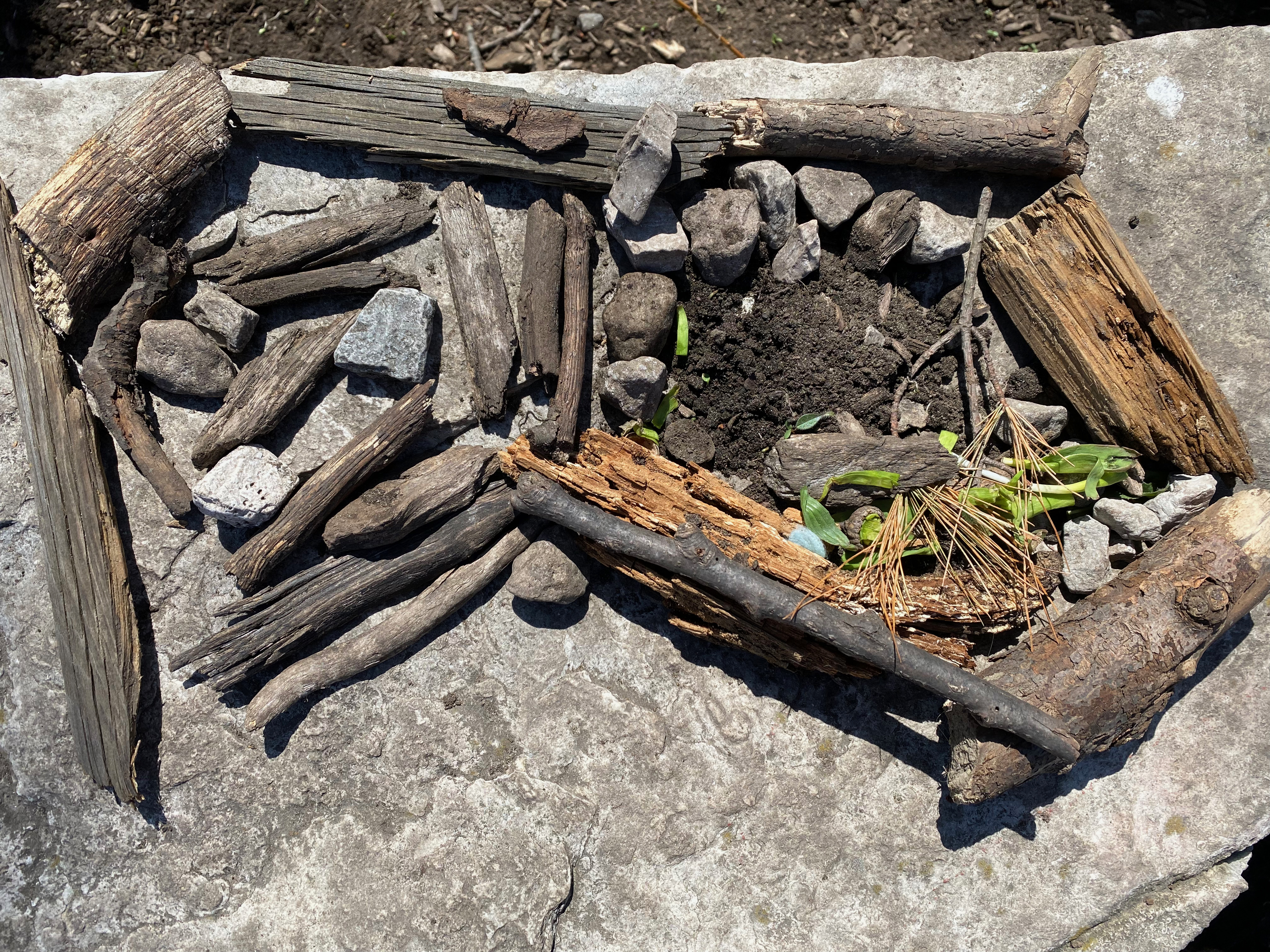
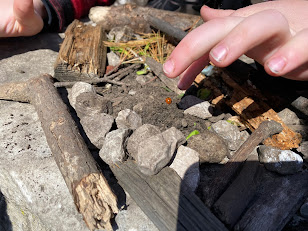
Each day the children would return to the mini houses and continue their work, focused on creating the most aesthetic and functional space for whatever creature they had found that day.
 There are four steps to the design process for young children. When I reflect upon the children's garden engineering of the habitats I observed these steps in action:
Identifying a Problem - the children felt the insects needed a home
Imagining and Planning - children brainstormed that natural loose parts could be used to design and construct a habitat and engaged in conversations about what this might look like
Creating - children spent time over many days creating different homes for different living creatures
Improving - children revisited their creations each day and revised their plans when necessary after they noticed new things about the insects or had engaged in conversations with peers

What might seem like a playful activity outdoors has the potential for much rich learning using an engineering mindset. When children create habitats outdoors they are participating in rich math exploration in action including:
-discussing, designing, and refining a plan
-classifying and sorting materials by common characteristics
-considering proportion as they build for specific insects
-using spatial reasoning and design as they manipulate materials
-thinking about measurement as they incorporate area and perimeter into their 'house' or discuss the attributes of materials (e.g., the heaviness of rocks, the length of sticks)
-counting materials gathered and used in the design process
-naming colours and shapes that emerge in their work
-using positional language to describe their creations
-thinking about balance and stability as they assemble materials
-incorporating patterns or symmetry as they create aesthetic structures
It's amazing to notice and name the rich math learning that emerges in children's self-directed play outdoors. Taking photos and videos of the work, engaging in discussions with kids about their play, and reflecting upon the experiences can help educators make this rich learning visible to others! Sometimes nature is the most effective math teacher of all!