Showing posts with label winter. Show all posts

Sunday, February 2, 2025

Introducing Children to Strong Characters Using Diverse Texts

"Simply put, a book is both a mirror and a window. It can reflect the reality of a child’s life, allowing them to see the story of someone who looks like them, thinks like them, or lives like them. It can also help a child understand what it’s like for those who live different realities, whether that is a different racial background, religion, socio-economic status, or another facet of identity."

As an educator I have always tried to include diverse texts in my classroom. Whether they are provided freely and permanently to children in the cozy reading area or explored during whole and small group learning, I feel it is so important to help children learn about the amazing diversity in our world. I have spent my entire career collecting texts that help represent the diversity of the children in my care and introducing them to the beauty of humanity beyond their current life experience. I want children to feel seen, represented and appreciated in our learning space.  

A favourite character of mine is Peter featured in books by Ezra Jack Keats. Peter is a typical little boy - spending time exploring nature, connecting with his dog Willie, and feeling the changes that happen in his family when a new sibling is born. I appreciate the artwork created by Keats in the Peter books. They are a staple in my classroom.

This winter I was inspired to research Keats more deeply. I knew he authored The Snowy Day in 1962 but was surprised to learn that Peter is considered to be one of the most consequential children's book characters. Keats felt it was unfair for children to read books that only featured white characters so he created more diverse stories. How did I not know this? Peter is one of the first Black protagonists in a children's story that won the Caldecott award.

Looking back on past readings of The Snowy Day and Peter's Chair, I felt I may have glossed over Peter's Blackness, focusing instead on the plot of the book and its beautiful illustrations. I wonder how many of my students recognized Peter as Black, and made personal connections with him through the beauty of the text. This time I aimed to accomplish more. Before reading the story I introduced Peter to the children as one of the first Black characters in a book. We talked about representation and how before The Snowy Day Black characters were not prominent in books. We discussed how unfair that was and how important Keat's work would have been at that time. This was perfect timing because the children had just learned about the work of Alma Thomas in a previous exploration of concentric art work. During our research we learned Thomas could not attend school because she was Black, and was one of the first Black female artists to have her art displayed in a gallery. Exploring Peter consecutively with Alma Thomas helped give children context when thinking about social issues and racial discrimination. This made our 'text to self' connections to Keat's books richer and more attainable for children. 

I also intended to help children feel more connected to Peter. We used class discussions to think about him. How old did we think Peter might be? How were we alike? What might we say and do if Peter were a member of our class?


My teaching partner and I offered children STEM challenges to help design a new chair for Peter...

          
...and we explored the setting and actions he experienced using the language of art. The intent was for children to continue to think deeply about Peter as a character and feel connected to him beyond our initial explorations of the text.
         
As we continue to explore books that Keats wrote featuring Peter and his family, I am hopeful that children will think more deeply about him as a character and recognize that despite our differences we are really the same children at heart, and that all people have a right to feel seen, heard and represented in our classrooms and world. Digging into diverse texts, understanding their histories and connecting with strong characters is a step in the right direction.

Friday, December 13, 2024

Printable Subitizing Cards

We use these subitizing cards for many games in our classroom. This past week we invited children to play a 'roll and record' game. Using one die or two dice, children would roll, subitize or add, and cover that number on their card using a holiday trinket. Click on the image of the card to download your own copy of the four subitizing cards!

Sunday, November 10, 2024

Facilitating Math Talks with Young Children - Printables to Support the Math Talk Books

Math talks are a great way to engage children in open-ended explorations that invite them to think critically and creatively about a concept. Math talks are like number talks, yet include any area of math that an educator would like children to explore. An effective math prompt to facilitate a rich math discussion will be layered; it should be open-ended with multiple entry points for engagement. Even children as young as kindergarten are capable of participating in complex math conversations. In our classroom I aim to invite children into a math talk at least once a day; I sometimes use the numerical date on our morning message as the spark for exploration. Other times an interesting photo or collection of loose parts will be engaging and incite children into further exploration. I try to vary the invitations I provide in order to diversify the math we discuss and to reach as many learning interests as possible. 

In our program we have a morning circle time. This circle is our first whole group gathering time for the day and helps set a positive atmosphere in our classroom. It is also a time to celebrate being together, and share news from our homes. We often use it as an opportunity to read a story and discuss any new and exciting activities or additions to our classroom space about which the children should know in order to be successful for the day. 

When I first started teaching kindergarten many years ago it was expected that the morning circle would begin with 'calendar time' where children would put a sticky number on a large grid to depict the day and there would be an extensive discussion about the calendar (e.g., day of the week, month, year). However over the years I realized that this was a very teacher-directed task and not as meaningful a use of our time. After reading Sherry Parrish's work on number talks I was inspired to use our morning message as an anchor for math talks. Wanting to still introduce the date to students, the numerical representation of the date became the foundation for our number talks most days. Sometimes I would use other prompts depending on the events and interests emerging in our classroom. If you would like to read more about number talks in kindergarten, you can access an article I wrote for the Journal of Teaching and Learning here: Joyful Number Talks in Kindergarten
 

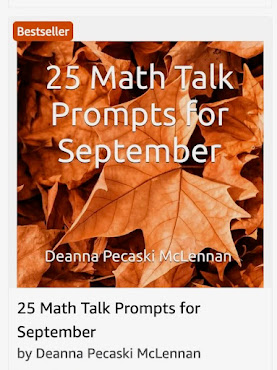
Over the years I have shared my math talks on social media and have been asked repeatedly to create a guide to support educators who wish to engage their students in math talks. This inspired my collection of monthly math talk books. Each book contain 25 prompts to engage children in regular conversations in the classroom. The prompts do not need to be followed in order. In order to help educators I have also created free downloadable PDFs that can be printed and used with students. 


Click on the book's image to be linked to where it can be purchased. 


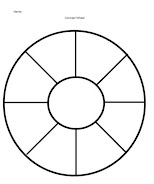
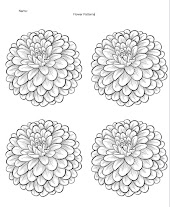
Click on the printable to be linked to where it can be printed.

Printables that can be used to support this book:


Printables that can be used to support this book:


Printables that can be used to support this book:


Friday, July 26, 2024

Book Review

"Exploring trees outdoors is an enjoyable experience that children love to do! Swinging from a branch, exploring leaves and bark, and observing gnarled roots are all favourite activities that also integrate rich learning. Heading outside to explore the yard uses children's excitement and enthusiasm for sensory and nature experiences to inspire rich mathematical and scientific inquiries about what they are seeing and experiencing."


I was excited to see a review of my book Tree Math in the MAMT Spring Journal! You can access the review here!

Thursday, March 28, 2024

Five Free Printables to Use with Tree Math

 "Trees are poems that the earth writes upon the sky."

-Khalil Gibran

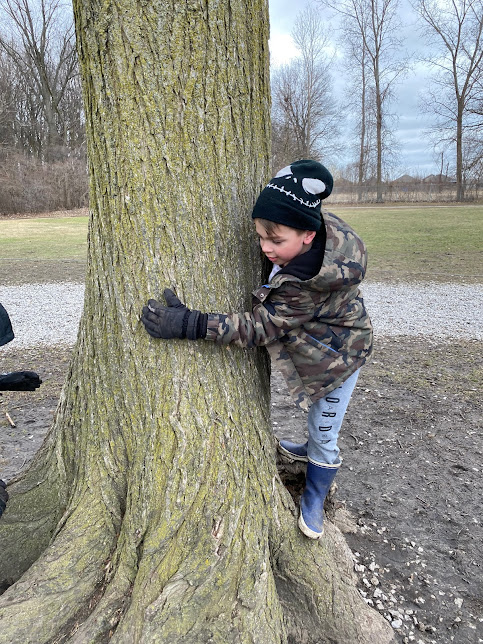
During outdoor play children are drawn to the trees in the school yard. They love to feel bark with their hands and wrap their arms around the trunk. They collect artifacts for exploration including sticks and leaves and search for insects in the bark's crevices. Trees offer so many rich opportunities for wonder and discovery as children notice how they change with the weather and seasons.


To help supplement my book Tree Math (available from Amazon and Indigo) here are five easy, free printables that can be used to support children's work in nature!

1. My Favourite Tree

Encourage children to spend time in nature and observe the tree they like best. Ask them to consider what it is they appreciate about this tree? Children can then sketch the tree on this page and compare their tree with others.

2. My Tree and the Four Seasons

Over time children can observe the same tree and draw what they notice changing during the four seasons. This page can be kept over time and added to as the months change. Children can also draw on it at one sitting and hypothesize what the tree might look like in each season, especially after conducting research about how trees adapt to the weather.

3. Tree Circumference

Children can use a variety of materials to measure how big around a tree's trunk is (e.g., measuring tape, hand spans, links) and record it on this tracking page. Drawing a picture can help explain their math thinking.

4. Tree Bark Patterns

Exploring the texture of bark appeals to many children who enjoy sensory experiences. Children can use magnifying glasses to examine the patterns in bark up close, or place a paper on top of the bark and use crayons to create a rubbing. Children can then describe what they see and compare their rubbings to others. 

5. A Tree is a Home

Encourage children to explore many trees in the school yard and neighbourhood. Ask children to observe what living things they observe on and in the trees (e.g., birds, insects, mould) and record their observations on the tracking paper. They can hypothesize how the tree might be a home for many living things at the same time.

Sunday, June 4, 2023

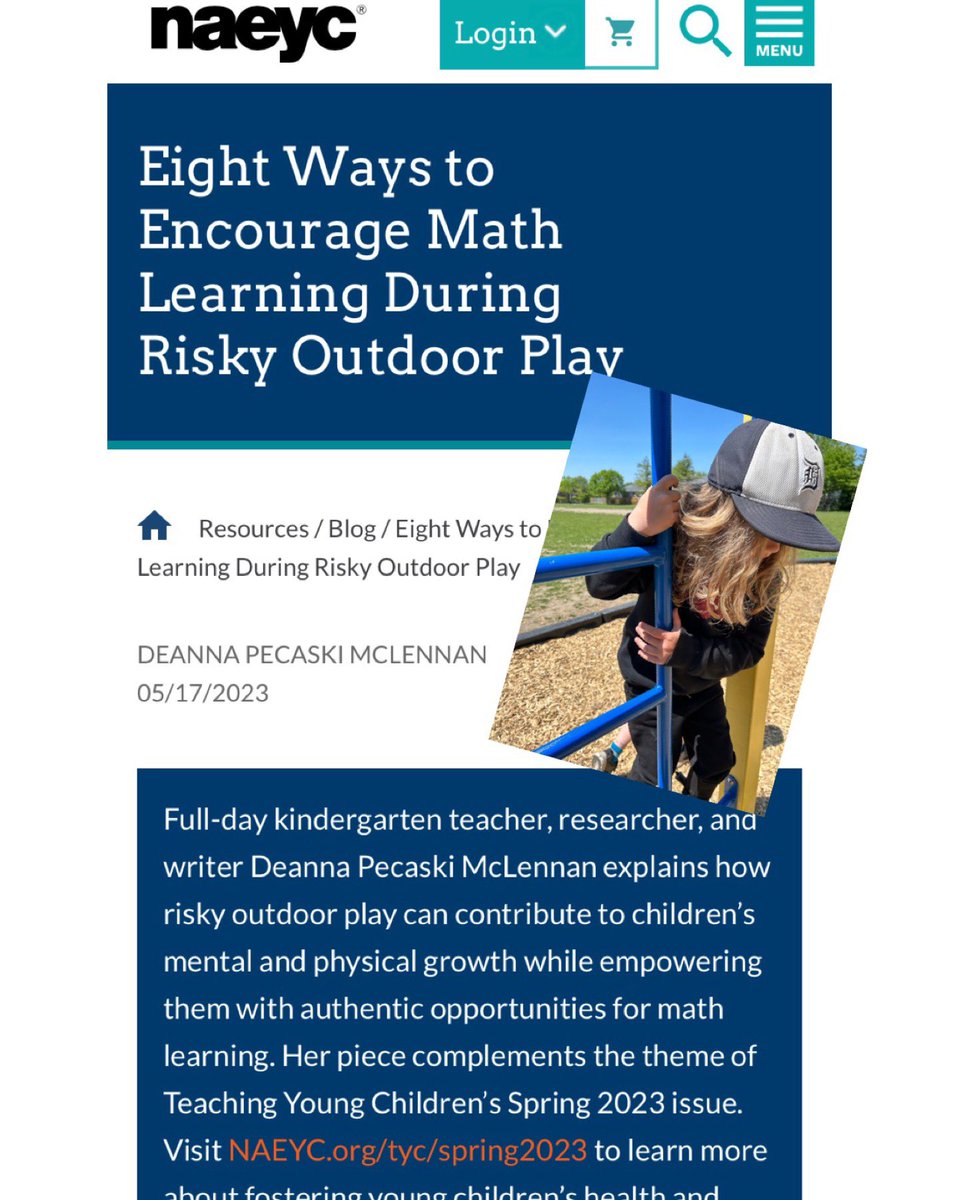
Eight Way to Encourage Math Learning During Risky Outdoor Play

This month I have a blog post featured on the National Association for the Education of Young Children's (NAEYC) website regarding how to engage children in math learning during risky, outdoor play. You can read the article here: Eight Ways to Encourage Math Learning During Risky Outdoor Play.

Image

Thursday, April 28, 2022

The Wonder of Trees

"Between every two pines is 

a doorway to a new world."

John Muir


"Look at me!" Kyle called as he stood on his tiptoes.  "I can reach so high. If I jump I can reach even higher!"

"That's nothing. I bet I can reach higher," Asher responded.

"Ok, let's see you do it!" Kyle laughed. "I can reach this high." He jumped and slapped a spot on the tree.

Asher copied the movements, jumping and tapping the tree in a different place.

"Who was higher?" they called to me.

"I'm not sure," I answered. "It's hard to tell where you each touched and compare the spots. You'll have to think of a way to mark and measure to be accurate."

Harper had been standing next to me watching the boys. 

"I know," she said. "What if you each hold a piece of chalk in your hand. When you jump you can touch the tree and leave a mark."

"Oh good idea!" I answered. "And we can check our wonder wagon to see if we have any tools that measure."

"Like a measuring stick!" Harper answered.

Spending time outside in nature each day is important for children's growth and development. There is a misconception that a robust outdoor program needs numerous tools and materials in order to be successful. However in my practice I have found that often the best inquiries spark from examining and exploring natural elements in our play yard. One of the most intriguing artifacts that children love to explore is a tree. Trees are usually easy to find, diverse, and offer endless possibilities for child-centred inquiry. Responding to children's observations and wonderings about trees can inspire rich math, literacy and science work. 

Interested in exploring the trees in your surroundings with children? Here are some ideas for getting started. 

Tell stories about the interesting markings you find on trees.  Children love to hypothesize about unique things. Ask children to imagine how a spot ended upon a tree, or look for the math within the markings (here the knot on the tree appears to be made from concentric circles).

Explore the different textures you feel on trees. Many children are sensory learners who enjoy exploring their surroundings through touch. Encourage children to feel different parts of a tree (e.g., bark, leaves, blossoms) and describe what they feel. Sensations can be categorized and sorted (e.g., making a pile of smooth leaves).

Research the different objects that grow on trees. The life cycle of trees often results in the creation of flowers and fruit. This growth pattern can be observed and tracked over time.

Inquire about what living things make their homes in trees. Each area is unique with specific animals and insects using trees as shelters. Nests can be observed and described (e.g., a robin's nest is perfectly circular). Children can be encouraged to draw pictures detailing what they see.

Hypothesize the age of a tree using different clues. The rings on a stump can help determine the age of a tree as well as its type and size. Look for stumps and ask children to count as many of the concentric circles as they can see. They can estimate the age of the tree. If a tree is still standing children can estimate how tall or old it might be.

Build gross motor skills and perseverance by climbing trees. Building resiliency, grit and perseverance helps children in all aspects of their learning. Climbing trees encourages these skills as well as being a great physical experience that many children enjoy.

Investigate how trees change over time by exploring decomposition. Logs left over time provide a wonderful opportunity for children to become curious about how it has transitioned from tree to rotting wood. Many insects make their homes in and under logs. Ask children to tell stories about what they think might have happened to fell the tree, or investigate who has been using it as shelter.

Search for clues on the tree to guess who might have visited before you. Holes in the bark can tell stories of what animals have been searching for food in the bark, or using the tree as shelter. Children can observe bark for changes over time and conduct research.

Ponder why some trees stay green all year while others lose their leaves. Coniferous trees do not usually drop their needles. Ask children to describe and categorize the trees in the yard or neighbourhood, and observe them over the course of several weeks or months.

Use materials gathered from the tree as loose parts for imaginative play. Pinecones, twigs, leaves, needles and acorns are great manipulatives for math or creative work outdoors. These can be collected from the yard or donated by families, adding variety and interest to process-based play.
Measure, record and compare the sizes and shapes of different trees. Find the largest or smallest tree in your area and challenge children to find different ways to measure the trunk's circumference. Keep track of the measurements by recording them in a nature notebook or chart paper.
These suggestions are just a starting point for using trees as the basis for rich inquiry during outdoor learning. Listening to the observations and wonderings of children can spark amazing projects. Children often have the best ideas!

Monday, January 10, 2022

See, Think, and Wonder Math Routine Using Videos

Math is all around us! As an educator I love helping children discover the authentic ways we use math in our everyday lives! As children recognize the integrated, meaningful ways math helps our world work, their interest and confidence in the subject will grow. Exploring the authentic math that exists in our surroundings may help nurture children’s interest and confidence, building a strong foundation for subsequent experiences. 

The ‘see, think, and wonder’ routine is a specific sequence of steps that guides children’s thinking regarding a specific observation. Children first describe what they see, focusing on their power of observation. Next, they interpret these observations and articulate connections to what they have seen. Finally, they share a question or wondering about the object in order to guide their future thinking work.

The 'Winter Day - See, Think and Wonder' video can be used in physical or virtual learning spaces to help facilitate math conversations. At first children can be invited to carefully observe each photo and share what they see. Ask children to use rich description as they articulate their observations. Next, ask children to make personal connections to the information presented in the text and photos. They can articulate what they think about the question prompts in the text, or make inferences about the information shared in the photos. Finally, ask children to share what they wonder about the text and photos. Educators can pause the video at any point to give children more time to engage in math conversation about their observations and wonderings.

As children engage in conversation, reflect upon their ideas. What are children curious about? What do they notice in the foreground, and background of each photo? What connections can they make to the video? What experiences do they have that relate to the objects or situations being presented? Is there something they are interested in learning further? How might they go about conducting mathematical research if they have access to these objects or scenarios in real life? What knowledge do they need to have in order to research their question? What tools and supports might help them in their quest? How can they share their findings with others?

After the children have explored the video, consider asking them to co-create their own version of the media in the form of a 'See, Think, and Wonder' class book. Children can illustrate pictures and write their own narratives. Invite children to look around their homes and communities for other seasonal situations to explore. Perhaps children can digitally document what they find and add these to their own Winter Day book. Images can also be gathered and shared in a video form. The possibilities are as endless as the questions children ask.


YouTube link is Here: Winter Day - See, Think and Wonder

Friday, August 21, 2020

Inspiring Math Learning Outdoors using Moments and Photos

The world outdoors is filled with amazing math moments. Almost anything you find - whether it is natural or man made - contains an element of math.

From the symmetry we find in flowers or garden wheels...        


...the interesting shapes we can spot in structures and found objects...    


 ...the uniquely formed angles hiding in unexpected places...


 ...to the potential for discovering and playing with numbers.


The world around us uses math in the most interesting of ways.

Many educators are looking ahead to this school year, wondering how to engage children in authentic math moments while decreasing the risks associated with the current pandemic. Many experts recommend holding classes outside. This option is appealing, but some wonder how to take the math learning they traditionally offer in the classroom to the world beyond. How might one fulfill curriculum expectations and assess student learning while being outside?

I suggest looking to the world around you for math inspiration! 

Whether you are a teacher who will be holding your classes outside, or planning to engage children in online learning, using the outdoors to inspire math talks can be an authentic and exciting way for children to delve more deeply into math concepts while seeing their application to real life. 

Teachers can chose specific photos or places in the yard to introduce curriculum concepts needed to be covered (e.g., showing a photo of rain drops in a puddle to introduce the concept of radial symmetry) or ask children to see/think/wonder about a phenomena they notice and planning a mathematical inquiry centred around this (e.g., estimating and then problem solving for how to calculate the number of daisies that have grown in the garden).


There is math potential everywhere!

To help get you started, I have compiled a collection of 75 photos featuring natural and man made objects from the outdoors. You can access these here: Photos to Inspire Math Conversations

Feel free to use them to inspire math conversations in your physical classroom, or during an online math talk. Download them, print them, use them however you'd like to facilitate math learning with your students. Heading outside to explore math might seem daunting at first, but listening to the observations and questions that children have can be a wonderful start to a rich, mathematical inquiry.

I'd love to see the math learning you experience as we head back to school. Don't forget to tweet me @McLennan1977 and share the amazing #foundmath you discover in your explorations outdoors!


Related Posts Plugin for WordPress, Blogger...