Showing posts with label School. Show all posts

Thursday, November 3, 2016

Storytelling Coding

The children continue to express an interest in coding so in order to capitalize on this, I asked them to think about some fun obstacles that they might like to encounter if they could have an adventurous walk to school.

They thought it would be fun to walk through a forest, jump over a lake, move through a city, and go around hot lava! I printed realistic over head pictures after doing a google search and we placed them under our clear plexiglass coding board so they could be easily seen.


The children decided where home was and indicated this with a little wooden house. We used an overhead picture of a school and decided this was the end point. The children decided where the obstacles would be and these were placed underneath the clear coding grid.


One child was the player and another was the programmer. The player was moved around the board based on coding directions from the programmer. The programmer was able to help the player move with the commands 'go up', 'go down', 'go left', 'go right' and 'jump'. We decided quickly that other commands like 'swim' might be fun to try as well!


It was fun to observe the children program the child around the obstacles.


They weren't interested in a clear path to school and instead led each other on whimsical journeys around the board, jumping over water and coming close to the hot lava, even when it wasn't anywhere near the school!


An extension we'd like to try next is to use a favourite read aloud and encourage the children to create the setting and characters for the text. Once they do they can use the coding board to retell the story by mapping out the character's journey through pictures depicting the setting!

Friday, September 2, 2016

Making the 1st Day Great!

Image result for 1st dayBefore the first day...

In the days leading up to school, practice walking to school or to the bus stop often so it begins to feel like a familiar routine. If you child will be riding the bus, attend the bus orientation and go over the bus safety rules a few times.

A few days before school starts, begin getting your child and yourself used to the bedtime and wake-up schedule that will be required during school.

Get everything ready a day or two in advance.

The day before, let your child pick out what they will wear on the first day of school. Let your child choose a favourite outfit from clothes that are already 'broken-in' and comfortable.

Try to get your child and yourself off to bed a bit early so you're both well rested in the morning.

The first day...

Get yourself and your child up early enough to eat a calm, unhurried breakfast. Keep things as normal as possible; if your child normally has cereal for breakfast, make cereal this morning.

When you say goodbye to your child the first day, make it quick, light, and reassuring.

Your child will be reassured by a warm hug and a reminder that you, or their usual caregiver, will be picking them up or waiting at home after school is finished.

Some parents feel a temporary sense of loss when their child goes off to school. If you're feeling that way, plan a special activity for yourself that you can look forward to during the first days of school. 

After school...

Plan a special dinner with your child's favourite foods to celebrate the first day of school.

Use the first day of school to start some routines for the rest of the school year. One of these routines is to talk with your child every day about what happened at school. Here are some questions that can help to start the discussion:

  • Did your teacher read you a story today?  Tell me about it.
  • What did you do in school today that you really liked?  Tell me why this activity was so special for you.
  • What are you looking forward to doing tomorrow at school?
Another great routine to get started on the first day of school is displaying your child's school work. After you and your child have discussed what he or she has brought home from school, display it on the fridge or hang it on an inexpensive bulletin board hung in the hallway or bedroom at your child's eye level.

Use those precious few minutes before bedtime to snuggle with your child and read him or her a bedtime story. 

We have an open door - please don't hesitate to contact us with any questions or concerns!

Wednesday, August 31, 2016

First Day Anxiety


Freshly pressed school clothing, a new backpack full of supplies, and a child clinging to your legs refusing to let go...welcome to the first day of school! Although children are eager to begin kindergarten, it's understandable for most to experience first day (first week, or even first month) anxiety. Imagine what it must be like to suddenly leave the comfort of home and be dropped into a new environment where everything and everyone is different. This anxiety is normal and we will help you and your child to get through it! Please speak directly to us if you are concerned about your child's anxiety at starting school and we will do our best to provide support and strategies for helping with the transition to school.  (As a mom I know how it feels to send your baby to a new place; even if you are excited about the possibilities school is going to offer your child, it's hard to make the transition and realize they are now a 'big kid'. I've been there and can empathize. Feel free to talk to me about your questions and concerns as I want your child and family to feel secure and confident heading into the school year.)
 
Here are some tips you might also find useful:

Downplay the milestone. For some children highlighting the first day of kindergarten as a really big deal makes them more nervous than they already are. Instead of making a huge fuss about starting school, try comparing kindergarten to something your child is already familiar with, such as going to daycare, the Ontario Early Years Center, or a music or sports class.  Explain that kindergarten will be a place where he or she will make friends and have fun, just like he or she may have done with groups of kids before.
 
Connect school to home. Bring your child with you to all events that happen before school including parent interviews. This will provide your child with an opportunity to meet us and see our classroom ahead of time. Please send in a 4 by 6 inch photo of your family (all members included, pets too) that we will display around the classroom. This will help your child to feel more connected to their home life while at school. When your child goes home at the end of the day, engage him or her in a conversation about what they did during the day. Talking to your child about his or her day at school can help connect school to home life.
 
Read books together about starting school. Reading about other children who might have fears and anxiety about starting school may be comforting to kids who are experiencing the same feelings. Here is an excellent list of books about starting school.  
 
Try to minimize your own anxiety. Just as it's perfectly normal for your child to feel some anxiety on the first days of kindergarten, it's absolutely normal for you to feel anxious when you see your child upset or when a life change like your child starting school occurs. It's also understandable that you may experience some frustration when you see other children playing happily in the classroom while yours is still clinging for dear life to your legs. Don't hesitate to speak with us about your concerns and how we can help plan for a smooth transition for your child into our classroom!
 
Don't stay too long. Reassure your child that you (or another caregiver) will be back at the end of the day (or waiting at home) and say a quick goodbye at drop-off time. Lingering will only make it more difficult for your child to see you go, and he or she may cry harder the next time because he or she may see that it's an effective way to get you to stay. As heart-wrenching as it may be for you to walk away while your child is upset, chances are that he or she will be playing happily soon after you are out of sight. We recommend that you don't sneak out without saying goodbye as this may undermine your child's trust and could worsen his or her separation anxiety.
 
Identify his or her anxiety. Find out exactly what your child is afraid of. Talk to him or her and find out what he or she is worried about. Concerned that you won't return? Afraid someone will be mean to him or her? Worried he or she won't know where the bathroom is or that he or she won't know what to do in the classroom? Once you establish what the specific fears are you will be better able to address your child's concerns and work with him or her and our teaching staff to find ways to handle them.
 
Send along a favourite comfort object or reminder of you. If your child has a favourite lovey (e.g., blanket, stuffed animal) send it along the first few days. We will ask children to keep their object in their backpack unless needed to help through a transition period. Sometimes having a favourite comfort object nearby helps provide children with a sense of security. Another wonderful item is a mini photo album filled with pictures of your family and home.
 
Don't put a time limit on how long it should take for anxiety to pass. For some children, first day anxiety may not last beyond a few days if it happens at all. For others, tears and school fears may go on for weeks. Just as each child has his or her own individual set of experiences and personality, the time it takes to adjust to school will vary from one child to another.

Visit our class blog together with your child. This helps your child see what fun and exciting activities have happened in our classroom in the past and will build excitement for the possibilities that await his or her time with us this school year!  
Don't hesitate to talk to us! We are here to help make your family's transition to full day kindergarten as smooth as possible.
 
Read professional resources to help you cope. An excellent book that we have recommended in the past for families is Nancy Balaban's "Everyday Goodbyes: Starting School and Early Care. A Guide to the Separation Process".

Tuesday, June 7, 2016

Why Blog?


As the school year comes to a close we have been reflecting upon our year; something we always review is our effectiveness in communicating with families. Have we honoured children's learning in the classroom and made visible the rich space of possibilities so that families are informed of their children's journeys and feel connected to our classroom? Have children been included in this process as an integral source of information and inspiration? We feel that one of the many ways we have been able to do this, and expand our professional learning network (PLN) is through our blog. We think all educators should consider how a blog might help them advocate for playful learning in the early years and better connect with their school community and beyond. Perhaps this blog entry will be the catalyst for some educators to create their own blogs for use in their classrooms next September. Feel free to share the address of your school blog in the comments below!

Why blog?

Blogging is an effective communication tool.

Blogging is a very effective way to to share the innovative and exciting activities happening in one’s classroom with a larger audience. Multiple forms of information can be shared on a blog - photos, videos, hyperlinks, iMovies, padlets - helping to embed technology into instructional practices and documentation.

Blogging helps demystify what happens in a process-driven, inquiry-based classroom and builds support for why this type of practice is both meaningful and developmentally appropriate practice for children. With few ‘receipts’ of learning like paper and pencil products being sent home from school, families are often left to wonder what their child accomplished all day. The all too common shrugging of shoulders is still a common response to the age old question of ‘what did you do at school?’.

Blogging can be a great way to share the learning happening through play and inquiry in one’s classroom and encourage parent-child conversations about school as families visit the site together. This helps children reflect back on past events and use the information as inspiration in order to plan for future classroom work.

Blogging also serves as an effective way for families to give immediate feedback on classroom events and activities. Enabling the comment feature allows readers to publish public comments on each blog post. Moderating these can ensure that content is appropriate and confidentiality of children (names, locations) is maintained.


Blogs can serve to motivate families and extend ideas and activities that have happened in the classroom at home. In order to encourage responses to posts and facilitate a ‘conversation’ between the blog and readers, invitations to reply in a particular way can be included as part of the post. For example, after hanging a birdfeeder outside of the classroom window and posting photos of the birds that have visited, readers can be asked to contribute photos of birds that have visited their backyards by including these in the comments section to the corresponding post. This way the audience is helping to co-construct the content of the blog. Families may be more inspired to engage in home activities that support school activities and curriculum if they have a public forum to share their ideas and relate these back to their children’s education. Just as educators may be more motivated to raise their level of programming knowing that they have an audience, so too will the readers of the blog as they work to create a communal representation of the ideas and understandings contained in the posts.

Communication also occurs between divisional teachers who share ideas and strategies for implementing curriculum. As they visit one another’s blogs, teachers will become inspired by their colleagues and this may act as a catalyst for professional conversation and feedback on activities.

Blogging integrates technology into regular practice.

Children can help blog, integrating technology into everyday moments in the classroom. Many blogging websites have apps for smart devices so children can blog in real time with an adult during an activity. Sharing time can include a review of photos inserted into a blank blog post and children can help co-construct the narrative in a shared writing experience. This also serves as an opportunity for a rich discussion about internet safety and critical consumption of online information directly in the instructional moment.

It is a cost effective and environmentally friendly way to share a lot of information with a wide audience with little to no paper products. Occasionally we will sent out a reminder slip with the blog address and description to families in order to advertise our site and remind them to visit.

Blogging also encourages teachers to become more tech savvy as they learn to manipulate new and exciting forms of technology and mash these together with their blog.


Blogging as Assessment

Blogging can be a form of assessment. Online entries can be reviewed and information used to guide assessment and evaluation for children. Online entries can be printed and personal observations regarding children can be directly written onto pages. These can then be used in a child’s portfolios.

Blog entries can be added to learning centres in the classroom as part of the documentation available. Using a QR code tagged with the web address of all entries related to that particular centre (e.g., all entried tagged drama are then shared in the dramatic arts centre using a QR code) helps bring digital documentation into the classroom and shares the stories of the rich learning that has happened throughout the year at the centre.

Children who are on extended trips away from school or absent can see what was missed and families might be inspired to create similar learning experiences at home. It’s almost impossible to make up a missed day of interactive play at school - there are no take home activities that can replicate the richness of learning together with friends - but the entries help families see exactly what their child missed while absent.

Blogging inspires.


Blogging helps educators connect with one another as interesting ideas are shared online and a spirit of learning encourages risk-taking in one’s classroom. Many teachers like to visit one another’s blogs, so your audience may eventually expand beyond the families of your students. It also inspires you to become better, knowing you are opening up your classroom to a global audience.

Blogging gives teachers an empowered voice as they strive to change the world of education and way kindergarten is viewed by outsiders. Many teachers still struggle with didactic pressures from colleagues and administrators who are unaware of best practices in kindergarten. Authoring a blog means that one has regular opportunities to share the rich, integrated, developmentally appropriate learning taking place each day in the classroom.

Blogging inspires kids. From experience I know that children in the classroom are more motivated to participate in an activity if they know I’m going to be blogging about it. They want to see themselves in a public forum and enjoy having an audience.

Blogging also inspires families. Over the years I’ve heard from many families who have begun to visit our class blog as soon as they register their child for school in the winter for the following fall. Many learn what the expectations and activities are for kindergarten and begin to prepare their children for this adventure by engaging in some of the activities at home. Younger siblings benefit as they also get a chance to experience activities, helping ready them for school at an even younger age than their older siblings. Families who are undecided about which school to attend might be swayed by the detailed programming information being shared on a blog.

Teachers are inspired to find new and exciting ways to share content from their classroom and this will help differentiate classroom practices (e.g., videos, word clouds, voice recordings, narratives, photos, artwork). As a blogger I am always interested in new and exciting ways to enrich my content, build readership, and help portray the exciting things happening in the classroom in tangible ways to others. 


Blogging helps educators reflect.

Blogging is reflective - a teacher must consider the important elements of an experience when crafting the descriptive narrative that accompanies photos in a blog entry, helping to reflect upon the experience and think about how to extend the learning moving forward.

I believe that blogging will ultimately help raise the stakes in the classroom as teachers try to outdo their own last best post and keep the energy going in the classroom. An amazing entry for me only further motivates me to try and outperform in order to have even more exciting and informative entry for families to enjoy.

As blogs are archived teachers can travel backwards in time and review posts from months and even years ago, celebrating their growth and journey as educators. It’s a record of what was done in the classroom and a predictor of future successes. It’s a way of honouring the children and stories of the classroom long after they have moved upwards into a new grade.

Your blog is who you are as an educator. It will make you marketable as an educator and help advertise you to potential administrators when looking for new opportunities (e.g., new school, assignments, leadership opportunities). We all want to have rich, detailed digital online footprints that showcase who we are as educators and show what we are capable of in the classroom and school.


Wednesday, November 25, 2015

Generating Wordles with Grade 8 Technology Buddies

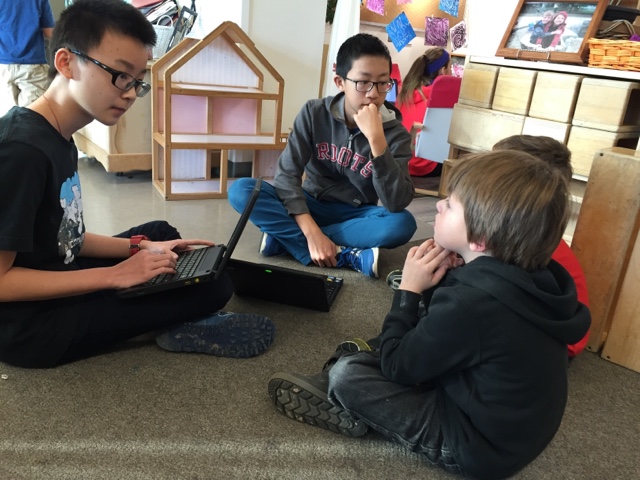
Wordles are 'word clouds' and are a great way to capture a lot of information on a subject in an aesthetic way. Today we met with the Grade 8 class to do some partnered technology work. Each kindergarten child shared what he or she loved about school and their Grade 8 buddy used this information to generate a personalized wordle. The Grade 8 prompted the kindergarten child by asking thoughtful questions about school in order to promote reflection and rich oral language.


Here are a few examples of the completed Wordles. It was amazing to review these with the children and see what they loved about school! Copies will be coming home shortly - why don't you consider engaging your child is a discussion about how they created the Wordle and what their favourite parts of school are?


Friday, July 3, 2015

Our School!

In celebration of the upcoming school year here is a flashback post to when the children explored our school. If you and your child will be joining us in September please peruse these photos so you can discuss the school and get to know it virtually in preparation for the new school year!

...the living wall outside of our classroom.


...the beautiful hallway. 


...our library. 


...the office. 


...the atrium. 


...the washroom near the gym. 


...the gym. 


...the mechanical room. (Our school has windows so the children can see how our school is maintained.)


...the rooftop garden. 


Why don't you ask your child what his/her favourite place in the school is?

Thursday, September 11, 2014

Tour of our School

Today we went on a tour of the school to learn about all of the exciting places in our building!  We saw...

...the living wall outside of our classroom.


...the beautiful hallway. 


...our library. 


...the office. 


...the atrium. 


...the washroom near the gym. 


...the gym. 


...the mechanical room. (Our school has windows so the children can see how our school is maintained.)


...the rooftop garden. 


Why don't you ask your child what his/her favourite place in the school is?
Related Posts Plugin for WordPress, Blogger...