Showing posts with label clothespins. Show all posts

Sunday, October 26, 2025

Spider Catapults


Spiders continue to be a popular topic of exploration in our classroom! To infuse this interest with math and fine motor work we introduced clothespin catapults to the children this week. Wooden catapults are easily made by securing a clothespin to a steady base (like a wooden block) with an elastic. 

They require concentration and perseverance for children to operate. As children become more confident using them they are able to use strategy to aim the catapult in a specific direction or apply pressure to further or reduce the launch power. 

Small plastic spiders (ours were from the local dollar store in the Halloween section) are light and perfect for playing with. We offer 'webs' made from wrapping a shallow basket with yarn. Children are encouraged to fire the spiders into the webs.


Once children master launching the spider into the web additional math tools can be offered to enhance the experience. A five or ten frame or hundreds chart are easy tools for children to use when tracking how many spiders they have landed in the webs.   


Additional targets can be provided for children to play with (e.g., alphabet chart, number chart, printable web with points). The possibilities are endless! 

Monday, September 19, 2011

Washing the Babies

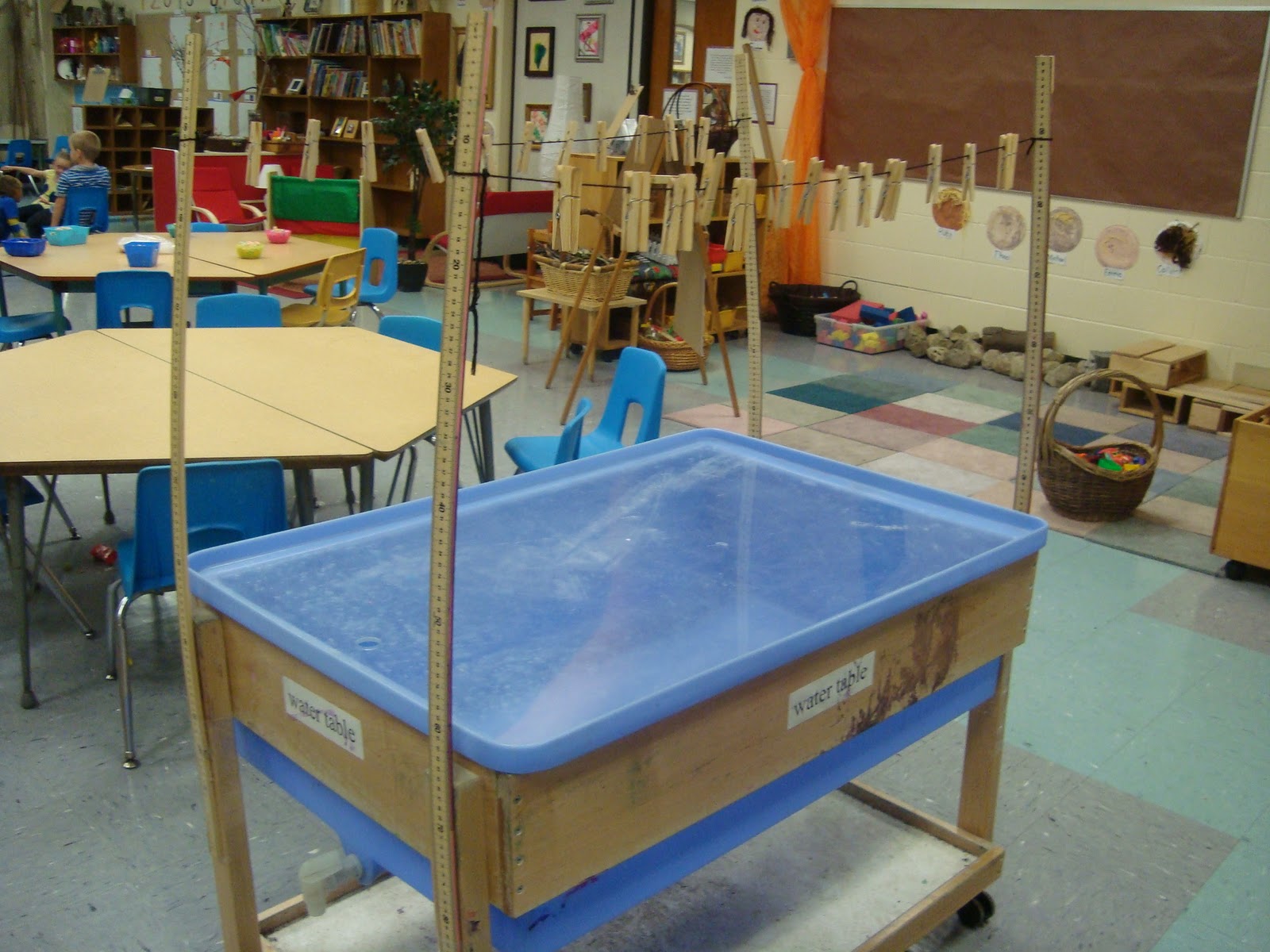
We saw a neat idea from an early years blog that put a clothesline over the water table to encourage imaginative play and strengthen fine motor skills! We tried it today.


The clothesline is the perfect height for children to hang the baby clothes from after being washed.


Pinching the clothespins strengthened the pincher grasp, which helps children develop skills for future writing!


Washing the babies and clothing encouraged children to role-play caregivers - some children sang and spoke softly to the babies as they bathed and dried them.


Ontario Curriculum fulfilled by this experience includes:
3.1 develop empathy for others, and acknowledge and respond to each other’s feelings (e.g., tell an adult when another child is hurt/sick/upset, role-play emotions with dolls
1.2 demonstrate the ability to take turns in activities and discussions (e.g., engage in play activities with others, listen to peers and adults)
4.1 begin to demonstrate control of small muscles in activities at a variety of learning centres (e.g., sand, water, visual arts centres) and when using a variety of materials or equipment (e.g., using salt trays, stringing beads, painting with paintbrushes, drawing, cutting paper, using a keyboard, using a mouse, writing with a crayon or pencil)
4.2 demonstrate spatial awareness by doing activities that require the use of small muscles

Related Posts Plugin for WordPress, Blogger...