Stringing beads is an excellent activity to promote fine motor skills, hand-eye coordination, and build patience! We had a large assortment of wonderfully beautiful beads available for the children to use today.
I am a Reggio Emilia inspired Full Day Kindergarten teacher and mother to three young children. This blog is meant as a communication tool for the families of our children and as a learning tool for the many educators who follow us. Please feel free to comment on posts and participate in our collective understanding of emergent curriculum.
Wednesday, September 21, 2011
Bubbles!
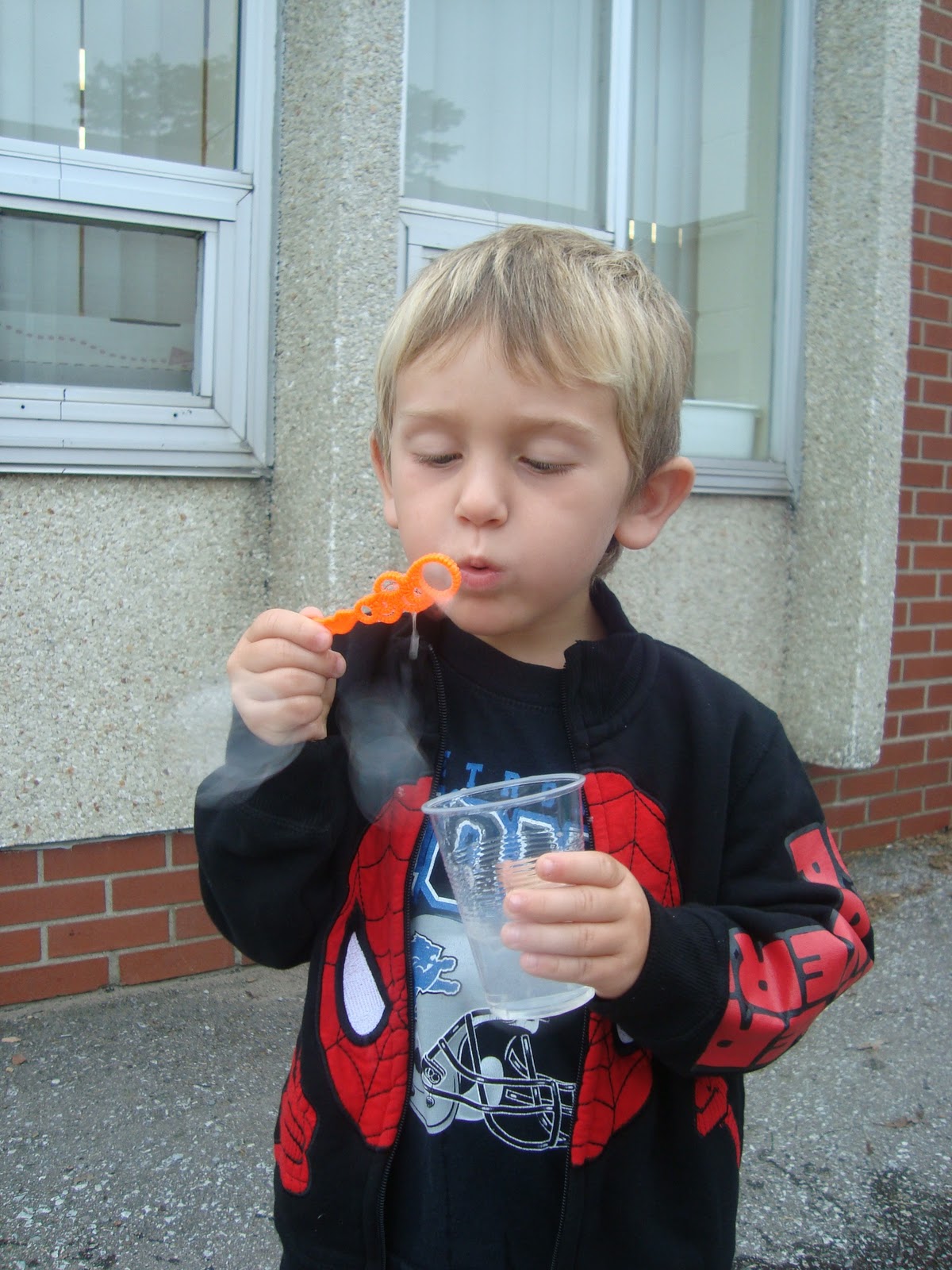
We spent some time outside today enjoying the cool autumn weather and blowing bubbles! We try and spend a large block of time each day outdoors so that we can engage in inquiry and exploration in our very large, nature-rich school yard.
Monday, September 19, 2011
Washing the Babies
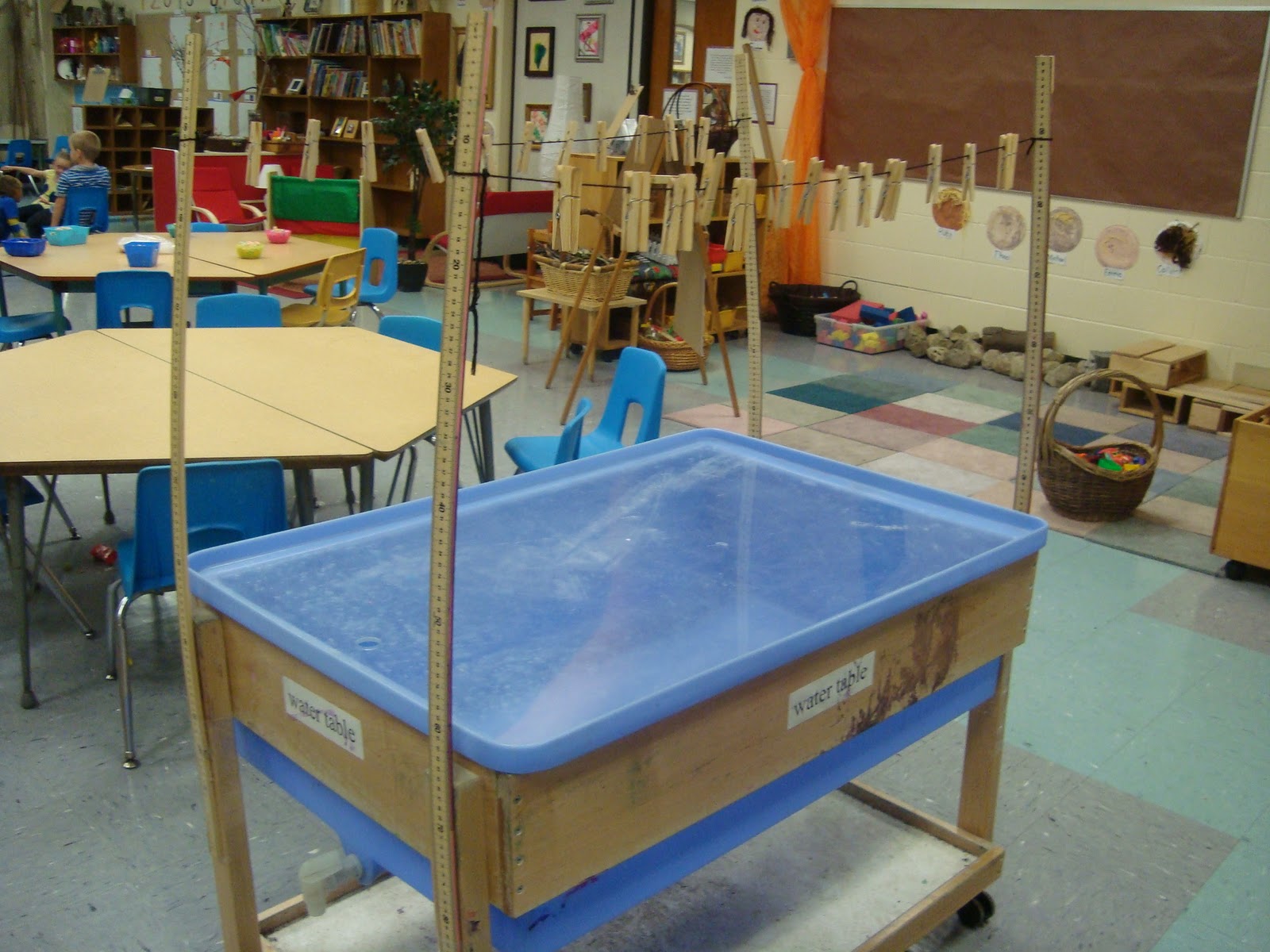
We saw a neat idea from an early years blog that put a clothesline over the water table to encourage imaginative play and strengthen fine motor skills! We tried it today.
The clothesline is the perfect height for children to hang the baby clothes from after being washed.
Pinching the clothespins strengthened the pincher grasp, which helps children develop skills for future writing!
Washing the babies and clothing encouraged children to role-play caregivers - some children sang and spoke softly to the babies as they bathed and dried them.
Ontario Curriculum fulfilled by this experience includes:
3.1 develop empathy for others, and acknowledge and respond to each other’s feelings (e.g., tell an adult when another child is hurt/sick/upset, role-play emotions with dolls
1.2 demonstrate the ability to take turns in activities and discussions (e.g., engage in play activities with others, listen to peers and adults)
4.1 begin to demonstrate control of small muscles in activities at a variety of learning centres (e.g., sand, water, visual arts centres) and when using a variety of materials or equipment (e.g., using salt trays, stringing beads, painting with paintbrushes, drawing, cutting paper, using a keyboard, using a mouse, writing with a crayon or pencil)
4.2 demonstrate spatial awareness by doing activities that require the use of small muscles
Friday, September 16, 2011
Look Who Came to School Today!
One of our children brought a few interesting creatures to school today. We placed the live grasshopper in our terrarium and the dried dragonfly and worm on the light box.
The children were fascinated by how the grasshopper was able to hang onto the top of the terrarium's lid without falling off.
The dragonfly and worm were illuminated by the light box, which made them very easy to see. We could even see inside the worm's body!
Some of the children drew pictures of what they observed.
We used science tools like magnifying glasses to help us out!
The children were fascinated by how the grasshopper was able to hang onto the top of the terrarium's lid without falling off.
The dragonfly and worm were illuminated by the light box, which made them very easy to see. We could even see inside the worm's body!
Some of the children drew pictures of what they observed.
We used science tools like magnifying glasses to help us out!
Mrs. Bombardier: "How can the grasshopper hold onto the top of the container?"
Child: "When I turned the light [box] on, I saw the sticky part on the legs. That's where he grapples it [the container]."
Mrs. Bombardier: "What is a grapple?"
Child: "That's what holds stuff."
What a beautiful creature! The children noticed the details on the dragonfly's wings!
Beautiful Stuff! Using Found Objects
As part of our program, we are hoping to use recycled, found materials in our science and art programs. One of our children brought in a large bag filled with objects he had collected from home (e.g., lids, marker caps). We explored them during circle time and looked for similarities and ways to sort them.
The children decided to sort them by colour.
We discussed the different ways colours can look (lighter, darker).
After we sorted the materials, we added them to our colour bins of beautiful stuff.
The objects look so beautiful displayed together!
Please consider keeping a bag nearby in the kitchen so you can save materials that might interest our children. There is a list on the right hand side of our blog if you'd like suggestions for what we need. Thank you for your support of our children and program!
The children decided to sort them by colour.
We discussed the different ways colours can look (lighter, darker).
After we sorted the materials, we added them to our colour bins of beautiful stuff.
The objects look so beautiful displayed together!
Please consider keeping a bag nearby in the kitchen so you can save materials that might interest our children. There is a list on the right hand side of our blog if you'd like suggestions for what we need. Thank you for your support of our children and program!
Thursday, September 15, 2011
Sorting Colour Chips
Today we placed coloured paint chips (paint samples) on the table and invited children to sort them.
The children immediately recognized that they could sort the chips by colour.
We discussed how there are many shades of one colour!
The colours look beautiful in our art corner. Check them out next time you're in the classroom!
Curriculum fulfilled by this activity:
DM5.1 sort, classify, and compare objects and describe the attributes used
Subscribe to:
Posts (Atom)